 Uma
Uma Quick Answer
The best small apartment decorating ideas focus on the aesthetic choices that make a small space feel curated: a unified color palette, correctly scaled furniture, one strong focal point per room, and textiles layered in texture rather than pattern. These 20 ideas are specifically about how the space looks and feels — not storage or layout — and every one of them makes a measurable difference in how designed the apartment reads.
Decorating a small apartment well requires different instincts than decorating a large one. The rules about scale, palette, and editing that apply everywhere matter twice as much when the room is small and every choice is visible all at once from a single vantage point.
These 20 decorating ideas focus specifically on the aesthetic side — color, furniture style, art, textiles, plants, and finishing details. They are about how the apartment looks and feels, not about how it stores or organizes. Get these right and a small apartment reads as a considered, personal space rather than a place someone is making do with.
Color and Palette
1. Choose Warm Off-White Over Stark White for Every Large Surface
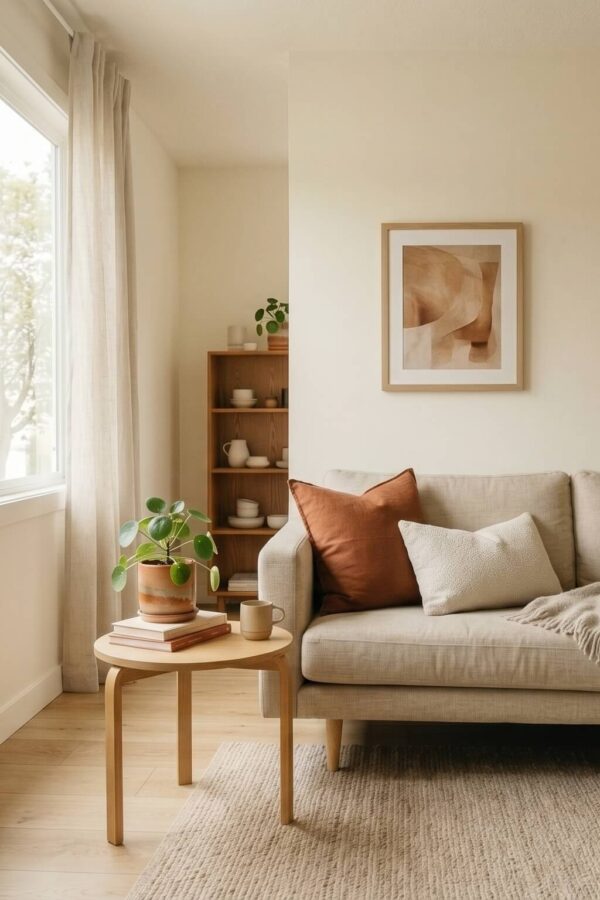
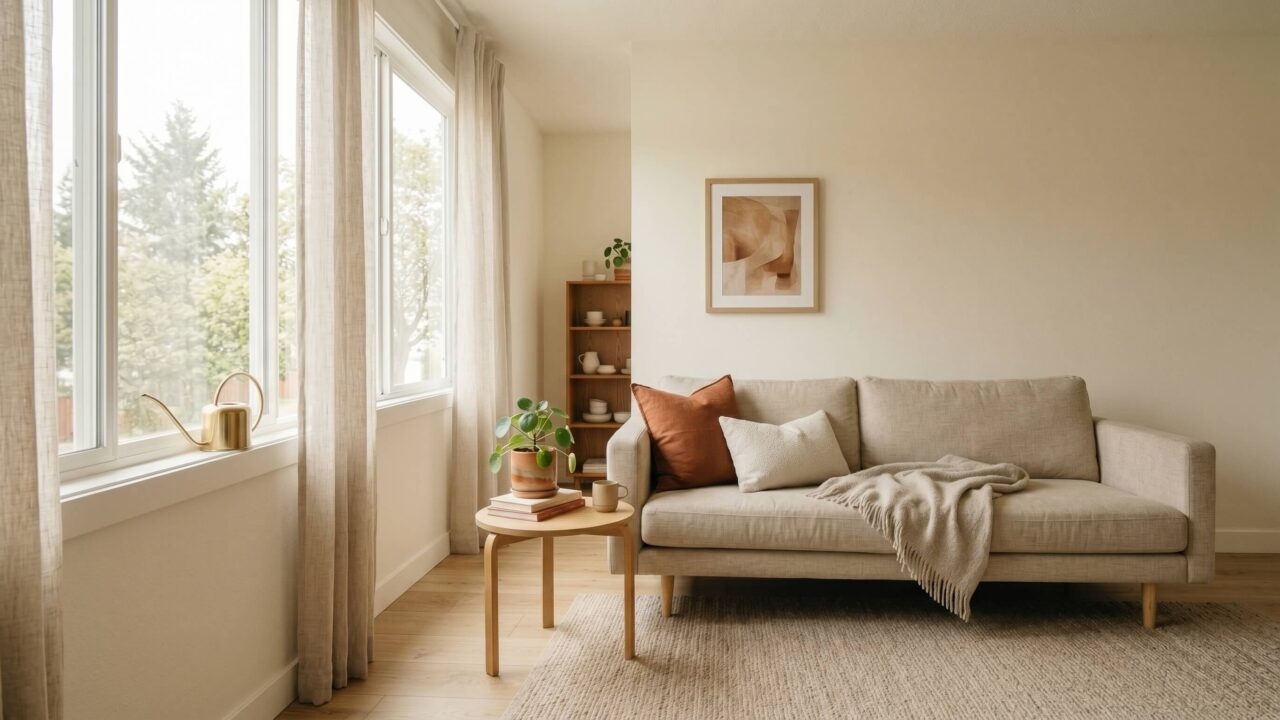
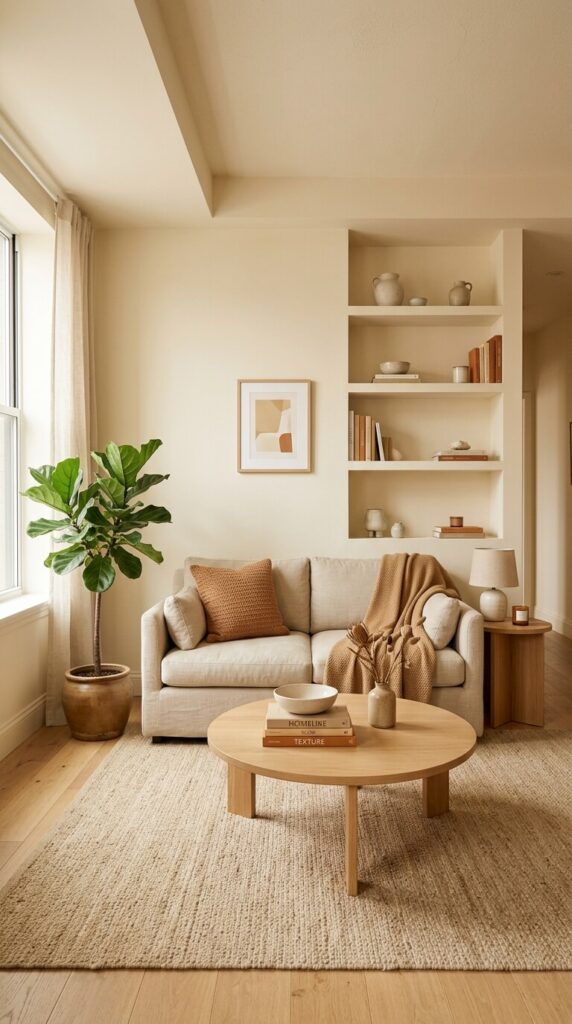
Stark white walls in a small apartment emphasize every boundary and every imperfection. Warm off-whites, creamy ivories, and soft greiges reflect light warmly and make the room feel simultaneously larger and more livable. The warmth tricks the eye into reading the space as intentional rather than bare. Paint large furniture pieces — a bookcase, a storage unit, a headboard — in the same warm white as the walls to make them recede and visually expand the room around them.
The specific tone matters less than the undertone. Keep it warm — yellow, beige, or red undertone — and avoid cool undertones like blue or green in any base white you use for large surfaces. A warm white and a cool white in the same room will fight each other and make both look wrong. Commit to one tone family throughout.
2. Apply the 60-30-10 Rule Across the Whole Apartment
The 60-30-10 rule gives every room a stable visual foundation: 60 percent of the room’s color comes from the dominant neutral — walls, large furniture, floors. 30 percent comes from a secondary tone — rugs, curtains, smaller furniture pieces. 10 percent comes from an accent color used in pillows, vases, throws, and plants. In a small apartment, keeping this ratio consistent across every room makes the whole space read as one designed environment.
The most common mistake is adding too many accent colors — terracotta here, sage there, blue over there. Choose one accent color for the whole apartment and use it consistently. One accent color in small doses throughout looks curated. Three accent colors fighting for attention looks accidental.
3. Keep Flooring and Large Furniture in the Same Tonal Family
When the floor and the main sofa or bed frame are in contrasting tones — dark floor, light sofa; light floor, dark furniture — the furniture reads as an object sitting on the floor rather than as part of the room. Keeping both in the same warm tonal family (both warm light, both warm medium) blurs the distinction and makes the furniture feel like it belongs to the room rather than being placed in it. This is especially effective in small spaces where every contrast reads more sharply.
4. Add Color Only in Textiles — Keep Hard Surfaces Neutral
In a small apartment, adding color to walls or large furniture is a high-commitment decision that is expensive to reverse. Adding color in textiles — throw pillows, a blanket, a rug — lets you introduce personality and warmth without any commitment. When the season or trend changes, you update the throw pillows rather than repainting. Keep every hard surface — walls, floors, furniture frames, cabinetry — in neutral tones and let textiles carry all the color work.
Furniture Style and Scale
5. Choose One Furniture Style and Commit to It Fully
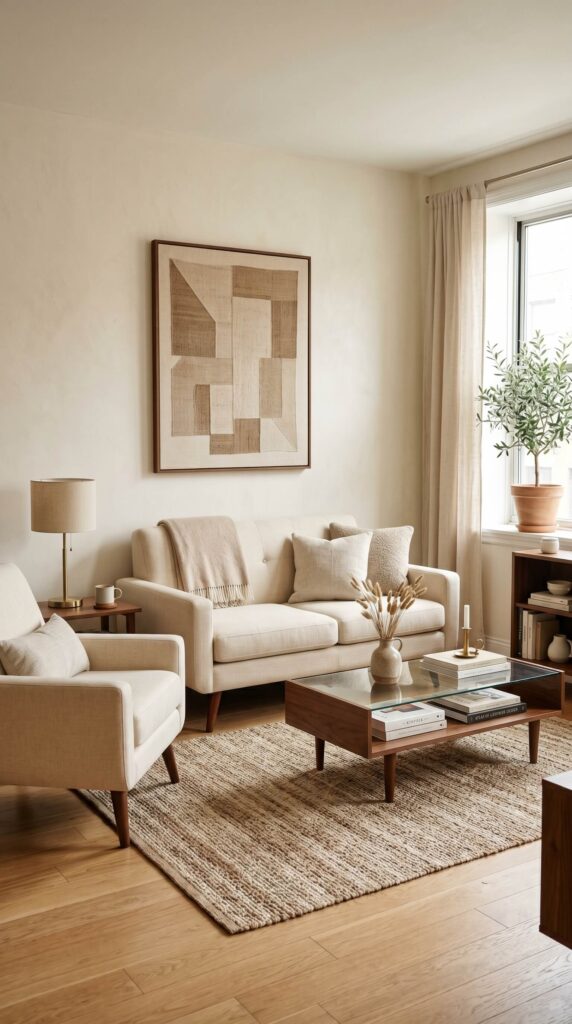
Small apartments reveal furniture style mismatches more harshly than large ones because everything is visible at once from every position in the room. A mix of Scandinavian, industrial, and traditional pieces that might read as eclectic in a large space reads as confused in a small one. Choose one style direction — mid-century modern, Japandi, minimalist, warm Scandinavian — and apply it consistently across every furniture purchase. Consistency reads as intention; inconsistency reads as improvisation.
Mid-century modern and Japandi styles suit small spaces particularly well because both favor low-profile furniture with exposed legs, which maximizes visible floor space. Both also tend toward warm neutral palettes and natural materials, which complement small-space decorating principles. If you already have mixed furniture, identify the dominant style and edit toward it over time rather than trying to change everything at once.
6. Scale Every Piece Before Buying — Tape It Out on the Floor
Put masking tape on the floor in the exact footprint of any large piece before buying it and live with the tape for a day. Walk around it. Sit near where it would be. Look at it from the doorway. The tape makes the scale real in a way that floor plans and product dimensions on a screen cannot. Pieces that look fine in a large showroom or product photo regularly turn out to be too large for a small apartment room once they are actually in the space.
7. Avoid Matching Furniture Sets — Similar Style, Different Pieces
A matching furniture set — sofa, loveseat, and armchair in the same fabric, same leg, same design — makes a room look like a showroom display rather than a lived-in home. Choose pieces in the same style family but with slight variation: the same warm tone but different textures, similar leg styles but different silhouettes. The slight variation makes the room look collected rather than packaged. This is especially important in a small apartment where a full matching set can look heavy and dominate the space.
8. Choose Low-Profile Furniture Over Tall and Heavy Pieces
Low-profile sofas, low bed frames, and low-slung chairs make ceilings feel higher by maintaining more visible wall space above the furniture line. Tall, bulky furniture eats vertical space and compresses the room. The ideal height for a sofa seat is 15 to 17 inches from the floor. The ideal height for a bed frame is a platform style with legs — low enough to keep the wall above the headboard visible, high enough for under-bed storage. Keep every piece as low as its function allows.
Art and Wall Decor
9. Go Oversized with Art — One Large Piece Over Several Small
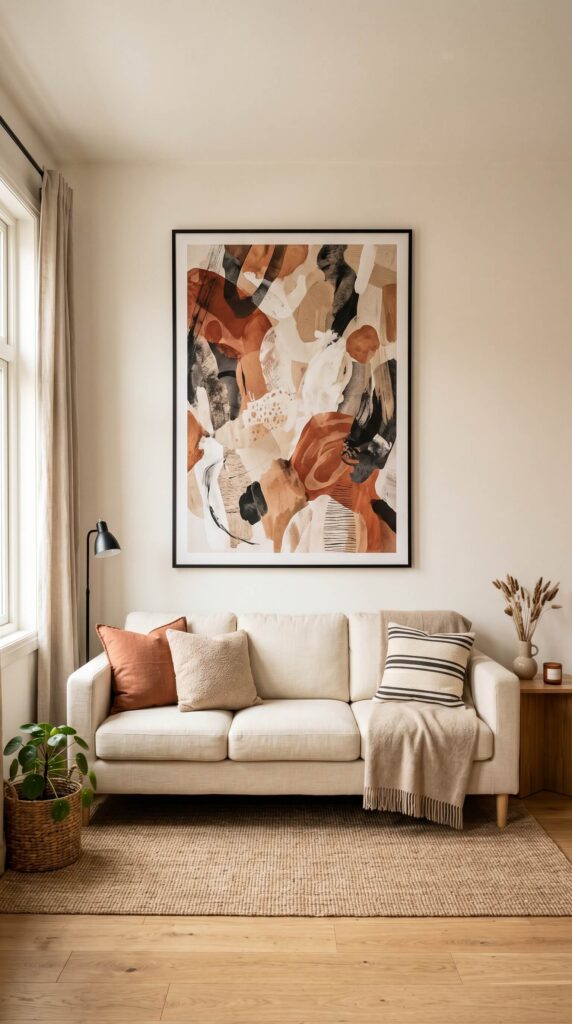
Art scale is where small apartment decorating goes wrong most often. People buy small-to-medium prints for small rooms, which makes the walls look timid and the furniture look unanchored. A single large piece — one print, canvas, or framed work that genuinely fills the wall space above the main furniture piece — reads as architecture rather than accessory. The correct size for art above a sofa is roughly two-thirds of the sofa’s width or wider. Scale up until it looks slightly too big, then go back one size.
10. Gallery Walls Work, But Only with Matching Frames
A gallery wall in a small apartment works when every frame matches — same metal, same width, same finish. A gallery wall of mixed frame sizes, colors, and styles in a small room creates visual chaos that makes the wall feel busier and the room feel smaller. Matching frames in black or thin brass, arranged in a tight grid or organic cluster so the frames nearly touch each other, reads as one composed piece rather than a collection of individual items.
11. Lean Art Against the Wall for a Relaxed, Collected Feel
Leaning large prints, canvases, and mirrors against the wall rather than hanging them is one of the most effective ways to make a small apartment feel like a curated home rather than a recently moved-into rental. It reads as design confidence rather than temporary measure. Layer two or three leaned pieces at different scales in a corner — a large canvas behind a small framed print in front of it — for the kind of composed vignette that reads as genuinely designed.
12. Use Art to Create One Clear Focal Point in Each Room
In every room, identify the wall where the eye naturally goes first and put the strongest art piece there. In the living room this is almost always the wall behind or above the sofa. In the bedroom it is the wall behind the headboard. Art in the right location anchors the room and makes every other design choice easier because everything else supports the focal moment rather than competing with it. Art in the wrong location — on a side wall no one looks at, or spread evenly across multiple walls — wastes its potential.
Textiles, Rugs, and Layers
13. Invest in One Large Rug That Anchors the Main Zone
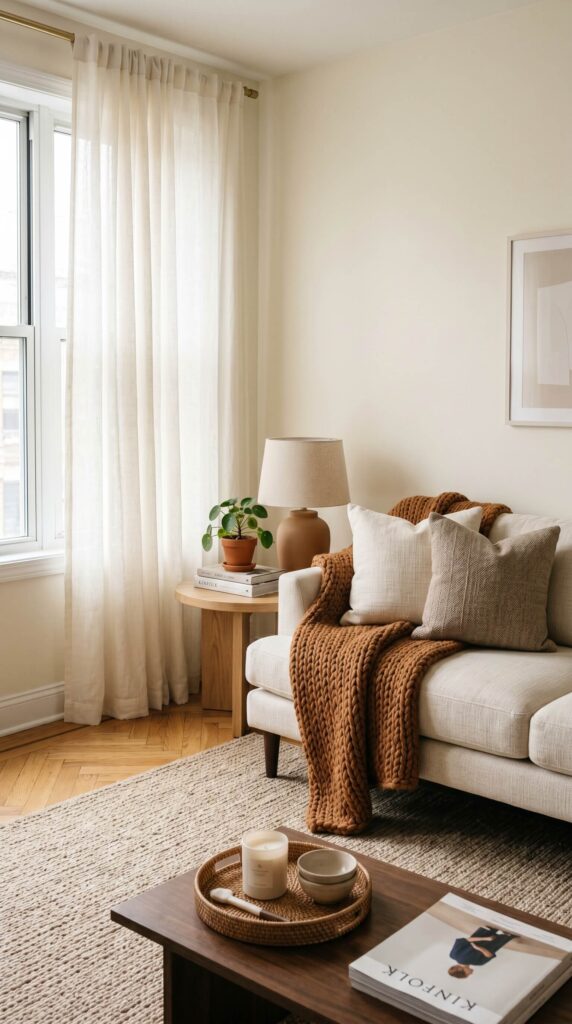
The area rug is the most impactful single decorative purchase in a small apartment living room or bedroom. It defines the zone, warms the space, and makes the furniture grouping read as a composed environment rather than individual pieces placed near each other. The most common rug mistake is going too small. For a living room, the front legs of the sofa should be on the rug at minimum. All four legs is better. A rug that is too small makes the room look like it ran out of budget.
14. Layer Pillows and Throws in Texture, Not Pattern
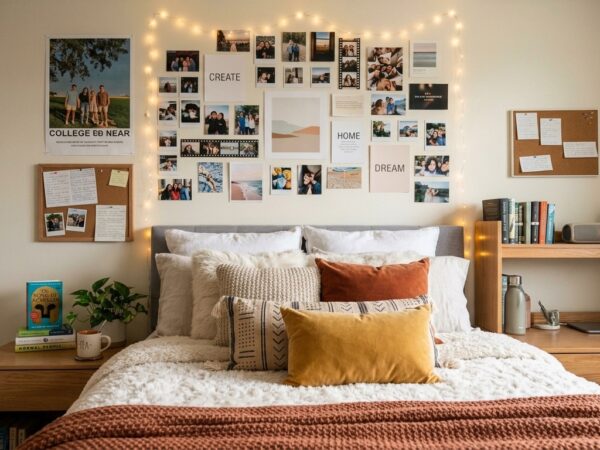
Patterned pillows in a small apartment compete with each other for attention and make the room feel busy. Textured pillows in the same tonal family — waffle weave, chunky knit, smooth linen, boucle — create visual richness without noise. The texture difference is enough to make the layering look intentional. Keep all pillows within two shades of each other and vary the texture across every piece. One accent-color pillow in a room of neutrals works. Three different patterned pillows in three different colors does not.
15. Use Curtains to Add Height, Not Just to Cover the Window
The curtain rod should be mounted at ceiling height — not at the window frame top — so the fabric creates a floor-to-ceiling vertical line that draws the eye upward and makes the ceiling feel taller. The curtains are dressing the wall, not the window. This means you need floor-length panels even for small windows. In terms of fabric, sheer or semi-sheer ivory linen keeps the wall feeling light. Heavy blackout curtains cancel the height effect and make small rooms feel heavier.
Plants, Objects, and Finishing Touches
16. One Architectural Plant Per Room — Taller Than You Think Necessary
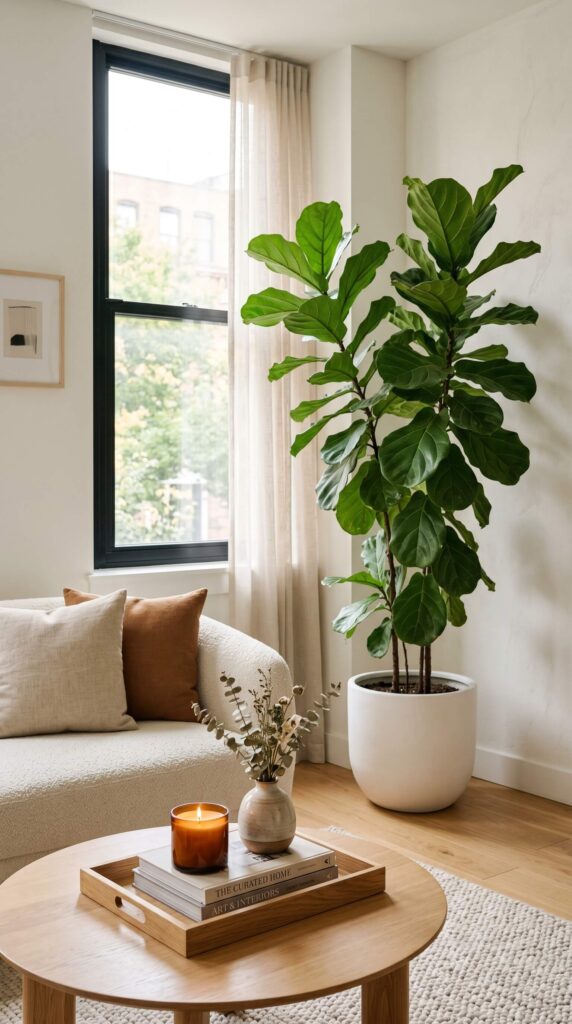
One large plant does more for a room than ten small ones scattered around it. A fiddle leaf fig, bird of paradise, or tall monstera in the right corner draws the eye upward, softens the room’s hard lines, and adds genuine organic life that no decorative object can replicate. The correct size is taller than feels comfortable — if it does not feel slightly too big, it is probably too small. Place it in the corner with the best natural light and let it become the room’s living focal point.
17. Style Shelves with the Rule of Odd Numbers and Open Space
Every shelf in a small apartment should have three things: objects in odd-number groupings, visible variation in height across those objects, and at least 40 percent of the shelf left empty. The odd-number grouping creates a natural triangular composition. The height variation gives the eye somewhere to travel. The open space prevents the shelf from reading as cluttered rather than styled. Apply this to every shelf in the apartment and the storage becomes part of the decor rather than a distraction from it.
18. The One-Tray Rule for Every Flat Surface
Every flat surface in the apartment — coffee table, side table, dresser, kitchen counter — gets one tray. Everything that lives on that surface lives inside the tray. This does two things simultaneously: it creates a composed vignette by grouping objects so the eye reads them as one unit, and it creates a physical boundary that prevents surfaces from accumulating clutter over time. When the tray is full, something has to leave before something else arrives.
19. Use Dried Botanicals for Long-Lasting Warmth Without Maintenance
Dried pampas grass, eucalyptus stems, cotton branches, and dried florals in a ceramic vase add the warmth and organic texture of plants without any maintenance, watering, or natural light requirements. They work in any room including bathrooms and bedrooms with no window. Dried botanicals in neutral tones — bleached, cream, warm tan — complement any palette and last for months to years without attention. A tall stem arrangement in a floor vase is one of the most impactful low-effort decor additions for a small apartment.
20. Edit Everything Down by Half After the Initial Decoration
After decorating any room, remove half of what you added. This is the most reliable single edit in small-space decorating. The initial instinct is almost always to add more — more pillows, more objects on shelves, more things on the coffee table — and the result is almost always too much. Removing half forces a prioritization. The things that stay are the things that genuinely matter and genuinely contribute. The things that leave were filling space, not adding to it. A room with half the objects almost always reads as more designed than the same room fully decorated.
Key Takeaways
- Warm off-white on walls and ceiling removes the boundaries that make rooms feel boxed in
- 60-30-10 rule: 60 percent dominant neutral, 30 percent secondary, 10 percent accent — same across every room
- Add color in textiles only — every hard surface stays neutral
- One furniture style committed to fully reads as designed; mixed styles read as improvised
- Scale up on art — one oversized piece outperforms five small ones every time
- Gallery walls only work with matching frames arranged tightly
- One large rug sized so the front sofa legs sit on it at minimum
- Layer textiles in texture within the same tonal family — not in pattern across different colors
- One architectural plant per room, taller than feels comfortable
- Edit every room down by half after decorating — what stays is what matters
Frequently Asked Questions
How do you make a small apartment look expensive?
The three things that most reliably make a small apartment read as expensive are: a unified warm color palette applied consistently across every room, correctly scaled art on every main wall, and furniture in one deliberate style rather than a mix of whatever was affordable at the time. None of these require expensive purchases — they require disciplined editing and intentional choices about what stays and what goes.
What decorating mistakes make small apartments look smaller?
The most common: art that is too small for the wall it is on, rugs that are too small for the furniture grouping they anchor, mixing too many patterns and accent colors, using overhead lighting exclusively instead of layered lamps, keeping every surface covered with objects, and choosing furniture that matches in a way that reads as a showroom set. Each of these has a direct inverse that works better.
What style works best for a small apartment?
Japandi and warm minimalism work best because both rely on natural materials, low-profile furniture with exposed legs, warm neutral palettes, and deliberate restraint in objects. Both styles also age well — they do not go out of fashion the way trend-driven aesthetics do, which matters in a small apartment where redecorating requires significant effort.