 Uma
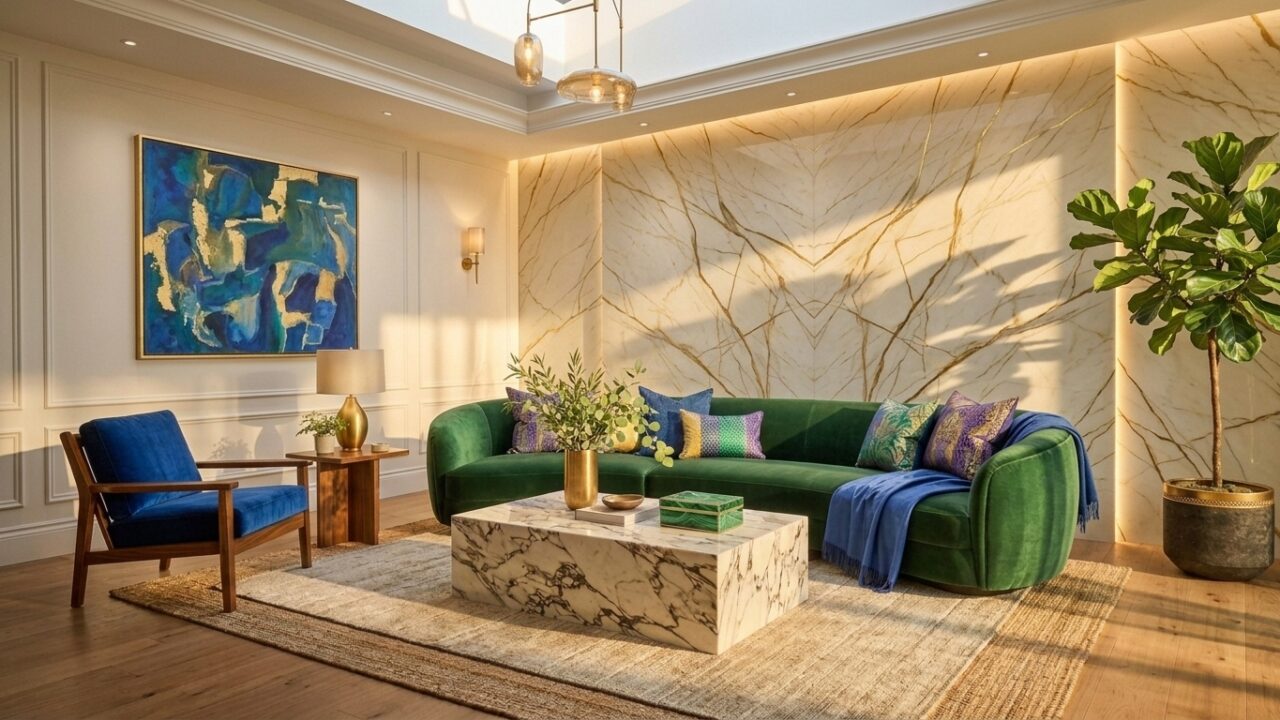
Uma A luxury living room is not simply a room filled with expensive furniture.
The most beautiful luxury living room designs feel intentional, balanced, and comfortable. They combine high-quality materials, thoughtful lighting, strong furniture proportions, and carefully selected decor.
Some luxury spaces are bright and minimal, while others use dark colors, dramatic stone, rich fabrics, or detailed architectural features. The style can be modern, classic, coastal, glamorous, organic, or deeply moody.
What makes the room feel luxurious is the way every element works together.
These 25 luxury living room designs explore completely different color palettes, layouts, materials, architectural styles, and moods so you can find inspiration that feels personal rather than repetitive.
Quick Answer: How Do You Make a Living Room Look Luxurious?
To make a living room look luxurious, begin with a cohesive color palette, well-proportioned furniture, layered lighting, quality fabrics, and one or two statement materials such as marble, walnut, brass, velvet, or natural stone.
A luxurious living room usually includes:
- Comfortable seating with clean proportions
- A large rug that anchors the furniture
- Layered ambient, task, and accent lighting
- Curtains installed high and wide
- A strong focal point
- Natural materials and rich textures
- Carefully edited decor
- Artwork that fits the scale of the room
- Hidden or attractive storage
- Enough open space for the room to breathe
1. Quiet Luxury Neutral Living Room
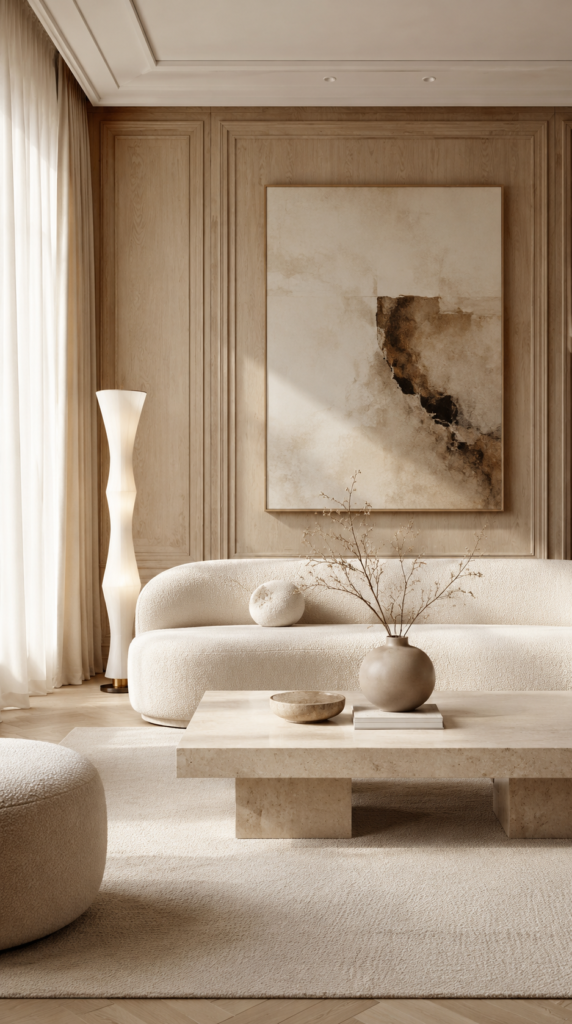
Quiet luxury focuses on craftsmanship, texture, and proportion instead of obvious glamour.
Use warm neutrals, natural stone, brushed metal, soft wool, linen, and pale wood. The room should feel calm and expensive without relying on bright gold accents or excessive decoration.
Keep the palette restrained, but layer several textures so the room does not feel flat.
Key design details:
- Oversized neutral rug
- Curved or softly structured sofa
- Travertine or limestone table
- Linen window treatments
- Sculptural lighting
- Large-scale artwork
2. Black Marble Contemporary Living Room
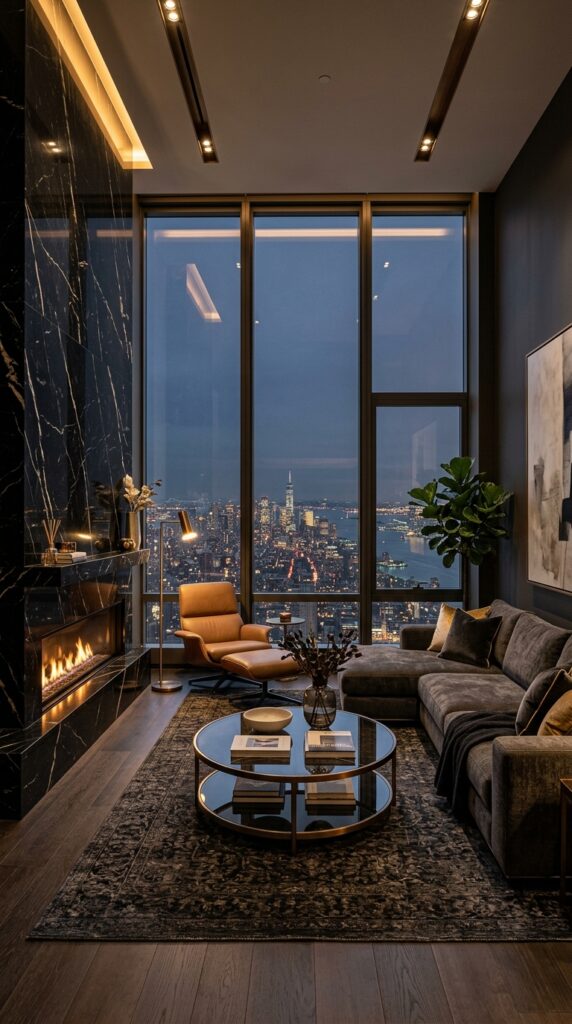
Black marble creates an immediate focal point and gives a contemporary living room a dramatic architectural presence.
Balance the dark stone with warm leather, soft upholstery, and metallic details. Without these lighter and warmer elements, the room can feel too severe.
Use black marble on one feature wall rather than throughout the entire room.
Best pairings:
- Caramel leather
- Charcoal upholstery
- Bronze or antique brass
- Smoked glass
- Warm white walls
- Dark walnut furniture
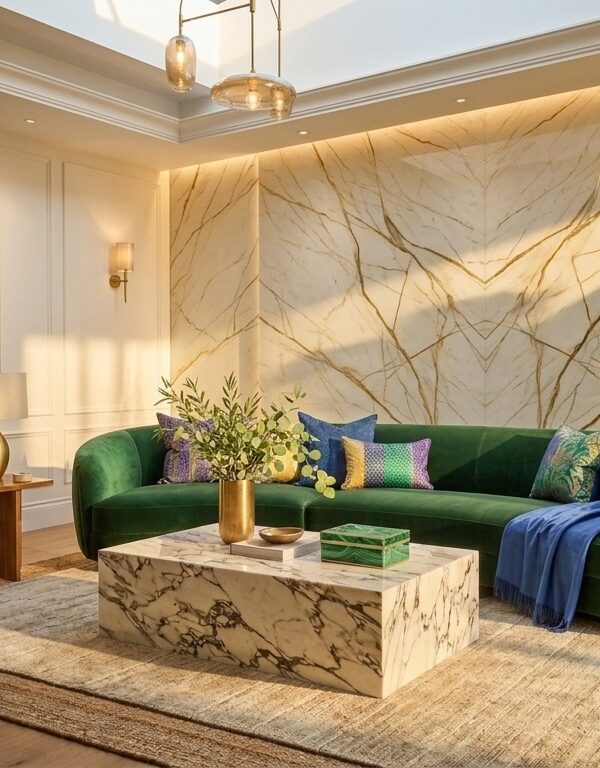
3. Jewel-Tone Art Deco Living Room
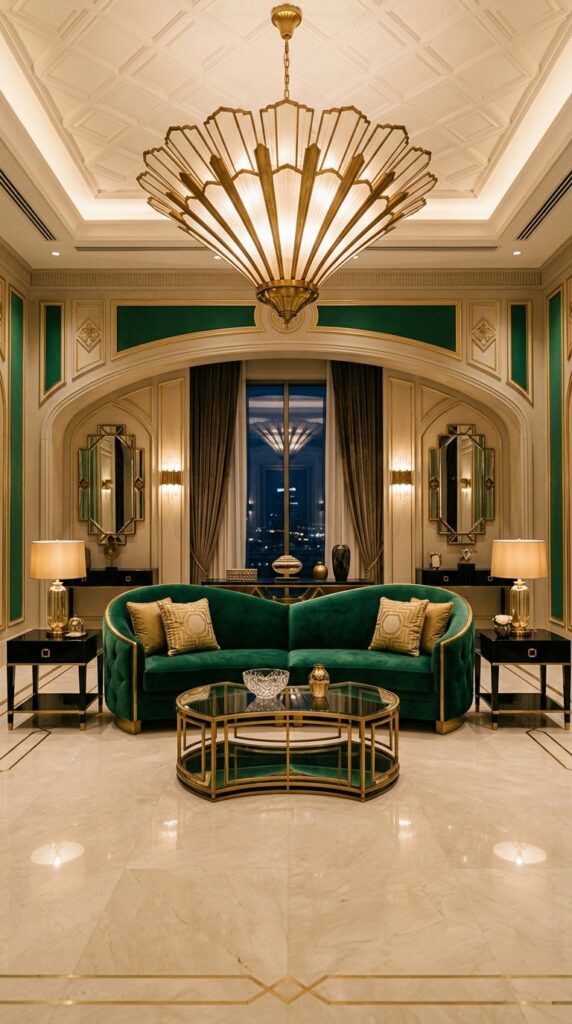
Art Deco luxury is bold, polished, and highly decorative.
Emerald, sapphire, ruby, and deep teal work beautifully with brass, black lacquer, marble, and geometric forms. The key is to keep the room structured so the rich materials do not become visually chaotic.
Choose one jewel tone as the dominant color and use the others sparingly.
Art Deco elements to consider:
- Velvet seating
- Fluted or scalloped furniture
- Brass trim
- Geometric rugs
- Mirrored surfaces
- Statement chandeliers
4. Parisian-Inspired Living Room
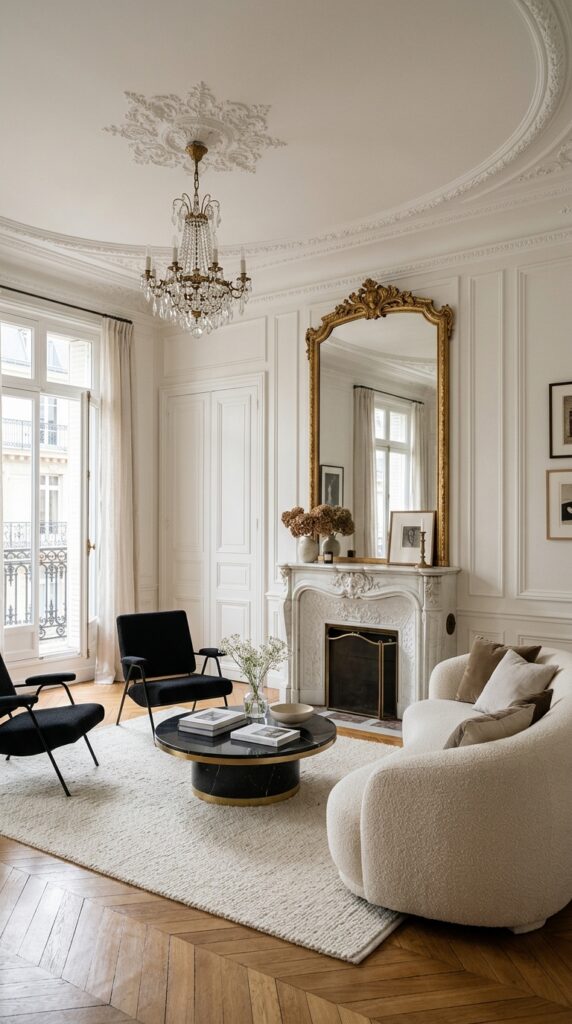
A Parisian living room feels luxurious because it mixes historic architecture with modern furniture.
Ornate moldings, herringbone floors, marble fireplaces, and tall windows create a classic foundation. Contemporary seating and minimalist artwork keep the room from looking overly traditional.
The contrast between old and new is what gives this style its character.
Parisian design features:
- Decorative wall molding
- Herringbone wood flooring
- Antique mirror
- Modern sculptural seating
- Marble fireplace
- Minimal but oversized art
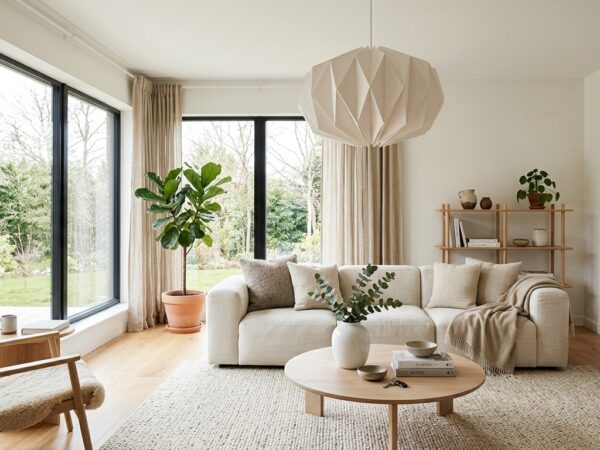
5. Organic Modern Living Room
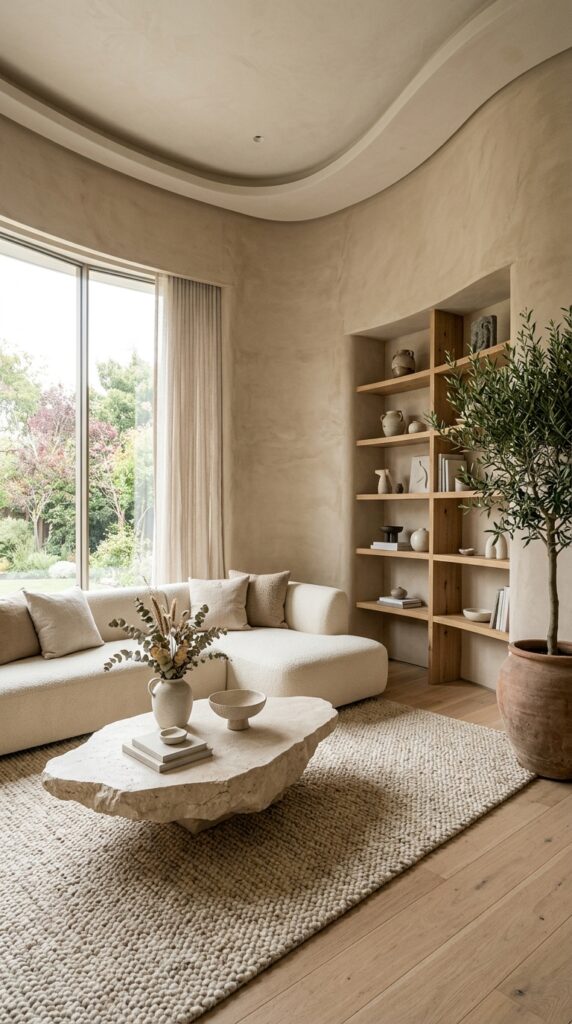
Organic modern design combines clean contemporary shapes with materials that feel natural and imperfect.
Use stone, plaster, oak, wool, clay, and linen. Rounded furniture and soft architectural curves help the room feel welcoming rather than rigid.
This style looks most luxurious when the decor is edited and the natural materials are allowed to stand out.
Materials that work well:
- Limewash or plaster walls
- Raw or pale oak
- Wool and linen
- Handmade ceramics
- Limestone
- Woven natural fibers
6. Penthouse Living Room with a City View
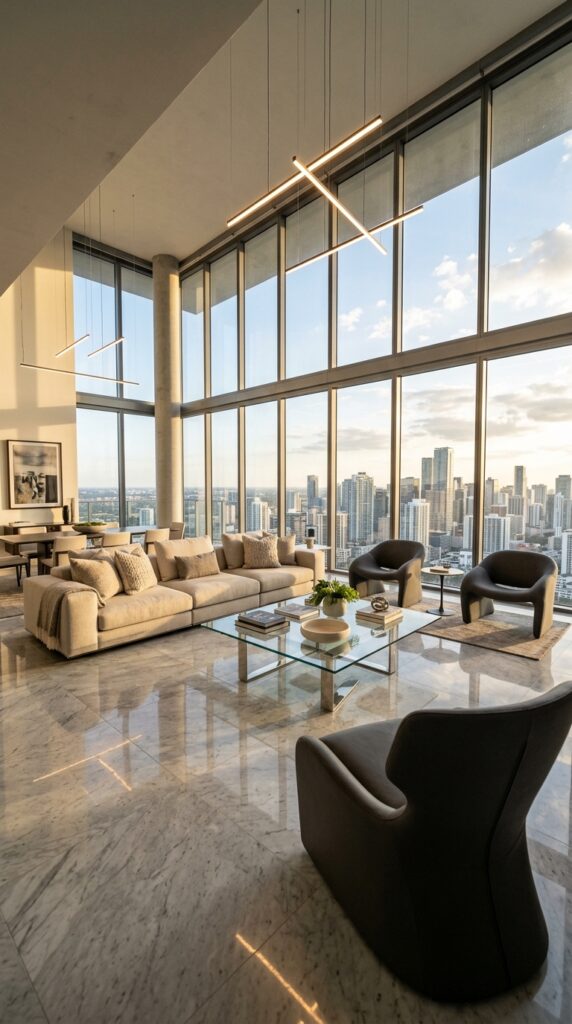
In a penthouse living room, the view should remain the main feature.
Choose low-profile furniture that does not block the windows. Keep the palette refined and avoid filling every surface with accessories.
Glass, polished stone, metal, and tailored upholstery complement the modern architecture without competing with the skyline.
Penthouse layout tips:
- Keep furniture below window height
- Use open-legged tables
- Choose one large rug
- Keep window treatments minimal
- Position seating toward the view
- Use lighting with a slim profile
7. Mediterranean Luxury Living Room
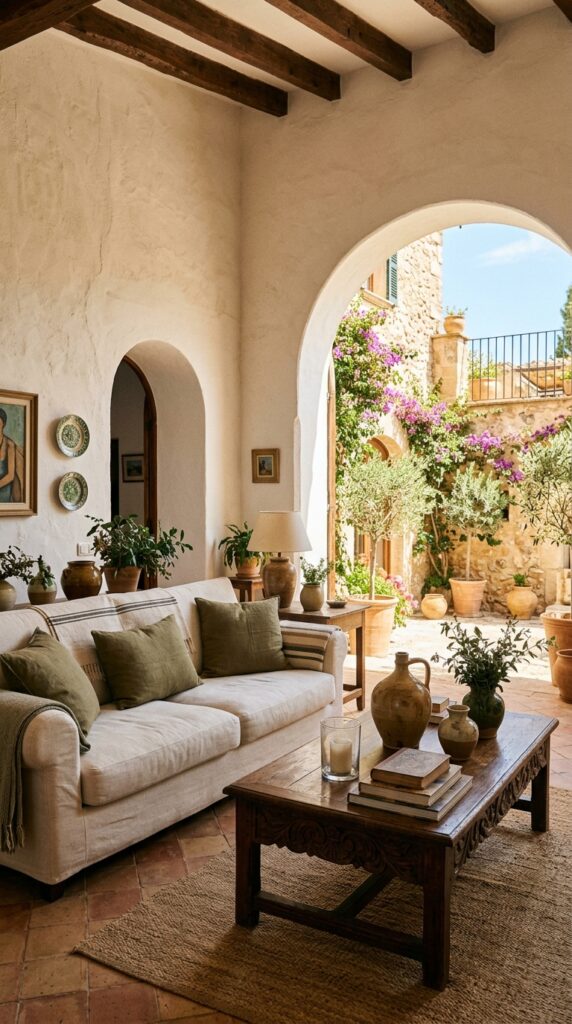
Mediterranean luxury feels warm, relaxed, and connected to nature.
Arches, plaster walls, terracotta, aged wood, linen, and handmade pottery give the room depth. The space should feel elegant without appearing overly polished.
Use earthy colors inspired by sun, stone, olive trees, and the sea.
Mediterranean palette:
- Warm white
- Sand
- Terracotta
- Olive green
- Weathered wood
- Muted blue
8. Moody Plum Luxury Living Room
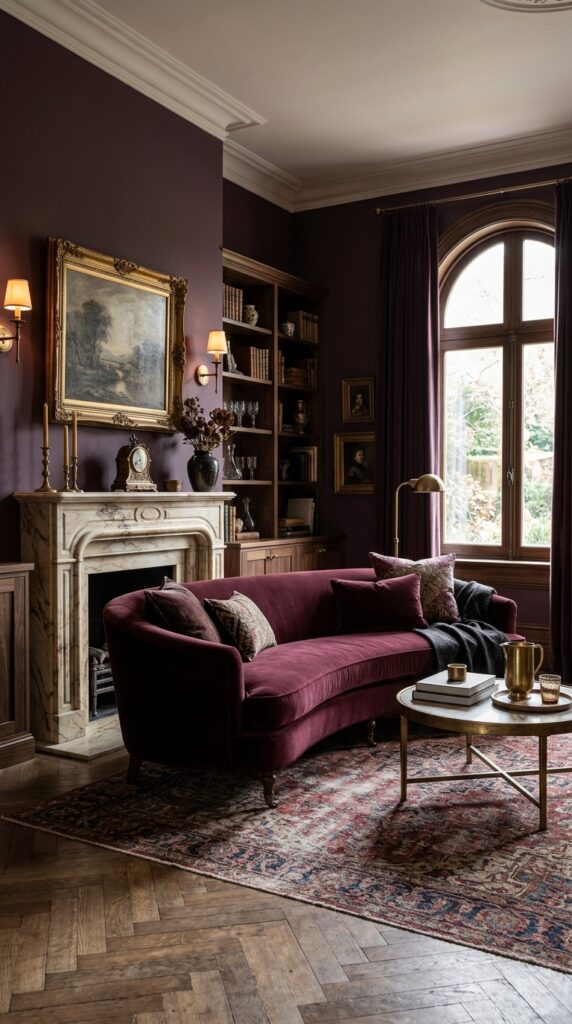
Plum is a sophisticated alternative to charcoal, navy, or black.
It gives the room depth while still feeling warm and inviting. Pair plum walls with walnut, antique brass, cream stone, and soft beige upholstery to keep the palette balanced.
Good lighting is especially important in a dark room. Use daylight, wall sconces, and table lamps to prevent shadowy corners.
Colors that complement plum:
- Warm cream
- Dusty rose
- Walnut brown
- Antique brass
- Muted olive
- Soft taupe
9. Coastal Luxury Living Room
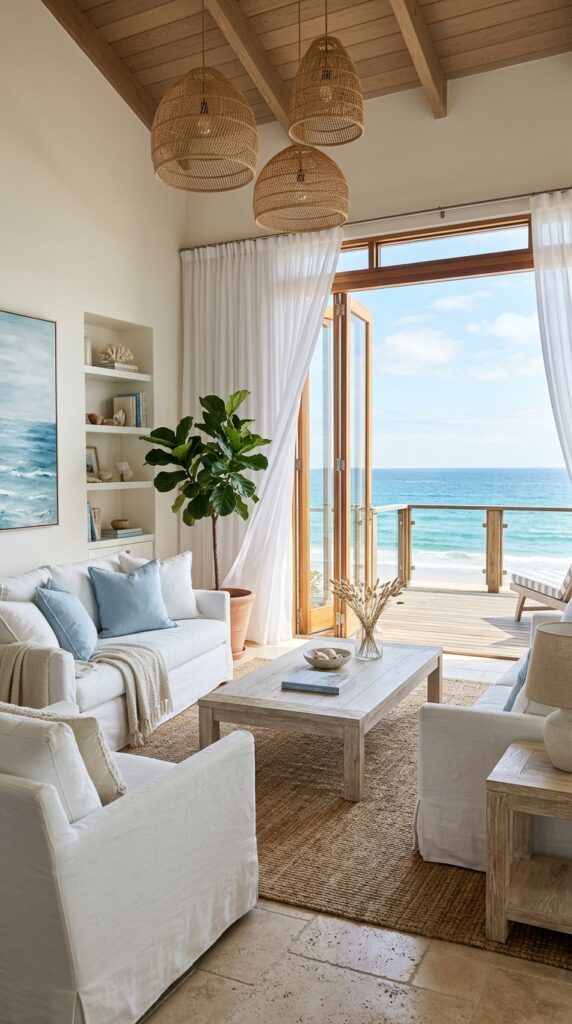
Luxury coastal design should feel fresh and elegant rather than themed.
Use white, sand, pale blue, natural linen, woven materials, and light wood. Avoid filling the room with shells, signs, or obvious nautical decorations.
Let the light, textures, and outdoor view create the coastal feeling.
Refined coastal materials:
- Linen
- Bleached oak
- Pale stone
- Woven seagrass
- Soft blue textiles
- Clear or frosted glass
10. Japandi Luxury Living Room
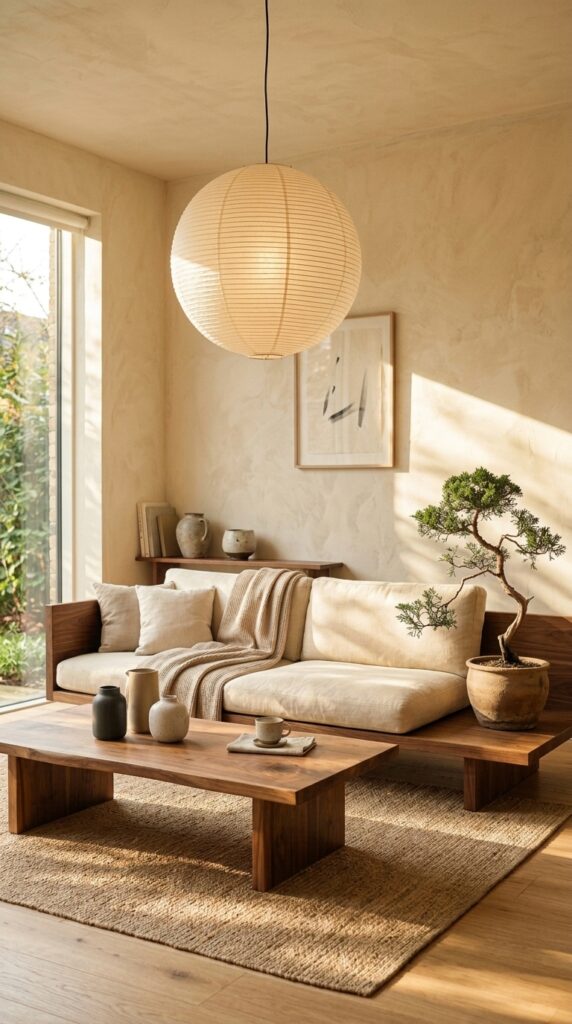
Japandi combines Japanese simplicity with Scandinavian warmth.
The style relies on strong craftsmanship, restrained decor, low furniture, and natural materials. Every item should have a purpose and enough space around it.
Use warm wood and textured neutrals to keep the room from feeling cold.
Japandi essentials:
- Low-profile seating
- Simple wood furniture
- Neutral wool rug
- Paper or fabric lighting
- Handmade ceramics
- Minimal visual clutter
11. Mid-Century Luxury Living Room
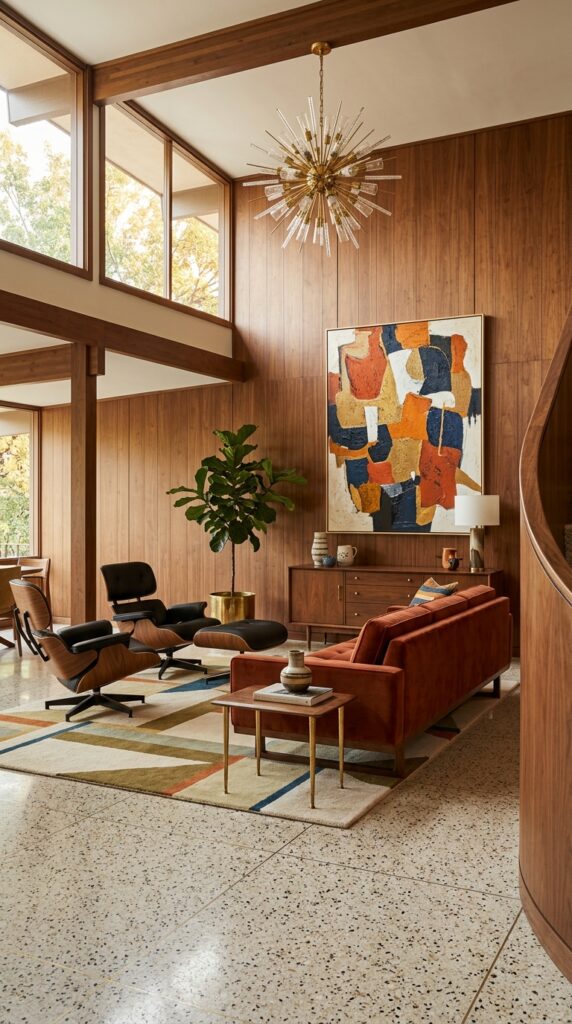
Mid-century luxury combines warm wood, sculptural furniture, and clean architectural lines.
Walnut, leather, velvet, terrazzo, and brass work especially well. Choose furniture with strong silhouettes rather than filling the room with many small decorative pieces.
A few vintage-inspired designs can make the room feel collected and timeless.
Mid-century details:
- Tapered furniture legs
- Walnut cabinetry
- Globe lighting
- Bold abstract art
- Textured upholstery
- Warm earthy colors
12. Soft Glam Living Room
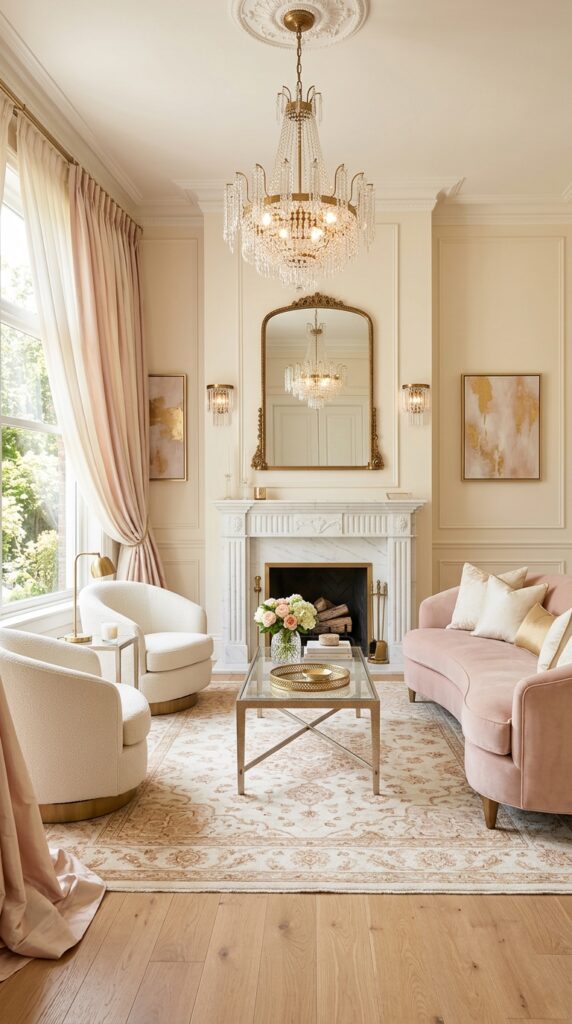
Soft glam design uses luxurious finishes without becoming overly flashy.
Combine blush, ivory, champagne metal, marble, velvet, and reflective glass. Keep the lines simple so the materials feel elegant rather than excessive.
One chandelier and a few polished surfaces are usually enough.
Soft glam accents:
- Velvet upholstery
- Champagne brass
- Fluted marble
- Silk or satin curtains
- Curved seating
- Crystal lighting
13. Dark Academia Luxury Living Room
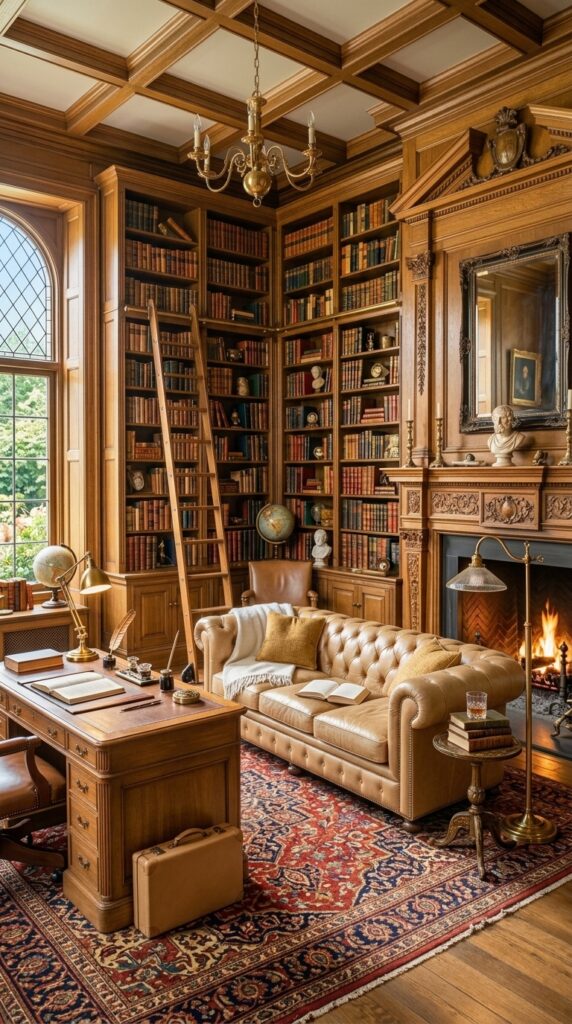
Dark academia works beautifully in a luxurious living room when it feels layered rather than gloomy.
Use books, dark wood, leather, antique brass, vintage rugs, and traditional artwork. Keep ceilings or trim lighter if the walls and shelving are dark.
Multiple light sources help the materials look rich instead of heavy.
Dark academia elements:
- Built-in bookcases
- Leather seating
- Vintage rugs
- Framed paintings
- Brass lamps
- Dark green or oxblood accents
14. Five-Star Hotel Living Room
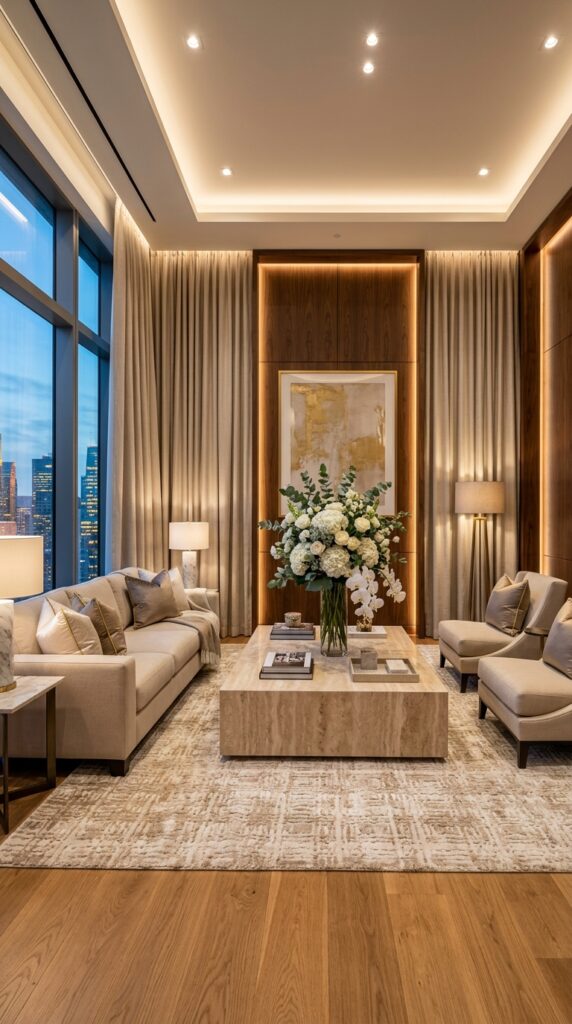
Luxury hotels create impact through symmetry, scale, and layered lighting.
Use matching side tables, balanced lamps, tailored seating, and a central coffee table. Curtains should feel full and generous, while decor should remain carefully edited.
This look works well for homeowners who prefer a calm, formal, and polished room.
Hotel-style details:
- Symmetrical furniture placement
- Oversized floral arrangement
- Full-length curtains
- Matching table lamps
- Large central rug
- Hidden storage
15. Sculptural Minimalist Living Room
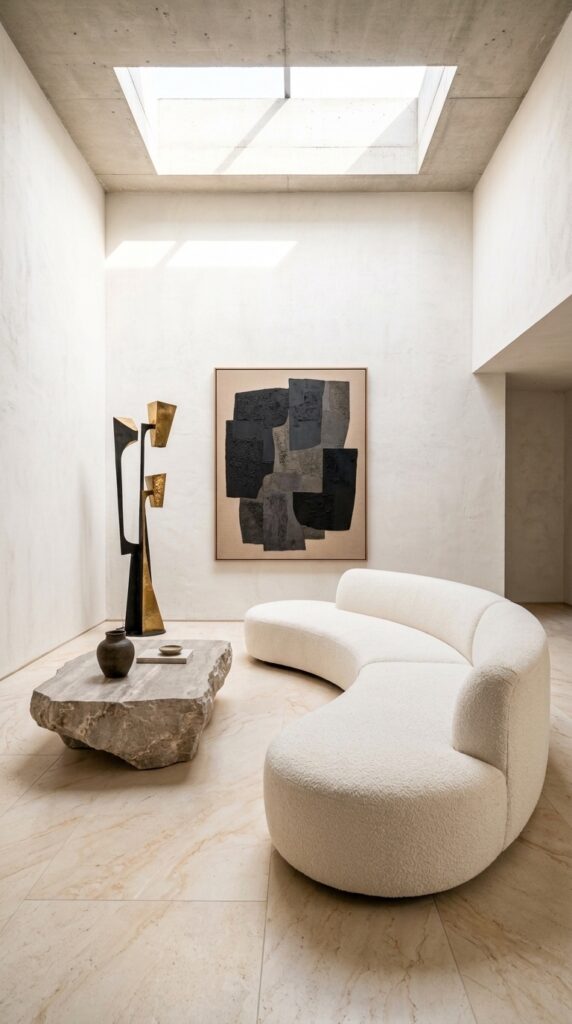
Minimalist luxury depends on shape, scale, and material quality.
Instead of using many decorative pieces, choose a few sculptural objects with strong visual presence. A curved sofa, monolithic table, or artistic lamp can become the room’s main feature.
Leave generous open space around each piece.
Minimalist luxury principles:
- Fewer, larger pieces
- Strong furniture silhouettes
- High-quality stone or wood
- Hidden storage
- Limited color palette
- Intentional negative space
16. Double-Height Luxury Living Room
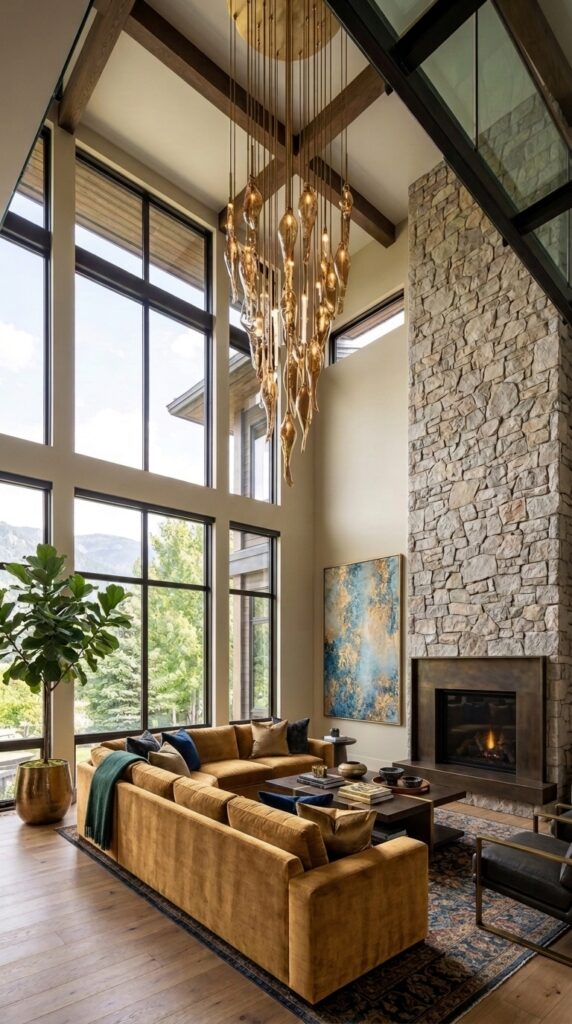
A double-height living room needs decor that matches its scale.
Small artwork, short curtains, and tiny lighting fixtures can make the room feel unfinished. Use tall curtains, oversized art, a substantial chandelier, and one or two large plants.
Keep the furniture grouped closely enough to maintain a comfortable conversation area.
Scale-enhancing ideas:
- Floor-to-ceiling curtains
- Oversized chandelier
- Tall fireplace surround
- Large indoor tree
- Extra-large artwork
- Broad sectional sofa
17. Classic Traditional Living Room
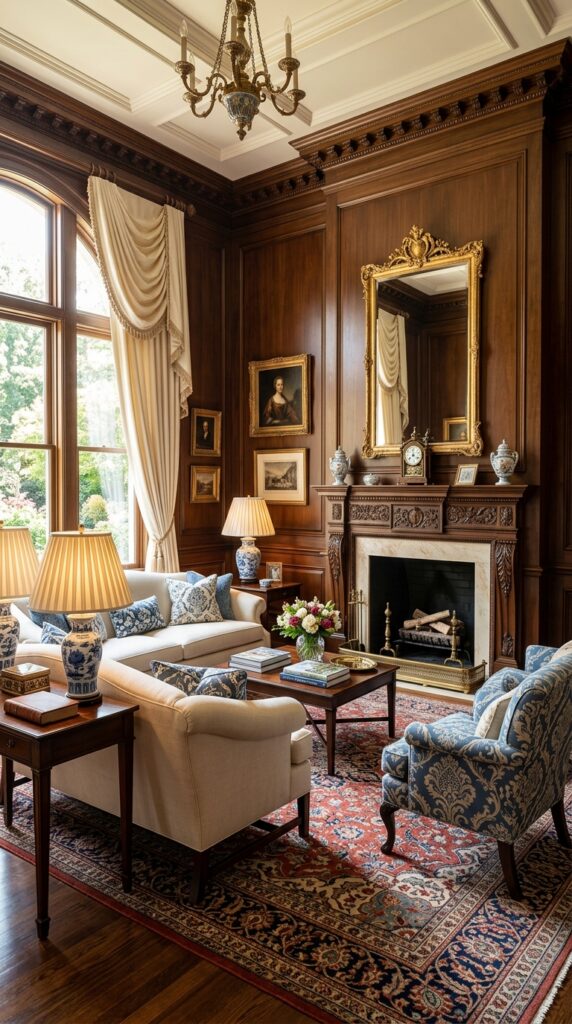
Traditional luxury is built around symmetry, craftsmanship, and timeless furniture.
Use carved wood, tailored upholstery, classic patterns, framed artwork, and elegant lighting. To keep the room fresh, combine antiques with a cleaner sofa silhouette and lighter wall colors.
The room should feel collected over time rather than purchased as one matching set.
Traditional features:
- Paneled walls
- Carved wood furniture
- Patterned armchairs
- Classic fireplace
- Table lamps
- Framed landscape art
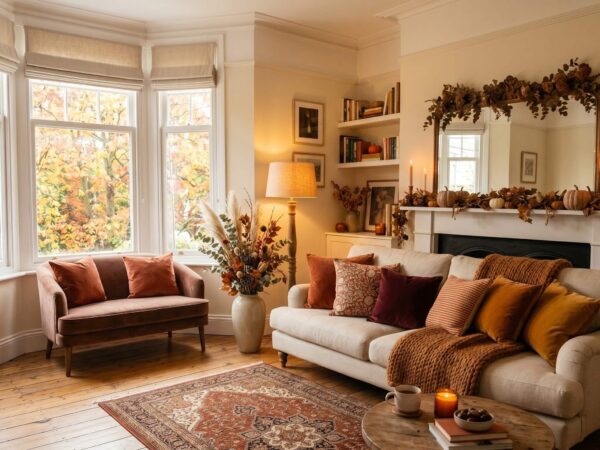
18. Warm Earth-Tone Living Room
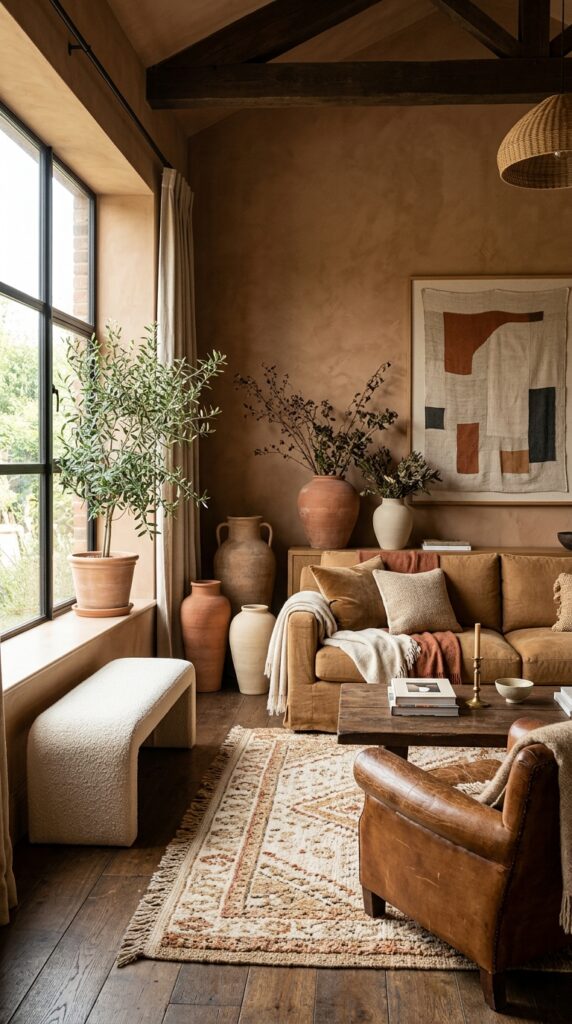
Earth tones make a luxury living room feel grounded and comfortable.
Clay, camel, rust, chocolate brown, and warm cream can be layered without making the room feel dull. Add pale upholstery or light stone to keep the space balanced.
Mixing matte and tactile materials gives this palette richness.
Earth-tone combinations:
- Camel and cream
- Rust and walnut
- Clay and ivory
- Chocolate and beige
- Terracotta and olive
- Cognac and black
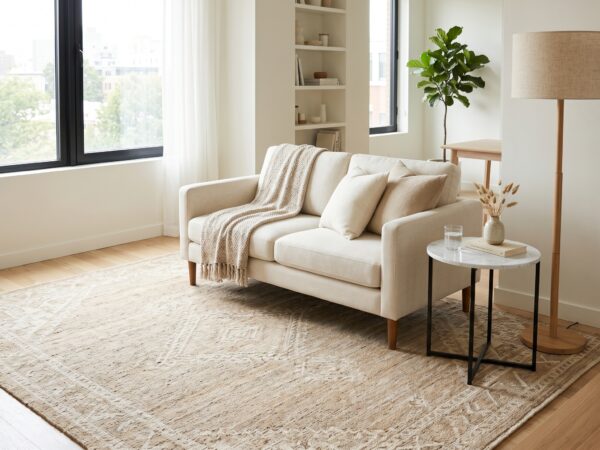
19. Monochrome Cream Living Room
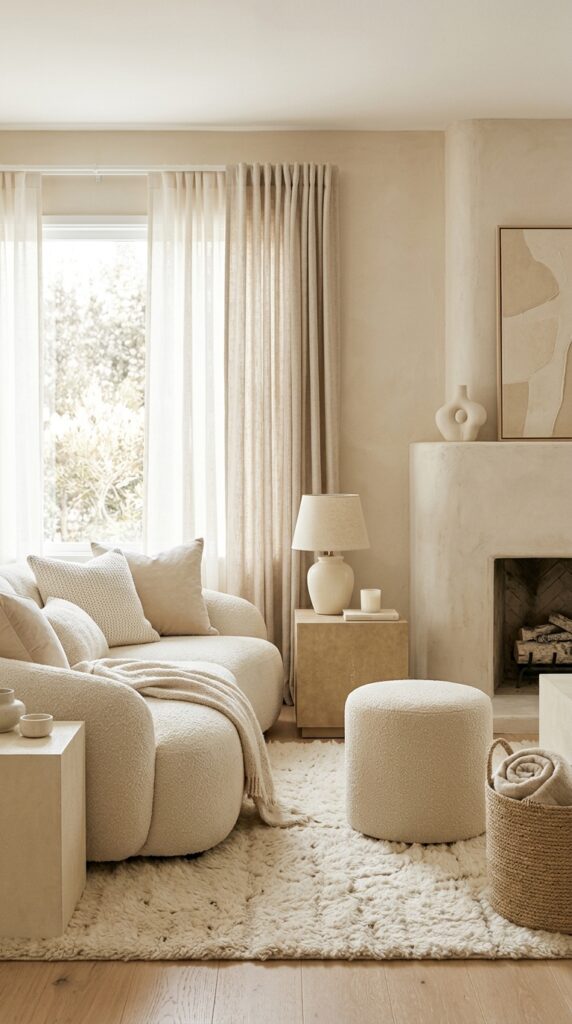
A monochrome room can feel deeply luxurious when it includes several tones and textures.
Use ivory, cream, oatmeal, sand, and pale beige rather than one exact shade. Combine smooth stone, soft wool, boucle, linen, and brushed metal.
Add small amounts of dark wood or black to create definition.
Ways to add contrast:
- Dark picture frames
- Walnut side table
- Black lamp base
- Green plant
- Veined stone
- Bronze hardware
20. Green Velvet Conservatory Living Room
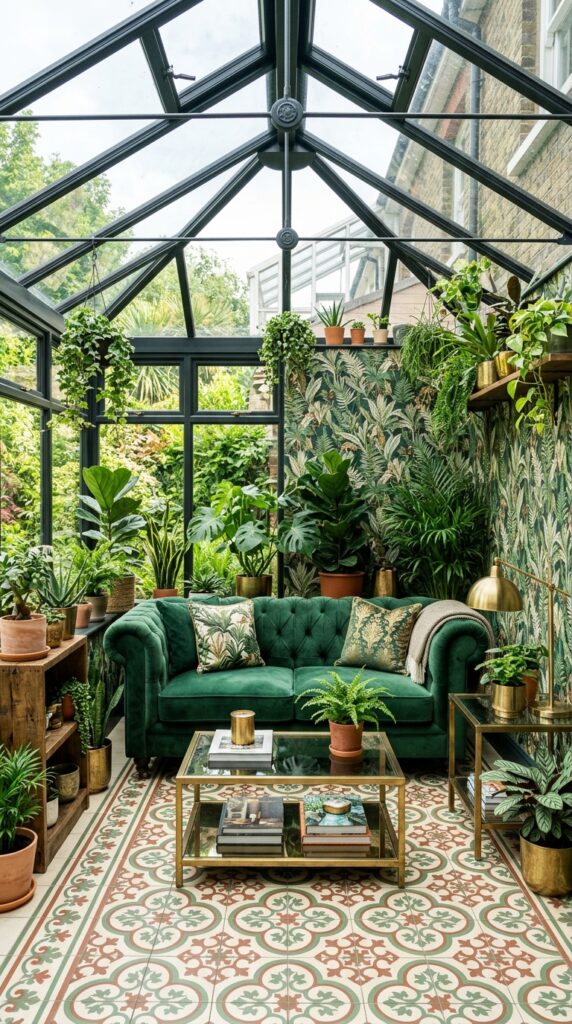
A conservatory-inspired living room combines luxury with a strong connection to nature.
Green velvet, botanical patterns, glass, brass, tile, and living plants create a rich layered effect. Avoid making the room feel crowded by grouping plants in intentional clusters.
Use warm white walls and plenty of daylight to keep the greenery fresh.
Conservatory elements:
- Green velvet sofa
- Botanical artwork
- Patterned flooring
- Brass accents
- Indoor trees
- Glass architectural details
21. Tailored Masculine Living Room
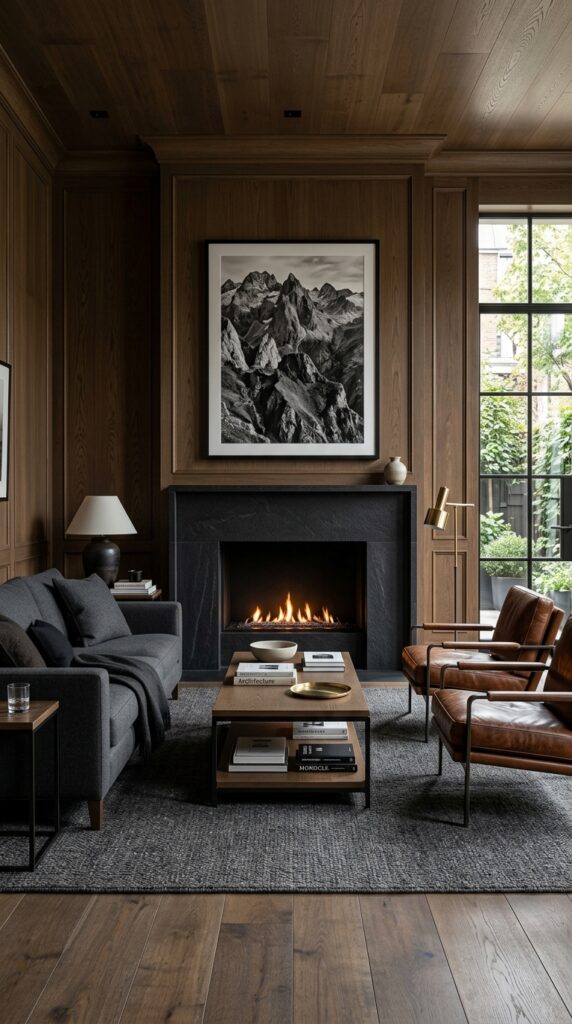
A masculine luxury living room can feel strong without becoming overly dark.
Use tailored upholstery, leather, dark wood, black stone, and clean architectural lines. Add a warm rug, lighter ceiling, and broad windows to maintain balance.
Keep accessories minimal and substantial.
Masculine materials:
- Saddle leather
- Charcoal wool
- Dark oak
- Blackened steel
- Honed stone
- Brushed bronze
22. Feminine Blush and Champagne Living Room
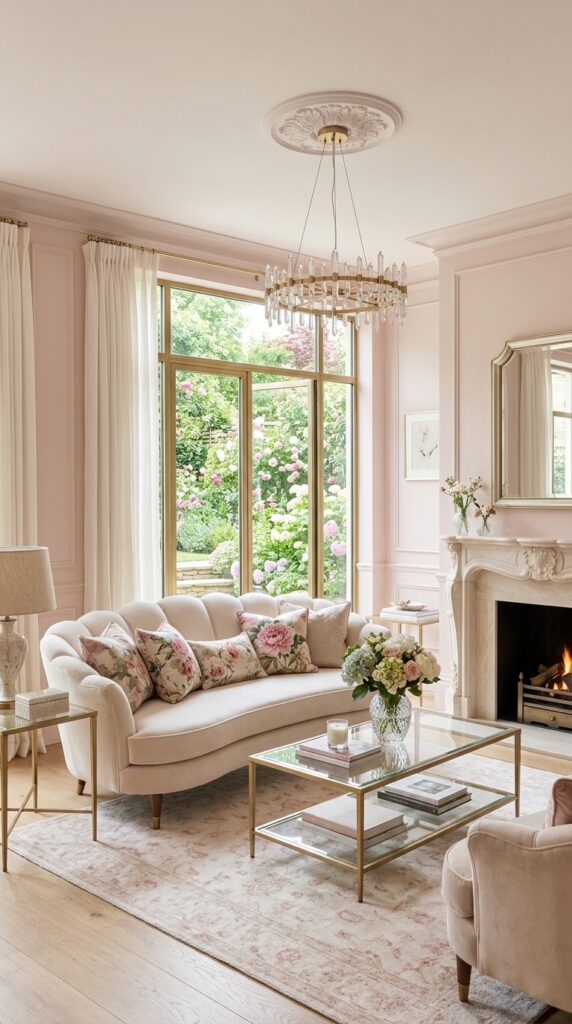
A feminine luxury room can feel graceful and sophisticated without becoming overly sweet.
Use blush in muted tones and combine it with cream, taupe, champagne brass, and pale stone. Keep the main furniture clean and modern.
Floral patterns should appear in small, controlled amounts.
Refined feminine details:
- Dusty blush
- Champagne metal
- Curved furniture
- Pale marble
- Delicate lighting
- Soft floral textiles
23. Fireplace-Centered Living Room
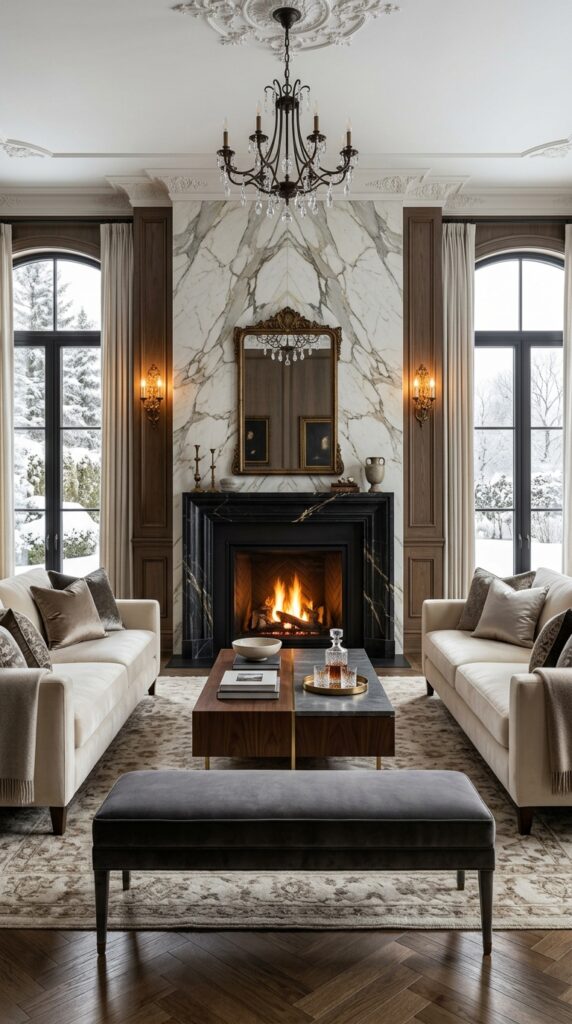
A dramatic fireplace creates a natural focal point and makes the furniture layout easier to organize.
Position seating so the fireplace remains visible from multiple angles. Two facing sofas create a formal conversation area, while lounge chairs can soften the arrangement.
Keep the mantel decor simple if the stone already has dramatic veining.
Fireplace styling ideas:
- Bookmatched marble
- Oversized mirror
- One large artwork
- Matching wall sconces
- Low decorative objects
- Built-in firewood storage
24. Gallery-Inspired Living Room
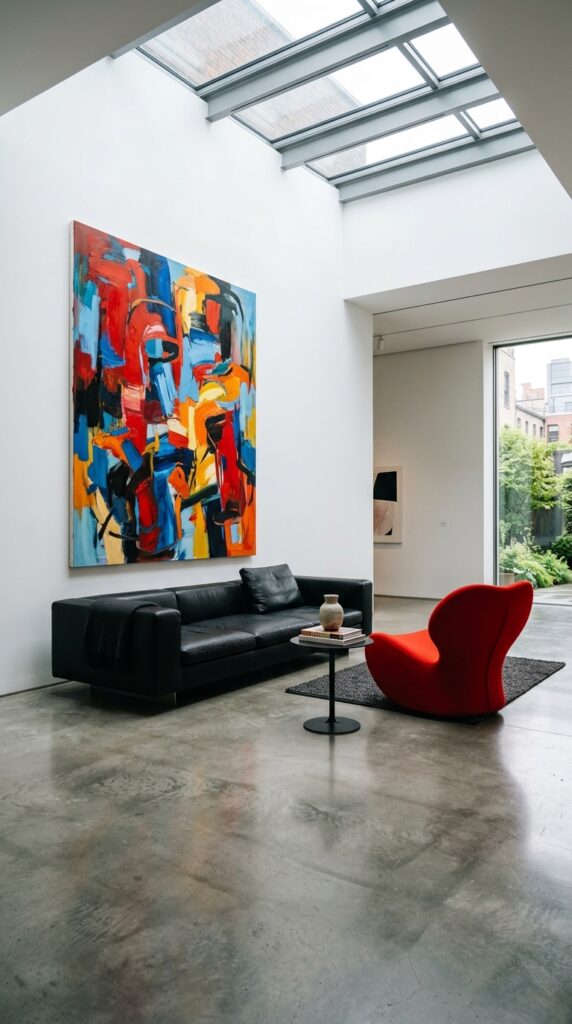
A gallery-inspired living room allows artwork to become the main source of color and personality.
Keep furniture simple and architectural. White walls, clean floors, and controlled lighting help large artwork stand out.
Avoid adding too many small accessories around the art.
Gallery-style guidelines:
- Use oversized art
- Keep frames consistent
- Leave breathing room around pieces
- Choose sculptural furniture
- Use directional lighting
- Limit tabletop decor
25. Indoor-Outdoor Luxury Living Room
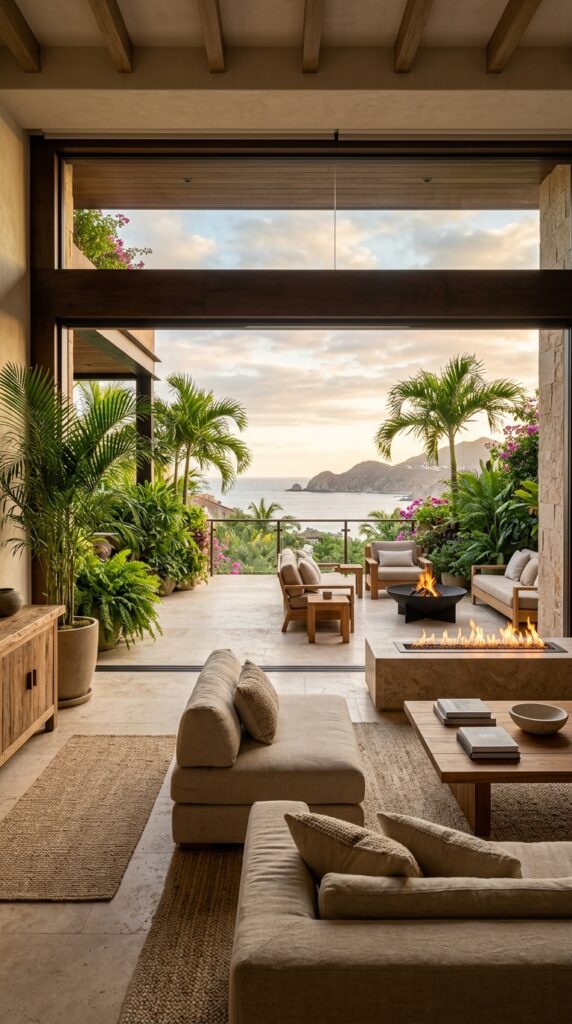
An indoor-outdoor living room feels luxurious because it expands the usable space and connects the home to the landscape.
Use continuous flooring, matching materials, and furniture colors that work both inside and outside. Large sliding or folding doors make the transition feel seamless.
Choose durable textiles that still look refined.
Indoor-outdoor design ideas:
- Continuous stone flooring
- Sliding glass walls
- Teak or stone furniture
- Performance fabrics
- Coordinated indoor and outdoor rugs
- Layered landscape lighting
Luxury Living Room Design Checklist
Use this checklist when planning your space:
- Choose a clear design direction
- Build a cohesive color palette
- Measure the room before buying furniture
- Select a sofa with the correct scale
- Use a large enough area rug
- Create a strong focal point
- Add layered lighting
- Install curtains high and wide
- Mix smooth and textured materials
- Include natural stone or quality wood
- Use a few large decor pieces
- Add artwork that suits the wall size
- Keep pathways clear
- Hide cables and visual clutter
- Include comfortable seating
- Add one sculptural element
- Use plants or fresh branches
- Balance dark and light materials
- Leave some surfaces partially empty
- Prioritize comfort as much as appearance
Common Luxury Living Room Mistakes to Avoid
A room does not look luxurious simply because it contains many decorative items.
Avoid these common mistakes:
- Buying furniture that is too small for the room
- Using a rug that does not reach the seating
- Matching every piece exactly
- Overusing gold or mirrored finishes
- Hanging curtains directly above the window
- Using only one overhead light
- Filling every table with accessories
- Choosing style over comfort
- Blocking natural light
- Using too many competing materials
- Hanging undersized artwork
- Ignoring storage and cable management
Luxury often comes from restraint. A few well-chosen pieces usually create more impact than a room filled with small decorations.
Final Thoughts
The best luxury living room designs feel beautiful, comfortable, and personal.
You can create a luxurious room with quiet neutrals, rich jewel tones, dark wood, marble, coastal textures, organic materials, or dramatic architectural details. There is no single luxury style that works for every home.
Choose a design direction that suits the architecture of your room and the way you actually live.
Focus on proportion, lighting, texture, materials, and comfort. When those elements work together, even a simple living room can feel polished, timeless, and deeply inviting.