 Uma
Uma Quick Answer
The best small apartment living room ideas work by doing three things at once: making the room feel taller, keeping the floor visually clear, and giving every piece of furniture more than one job. From floating your sofa off the wall to choosing storage that disappears, these 20 ideas transform even the smallest living room into a space that feels intentional and livable.
A small living room does not have to feel like a waiting room. The difference between a cramped space and a cozy one is almost never square footage — it is how the furniture is arranged, how the light moves through the room, and how much visual noise the space carries. Get those three things right and the room changes completely.
These 20 small apartment living room ideas focus on changes that actually work in real apartments, not just staged photos. Some take an afternoon. Some take five minutes. All of them make the room feel bigger, more designed, and easier to live in.
Furniture Layout
1. Float Your Sofa Away from Every Wall
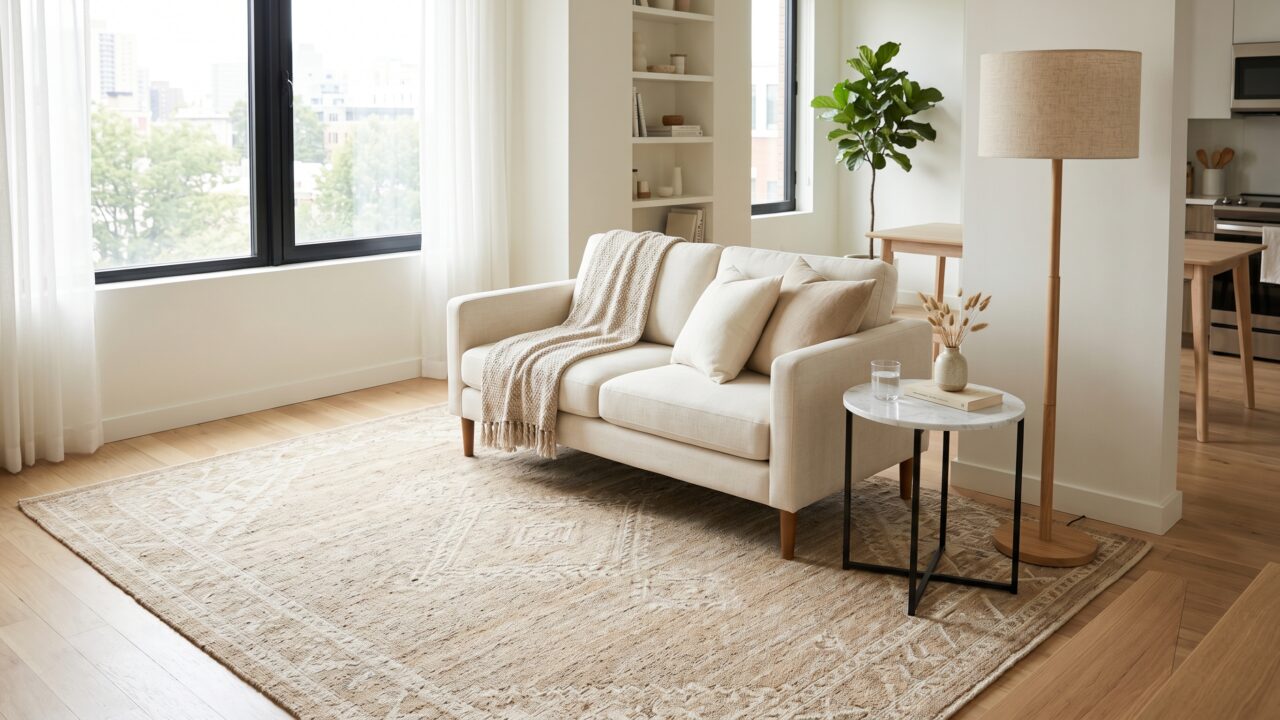
The most common small living room mistake is pushing every piece of furniture flat against the walls to clear the center. It does the opposite of what you want — the room ends up looking ringed out and the center feels like dead space. Pull your sofa six to twelve inches away from the wall behind it. The gap creates visual breathing room and makes the room read as intentional rather than crammed.
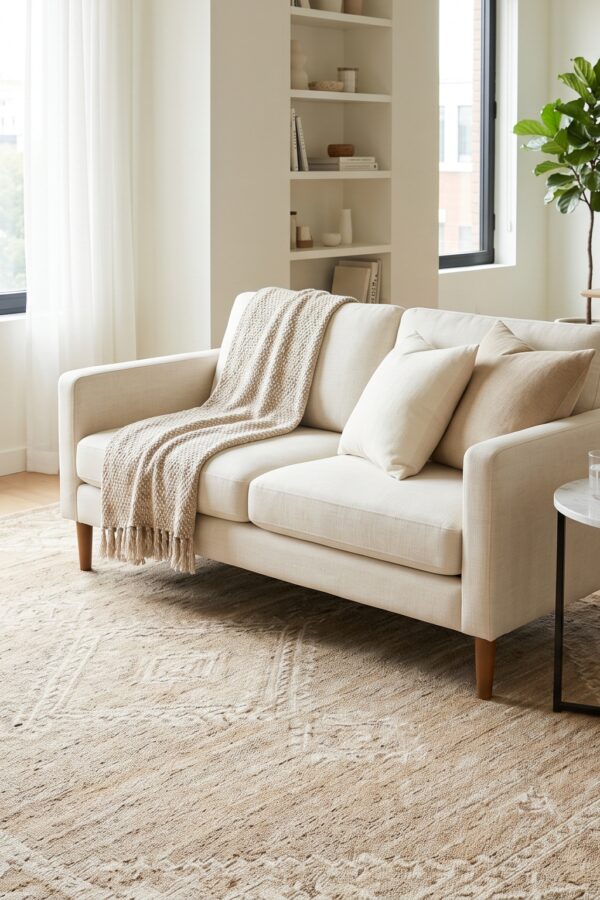
Pair this with a large enough area rug so the front legs of the sofa sit on it. This anchors the floating arrangement and defines the living zone without needing walls to do it.
2. Choose a Loveseat If Your Room Is Under 250 Square Feet
A standard three-seat sofa in a genuinely small living room eats the entire space. A loveseat or a two-and-a-half seat sofa gives you most of the seating in much less footprint and leaves enough room for an accent chair, which means you actually get more flexible seating, not less. Two separate pieces also create a more conversational layout than one oversized sofa alone.
3. Mount the TV on the Wall and Eliminate the Media Console
A TV stand or media console in a small living room takes up a disproportionate amount of floor space and wall length. Mounting the TV at the right eye-level height frees the entire surface and floor below it. Use a wall-mounted floating shelf below the screen for the essentials — cable box, a small plant, one or two books — and keep it narrow.
The wall below a mounted TV is also a prime spot for a slim console table that doubles as storage and a display surface without occupying the visual weight of a full media unit.
4. Use a Round Coffee Table to Improve Traffic Flow
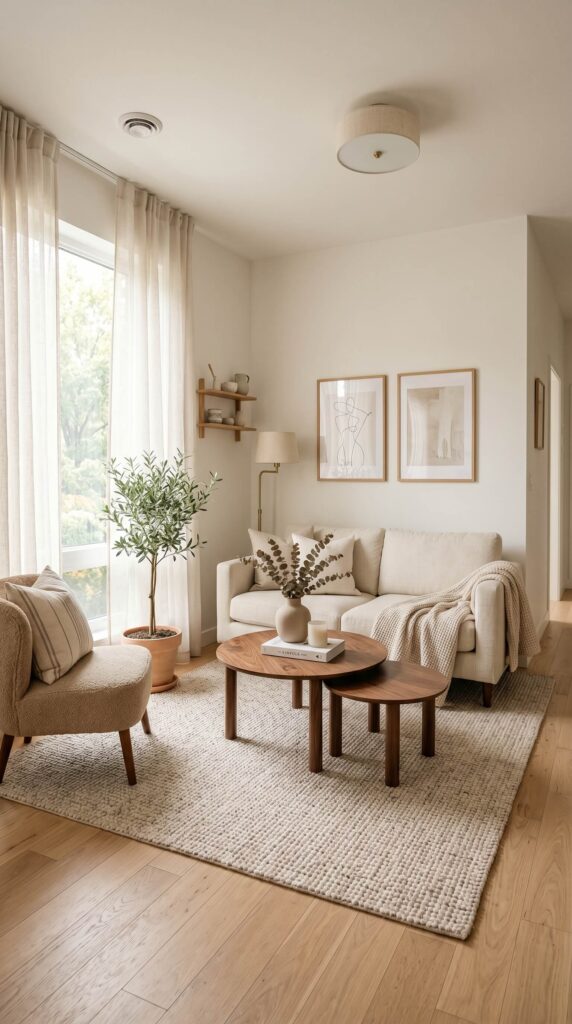
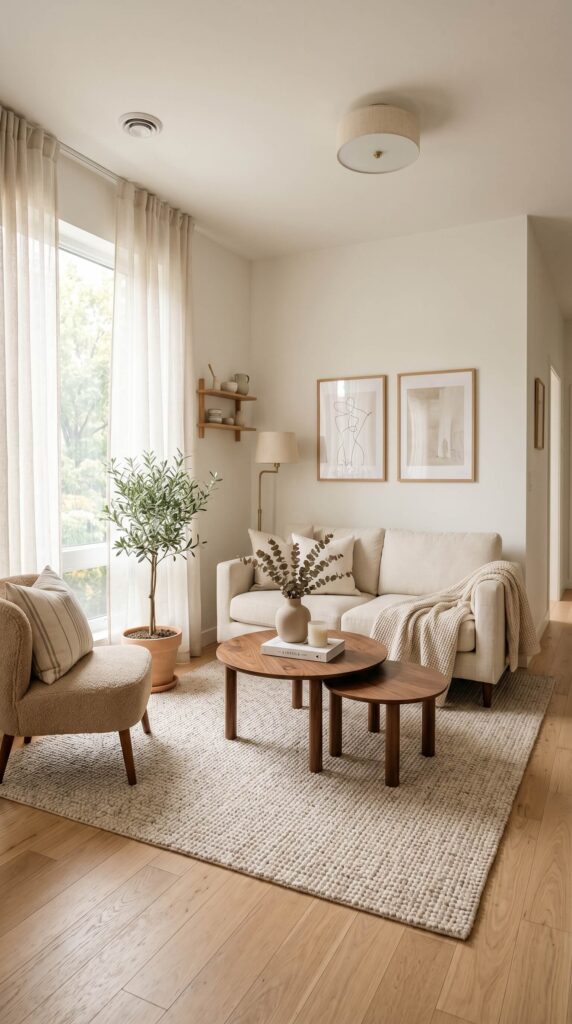
Square and rectangular coffee tables have corners that catch you every time you walk past them in a tight room. Round tables eliminate that problem entirely and make the layout feel more relaxed and open. A round table in the same size footprint as a rectangular one reads as smaller because the eye takes a smooth path around it rather than clocking sharp edges.
💡 Quick Tip: Nesting tables instead of a fixed coffee table give you surface space on demand and full floor space when you do not need it.
Light and Color
5. Hang Curtains at Ceiling Height, Not Window Frame Height
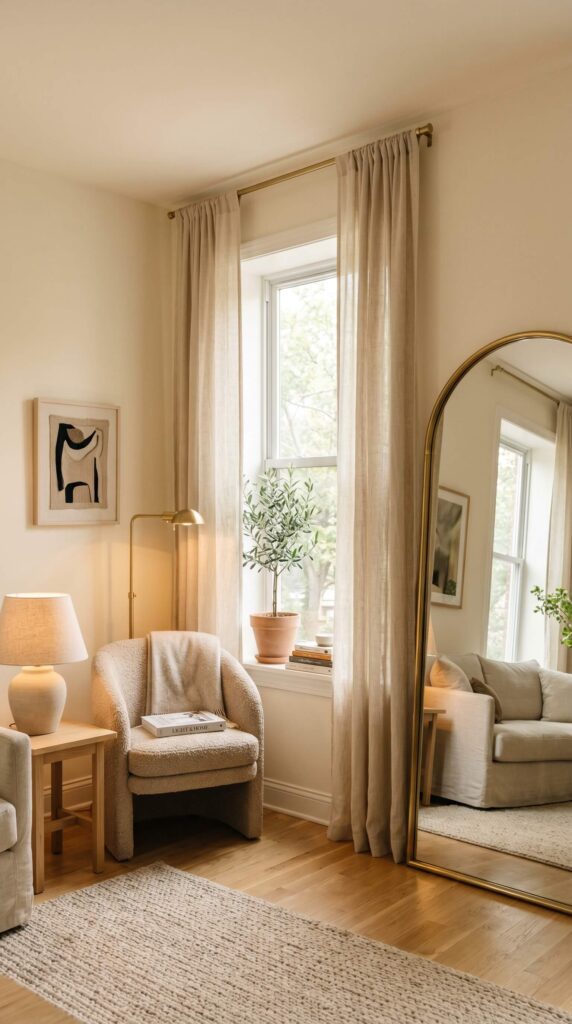
Where you mount the curtain rod changes the entire room. Install it as close to the ceiling as possible and let the fabric fall to the floor. The vertical line draws the eye upward and makes the ceiling feel taller. Even in a room with small windows, long ceiling-height curtains make the wall read as a dramatic surface rather than a wall with a small hole in it.
6. Paint the Ceiling the Same Color as the Walls
A white ceiling against a painted or darker wall creates a horizontal cap that makes rooms feel boxed in. Painting the ceiling the same warm neutral as the walls removes that visual boundary entirely. The room feels like a continuous envelope and the eye stops registering where the walls end. Warm off-whites and creamy tones work best for small spaces.
7. Add a Large Mirror Opposite or Adjacent to the Main Window
One large mirror placed opposite or at an angle to the main light source bounces daylight across the room and creates a doubled sense of depth. It is more effective than any amount of artificial lighting at making a small room feel larger. Go for one large statement mirror rather than several small decorative ones — a single piece reads as architectural rather than as decor.
8. Build Three Layers of Lighting Instead of Relying on the Overhead
Overhead lighting illuminates everything uniformly and makes every corner and wall equally obvious. Layered lighting — a tall floor lamp as the main source, a small table lamp on a side table, and accent lighting on a shelf — creates pools of warmth that suggest depth and draw the eye through the room. The ceiling fixture should be the last thing you turn on, not the first.
Smart Storage
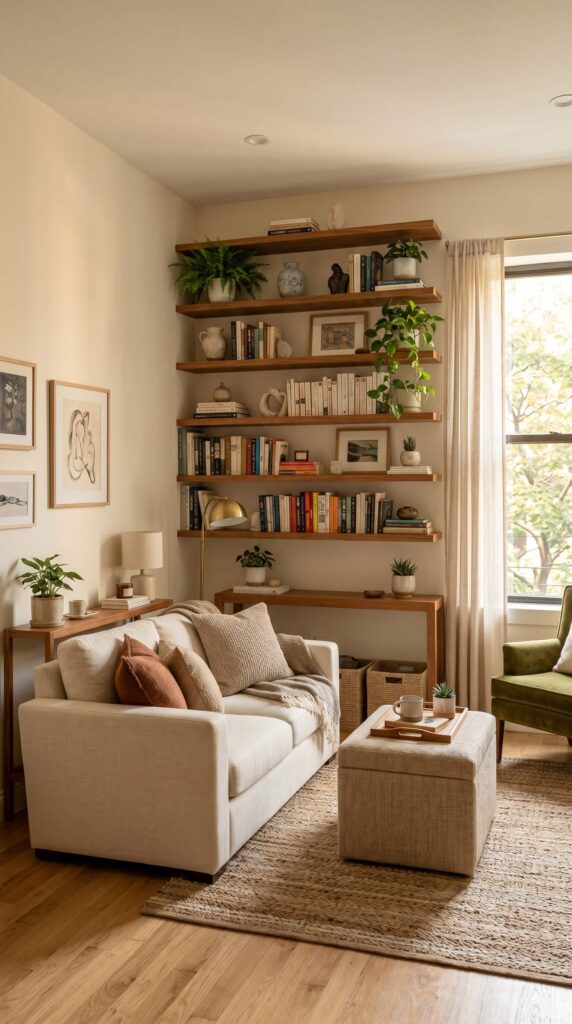
9. Line One Full Wall with Floor-to-Ceiling Floating Shelves
A complete wall of floating shelves creates a built-in library look at a fraction of the cost of actual built-ins and adds storage that uses zero floor space. Style the top shelves with objects you access rarely, the middle with books and plants, and the lower shelves with baskets that hide everyday clutter. The wall becomes the focal point of the room rather than a blank surface.
10. Replace Your Coffee Table with a Storage Ottoman
A storage ottoman does four things a coffee table does not: it holds things inside it, it provides extra seating for guests, it works as a footrest, and with a tray on top it functions exactly like a coffee table surface. In a small living room, any piece that does only one job is a luxury you probably cannot afford. A storage ottoman earns its footprint four times over.
11. Add a Slim Console Behind the Sofa
A console table positioned directly behind the sofa adds a full layer of display and function in the same footprint as the sofa. Use it for a lamp, a few books, a small vase, and whatever you actually use daily. Keep the depth under 14 inches so it does not push the sofa too far into the room. It looks designed and creates a visual backdrop that makes the seating area feel more anchored.
12. Use Baskets on Lower Shelves to Hide Everyday Clutter
The fastest way to make a small living room feel cluttered is to leave flat-surface items visible with nowhere to go. Large woven baskets on the lower shelves of a bookcase or floating shelf unit give all of those things a home that looks intentional from across the room. Label the baskets if you need to find things quickly.
Decor and Styling
13. Use One Large Piece of Wall Art Instead of Many Small Ones
A single large artwork above the sofa anchors the room and reads as a design decision. Multiple small prints scattered across a wall read as an unfinished collection. The large piece creates one strong focal moment; the small cluster creates visual noise. If you want a gallery wall, commit to it with matching frames in a tight arrangement. If you want simplicity, go for one oversized print that fills the wall confidently.
14. Commit to One Statement Plant Per Room
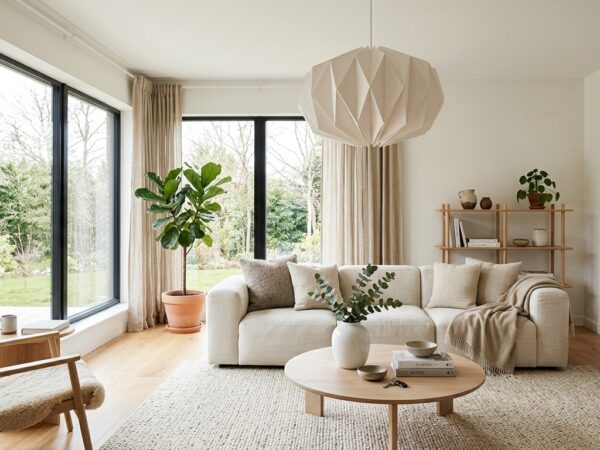
One tall, architectural plant in a corner draws the eye upward and softens the room’s hard lines in a way no decorative object can replicate. A fiddle leaf fig, a tall monstera, or a bird of paradise at full height becomes a vertical design element that anchors the corner and gives the room a sense of life. Resist the temptation to add multiple smaller plants across the room — it reads as collection, not design.
15. Apply the One-Tray Rule to Every Flat Surface
Every coffee table, side table, and console should have one tray. Everything you put on that surface lives inside the tray. This does two things: it groups objects so they read as one composed vignette rather than several loose items, and it creates a boundary that prevents flat surfaces from slowly accumulating clutter.
16. Keep Your Color Palette to Three Colors Maximum
A small living room with too many colors and patterns reads as chaotic regardless of how tidy it is. Choose a dominant neutral for the large pieces, a secondary neutral for textiles and cushions, and one accent color that shows up in small doses — a throw, a vase, a lampshade. Three colors, used consistently, make a small room feel curated.
Renter-Friendly Upgrades
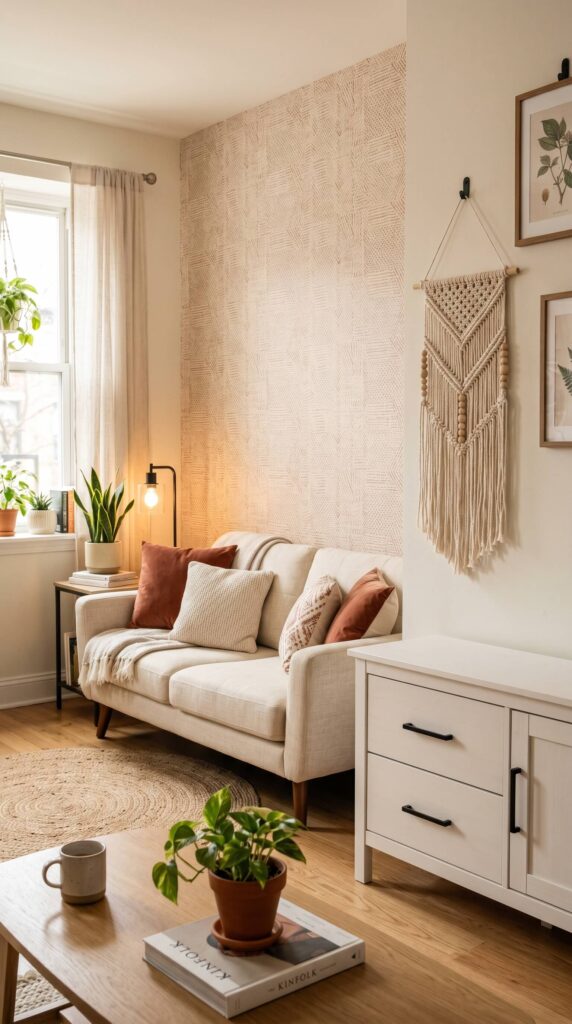
17. Use Peel-and-Stick Wallpaper on the Wall Behind the Sofa
One accent wall behind the sofa transforms a rental living room without touching the original paint. Modern peel-and-stick wallpaper in a subtle texture, geometric, or botanical pattern changes the entire character of the room. Choose a pattern with a warm, neutral base tone so the wall complements rather than competes with the furniture. Remove it slowly with a hair dryer when you move out and it leaves no damage behind.
18. Swap the Pendant or Ceiling Light Fixture for Something Better
Builder-grade ceiling fixtures in rental apartments are almost universally ugly. Most light fixtures can be unscrewed and replaced in under thirty minutes if you cap the wires safely and store the original to reinstall later. A rattan pendant, a simple linen shade, or a brushed brass flush mount costs under fifty dollars and immediately upgrades the room’s ceiling plane.
19. Use Command Hook Shelves for Lightweight Display
Removable adhesive shelves rated for five to ten pounds hold small plants, framed photos, candles, and lightweight books without a single hole in the wall. In a small living room, a row of three or four small floating shelves on a blank wall adds display space and makes the room feel more layered and finished.
20. Add a Full-Length Mirror That Leans Instead of Hangs
A large leaning mirror against the wall requires no installation, no holes, and no landlord permission. It does everything a wall-mounted mirror does — bounces light, creates depth, makes the room feel larger — with zero commitment. Lean it against the longest blank wall or position it to face the main window.
Key Takeaways
- Float furniture 6–12 inches from walls to create breathing room and visual depth
- Hang curtains at ceiling height, not window frame height
- Match wall and ceiling color to remove the visual boundary between them
- One large mirror opposite the main light source doubles perceived depth
- Replace the coffee table with a storage ottoman — four functions, same footprint
- Floor-to-ceiling shelves on one wall add storage without touching the floor plan
- One large artwork, one statement plant, one tray per surface — simplicity reads as design
- Three colors maximum across all furniture, textiles, and accents
Frequently Asked Questions
How do you make a small apartment living room look bigger?
The three highest-impact changes are ceiling-height curtains, a large mirror opposite the main light source, and matching the ceiling color to the wall color. Together these three visual tricks change how the room reads in under a weekend and cost far less than any furniture purchase.
What furniture works best in a small apartment living room?
Furniture with exposed legs, pieces that serve multiple functions, and anything transparent or light in color. A loveseat instead of a full sofa, nesting tables instead of a fixed coffee table, a storage ottoman, and a slim console behind the sofa will give you a fully functional living room in a tight footprint without any piece feeling like it does not belong.
How do you arrange furniture in a small living room?
Pull the main sofa away from the wall, anchor the seating group with a large area rug, and create at least one clear sightline that travels the full length of the room. Mount the TV to free up the floor below it. Keep traffic paths at least 24 inches wide. Test layouts on paper first — cut out scaled furniture shapes and move them around on a sketched floor plan before moving anything heavy.
What color should I paint a small living room?
Warm off-whites and creamy neutrals make small rooms feel the most spacious while staying livable and cozy. Apply the same color to both the walls and the ceiling to remove the visual cap that makes rooms feel boxed in. Avoid stark cool whites — they read as clinical and make the boundaries of a small room more obvious, not less.