 Uma
Uma Quick Answer
Rental-friendly apartment decor focuses on changes that require no permanent modification: peel-and-stick wallpaper, plug-in lighting, swappable hardware stored with originals, removable adhesive products, freestanding furniture, and area rugs over existing floors. These 20 ideas make a rental apartment look and feel designed without a single nail hole, paint drip, or landlord conversation.
Renting does not mean settling for builder-grade beige and a furniture arrangement that happened when the movers left. Almost every design element that makes an apartment feel like a home can be achieved without any permanent modification — you just need to know which products work and which techniques are reliable.
These 20 rental-friendly decor ideas are organized by category and every single one can be completely reversed when you move out. No holes, no paint damage, no deposits at risk. All of them make a visible, immediate difference in how the apartment reads.
Walls Without Holes
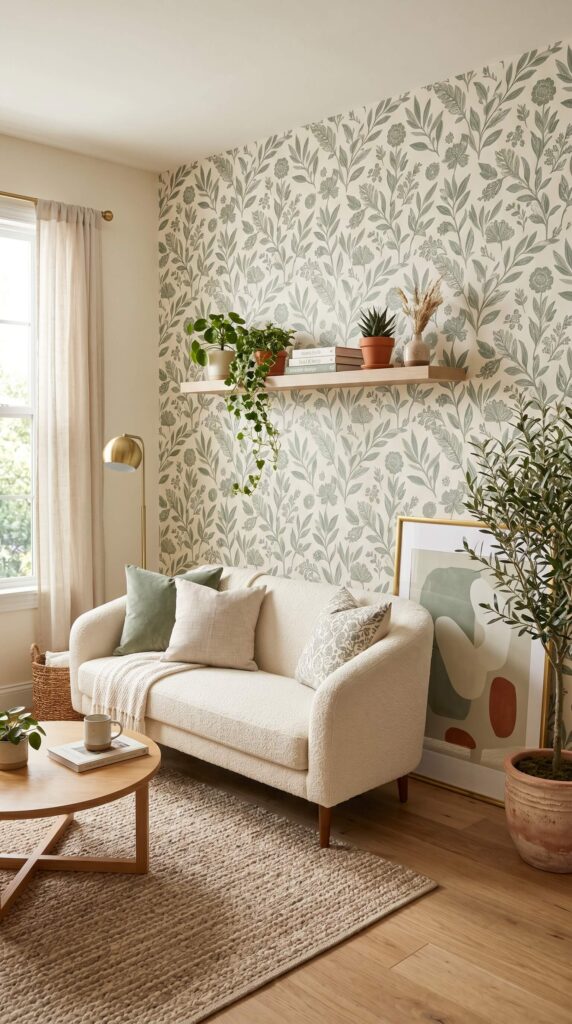
1. Use Peel-and-Stick Wallpaper on the Most Visible Wall in Each Room
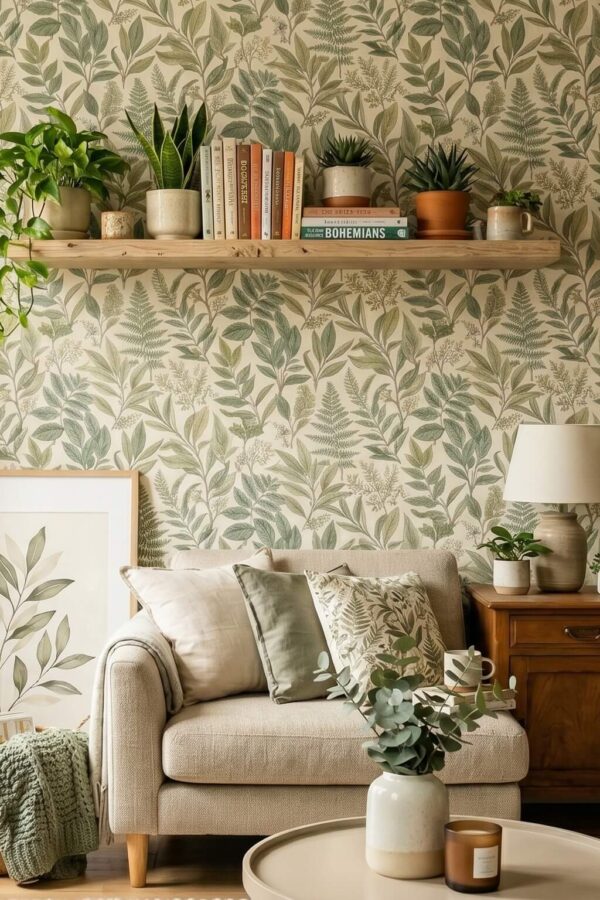
Modern peel-and-stick wallpaper has improved dramatically and the best versions are genuinely indistinguishable from traditional wallpaper at normal viewing distance. Apply it to one accent wall per room — the wall behind the sofa in the living room, the wall behind the headboard in the bedroom, the small section above the sink in the bathroom. One wall changes the entire character of the room. A full-room application is possible but one wall per room gives you 80 percent of the visual impact at 25 percent of the effort and cost.
The key for damage-free removal: remove it slowly, pulling at a 45-degree angle close to the wall surface rather than pulling straight out. Apply a hair dryer to warm the adhesive if it resists. Test a corner first in an inconspicuous spot to confirm the adhesive will not pull the paint off your specific wall type before committing to a full accent wall.
2. Use Command Picture-Hanging Strips for All Art and Mirrors
Command adhesive strips rated for the weight of your artwork hold reliably on painted drywall, plaster, and most smooth surfaces and remove cleanly by stretching the tab straight down the wall. They hold frames up to 20 pounds if you use multiple pairs and follow the manufacturer’s weight recommendations exactly. Gallery walls, single large frames, and even small floating shelves (purpose-built for Command mounting) can all be installed and removed without a single hole in the wall.
The most common failure with Command strips is not following the bonding time instructions. After applying the strip, press the item firmly against the wall for 30 seconds, then leave it alone for one hour before hanging anything. Skipping the bonding time is the reason most Command strip failures happen.
3. Lean Art and Mirrors Against the Wall Instead of Hanging
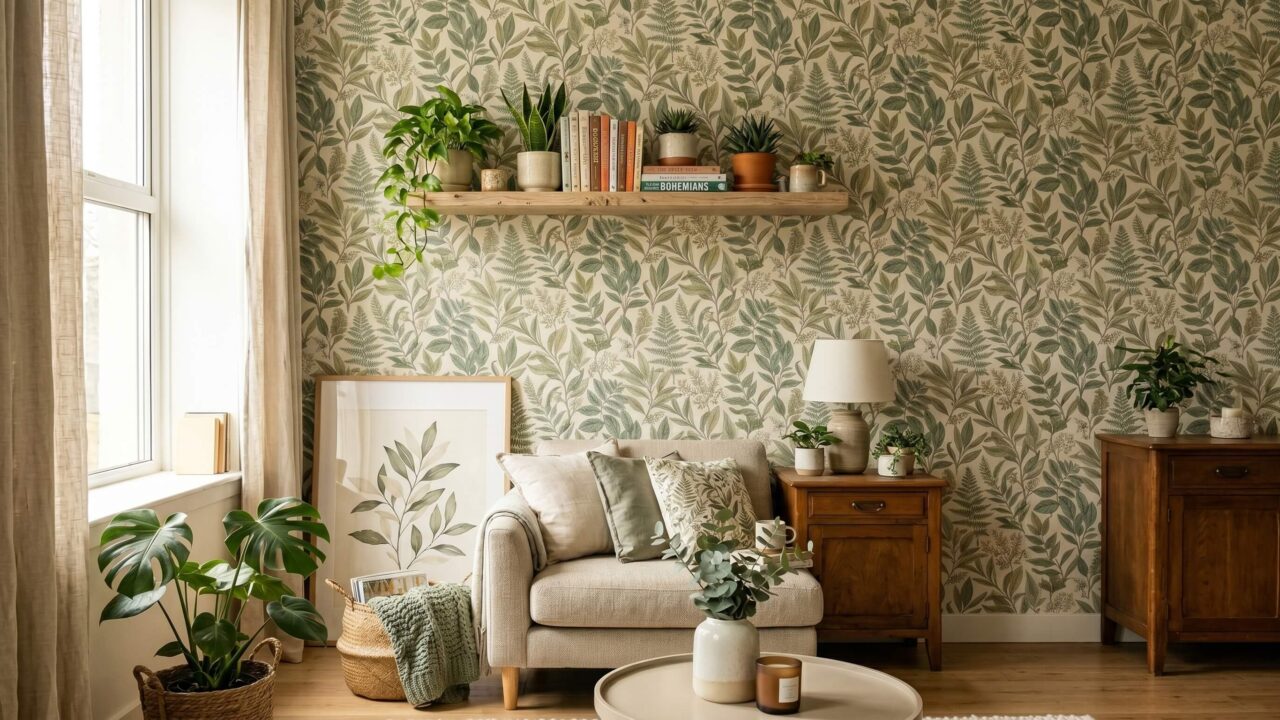
Leaning large frames, canvases, and mirrors against the wall is increasingly recognized as a legitimate design choice rather than a temporary measure. It reads as confidence and curated rather than provisional. A large leaned canvas in a corner, a leaned mirror against the main living room wall, a leaned framed print above the fireplace shelf — all of these look designed and require zero installation. Layer two or three leaned pieces at different scales for a composed vignette that looks genuinely considered.
4. Use Removable Fabric Wall Hangings for Soft Texture and Color
Woven wall hangings, tapestries, and fabric panels in natural materials — linen, cotton, jute — add texture and warmth to a rental wall with a single adhesive hook or a lightweight tension rod across the width. They are significantly easier to hang than framed art, completely damage-free, and add the kind of organic softness that painted walls cannot provide. A large natural fiber hanging above the sofa or bed becomes the room’s focal point and entirely defines its character.
Lighting Without Hardwiring
5. Use Plug-In Pendant Lights with Cord Covers
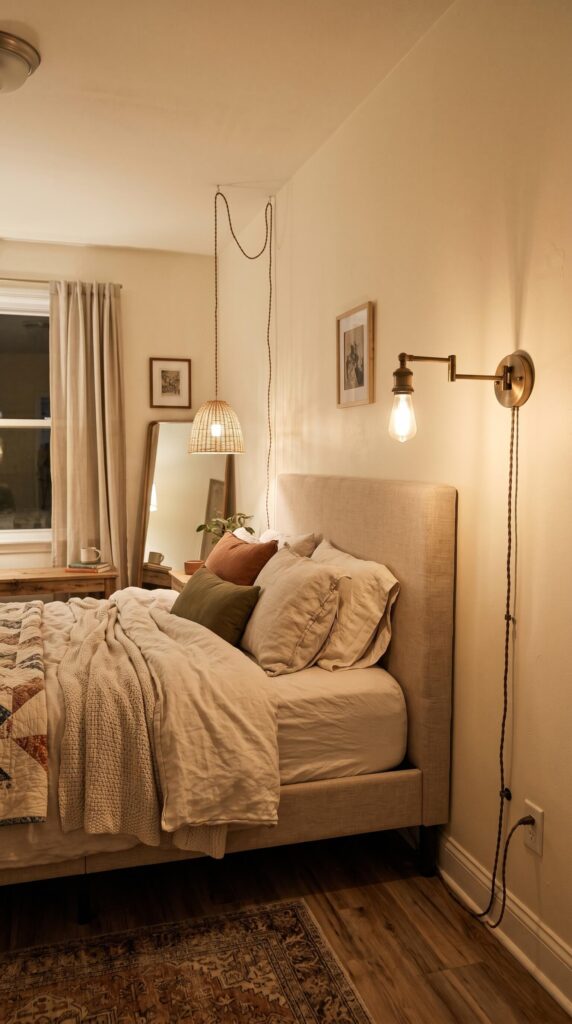
Plug-in pendant lights hang from a ceiling hook (installed with a removable adhesive ceiling hook rated for the weight) and the cord runs along the wall to an outlet, concealed in a paintable plastic cord cover that is attached with adhesive strips. The result looks nearly identical to a hardwired pendant from any normal viewing distance. This is the single most impactful lighting upgrade in a rental apartment because it replaces the one fixture everyone sees most — the ceiling pendant — without touching any wiring.
6. Install Plug-In Sconces on Both Sides of the Bed
Plug-in swing-arm sconces on either side of the headboard eliminate the need for bedside table lamps, free the entire nightstand surface, and create the kind of reading light that makes a bedroom feel like a hotel suite. Run the cord along the baseboard to the nearest outlet using adhesive cord clips. The cord is visible but reads as intentional when it runs neatly along the wall edge rather than dangling freely. This is one of the most reliable and reversible lighting upgrades in any rental bedroom.
7. Use Battery-Powered Lights Everywhere Wiring Cannot Go
Rechargeable battery-powered LED puck lights, strip lights, and push lights have become reliable enough for everyday use. Under kitchen cabinets with no outlets nearby, inside deep wardrobes, above a bathroom mirror where no vanity light exists — battery-powered lights solve all of these with no installation beyond an adhesive backing. Choose warm white versions at 2700K and place them strategically. A rechargeable version charged once a month is more convenient than a wired version in a rental context.
8. Add Smart Plug Dimmers to Every Lamp You Own
A smart plug with a dimmer function screwed into any standard outlet turns any floor or table lamp into a dimmable, remotely controllable light source for about fifteen dollars. No electrical work, no landlord permission, no installation. The ability to dim every lamp in the apartment from full brightness down to ten percent changes how every room reads and feels at night. Combine with warm 2700K bulbs and the apartment becomes dramatically more livable and atmospheric at zero cost beyond the plug adapters.
Hardware and Fixture Swaps
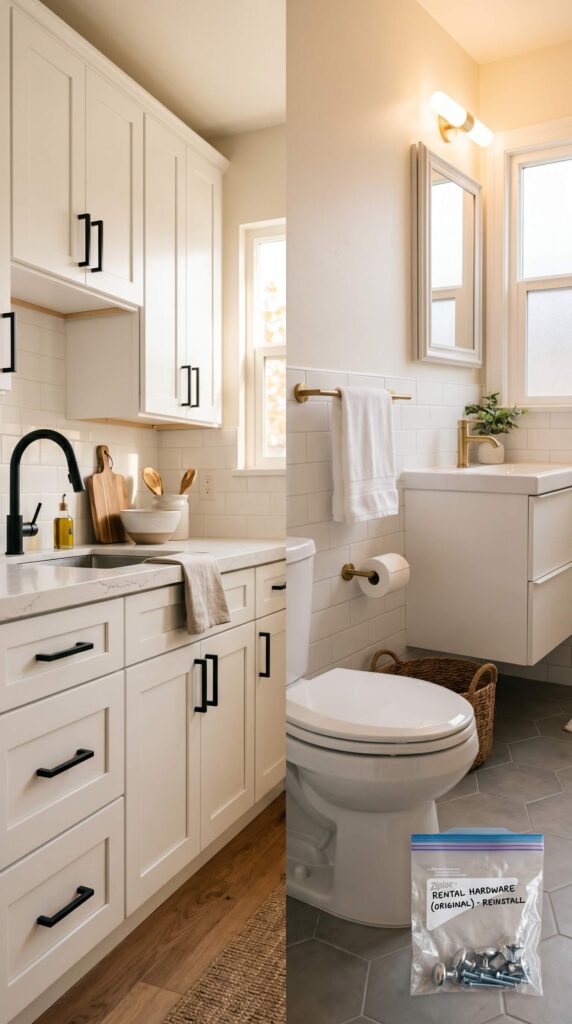
9. Swap Cabinet Hardware Across the Entire Apartment in One Session
Every cabinet pull, drawer handle, towel bar, toilet paper holder, and door knob in a rental apartment can be removed with a screwdriver and replaced in an afternoon. Keep every original in a labeled zip-lock bag stored somewhere accessible. Replace with matte black, brushed brass, or brushed nickel equivalents that match across the kitchen and both bathrooms for a unified, renovated look. The entire apartment looks different and more considered after this one session, which typically costs under a hundred dollars total.
10. Replace the Toilet Seat for an Immediate Bathroom Upgrade
The rental toilet seat is almost always the cheapest available and it shows. A quality slow-close toilet seat in white or soft grey replaces in ten minutes with a screwdriver. Store the original to reinstall when you leave. The difference in quality is noticeable every time you use the bathroom — it is one of the few home improvements that has a daily physical impact rather than a purely visual one. Soft-close seats that do not slam are available for under thirty dollars and last for years.
11. Replace the Showerhead — It Unscrews in Two Minutes
Most rental showerheads are low-flow and mediocre. A quality rainfall or adjustable showerhead unscrews from the shower arm in about two minutes with a wrench and a cloth to protect the finish, and reinstalls with plumber’s tape in another two minutes. No tools beyond a wrench, no plumber, no landlord permission required in most leases since no permanent modification is made. Keep the original showerhead in the box the replacement came in and store it somewhere accessible for move-out.
12. Use the Shower Curtain as the Main Bathroom Design Element
In a rental bathroom where the tile and fixtures are fixed, the shower curtain is the largest single design variable available. A linen-look curtain in warm cream or ivory makes the bathroom feel spa-like and elevated. A bold patterned curtain becomes the room’s focal point. A simple waffle-weave white cotton curtain reads as clean, minimal, and intentional. Change it when the season or your taste changes — it costs under thirty dollars and requires no installation beyond the existing rod.
Floors and Windows
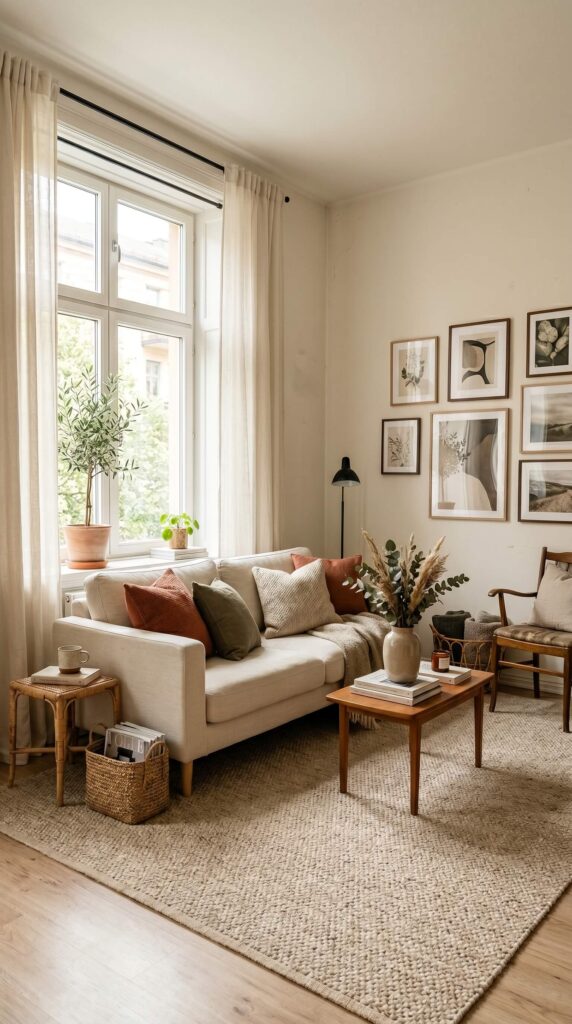
13. Use Area Rugs to Completely Cover Unappealing Rental Flooring
Rental laminate, cheap carpet, or dated linoleum can be covered entirely by the right area rug. A large rug in the living room that extends under most of the furniture, a runner in the hallway, a bath mat and wooden bath board in the bathroom, and a kitchen runner beside the stove and sink — together these cover most of the floor space in the apartment without touching the underlying material. The rental flooring disappears visually and the apartment reads as having the floor you chose.
14. Use Tension Rods Inside the Window Frame for Curtains Without Hardware
A spring tension rod installed inside the window frame — from jamb to jamb — holds curtain panels without any wall brackets, screws, or holes. This is the completely tool-free window treatment solution. The tension rod sits invisibly behind the curtain fabric and holds reliably for light to medium-weight panels. For heavier panels or curtains hung at ceiling height, use adhesive ceiling hooks rated for the curtain rod weight — these remove cleanly from most ceiling surfaces when the time comes.
Making It Feel Like Home
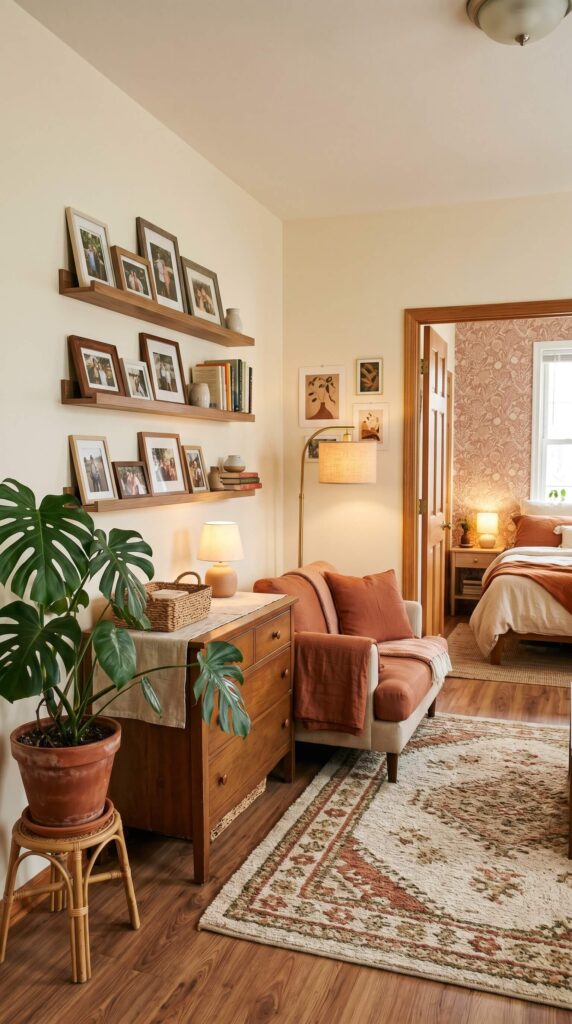
15. Use Freestanding Furniture Everywhere Possible
In a rental, freestanding furniture is always preferable to installed furniture because it moves with you when you leave. A freestanding wardrobe in place of a built-in, a freestanding ladder shelf in place of floating shelves, a freestanding kitchen island in place of a permanent island. Freestanding pieces let you create the storage system you need without asking permission and take everything you invested in the design with you when you move.
16. Add Plants as Living Decor That Travels With You
A well-established plant collection is one of the most valuable assets a renter can build because it improves every apartment it lives in and moves with you at the cost of a box and some wrapping. A large fiddle leaf fig, a mature monstera, and a collection of trailing plants can transform any rental from a transitional space into a genuine home. Plants also do something no landlord-approved decor can — they show that the space has been actively cared for and lived in.
17. Display Personal Photos Using a Picture Ledge or Rail
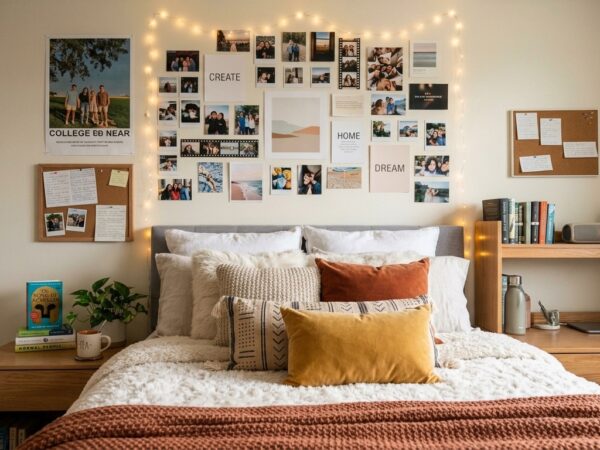
A picture ledge — a slim wall-mounted shelf specifically designed for leaning framed photos — mounted with adhesive strips holds a rotating gallery of personal photos that changes as your life does. Unlike a fixed gallery wall, a picture ledge allows you to swap, add, and rearrange without touching the wall every time. Use frames in matching colors for a cohesive look. A wire photo rail with clips is the other alternative — mounted with two adhesive hooks, it holds multiple photos on clips and requires zero holes.
18. Use Scent as a Consistent Part of the Space’s Identity
A candle, diffuser, or linen spray with a consistent scent creates a sensory layer to the home experience that visual decor alone cannot replicate. A room that smells of warm cedar, linen, or white tea reads as cared for and personal in a way that a room with identical visual decor but no scent does not. Choose one signature scent for the main living area and keep it consistent. Scent memory is powerful — a space that has its own consistent scent will always feel more like home than a visually decorated space with no olfactory personality.
19. Tape the Outline of Artwork and Furniture on the Floor Before Buying
In a rental where you want to be confident before making any purchase, use painter’s tape to outline the footprint of any furniture piece or the dimensions of any artwork on the floor or wall before buying. Tape cannot be seen in photos, it removes without damage, and it lets you confirm scale in the actual space under actual conditions. This is especially valuable for large-format art purchases and for furniture pieces where a few inches either way makes the difference between feeling right and feeling wrong.
20. Keep an Originals Box — Every Swapped Item Goes In It
The most important rental-friendly habit is one box labeled ‘originals’ stored in a closet or under a bed. Every time you swap a fixture — a ceiling light, a cabinet handle, a towel bar, a shower head, a toilet seat — the original goes in the originals box in a labeled zip-lock bag. When moving out, reinstall everything from this box and the deposit returns in full. This system works only if you are consistent about it from the first swap. Start the box on move-in day and put every original in it the day you replace it.
Key Takeaways
- Peel-and-stick wallpaper on one accent wall per room — remove slowly at 45 degrees with a hair dryer
- Command picture strips for all art — follow bonding time instructions exactly or they fail
- Leaned art and mirrors look designed, not temporary — lean large pieces with confidence
- Plug-in sconces beside the headboard are the most impactful bedroom lighting upgrade available
- Replace every cabinet handle, towel bar, and toilet paper holder — store every original in a labeled bag
- The shower curtain is the main bathroom design variable in a rental — change it deliberately
- One large area rug covers most rental flooring problems visually
- Keep an originals box from move-in day — every swapped item goes in it for move-out reinstallation
Frequently Asked Questions
What rental-friendly changes make the biggest difference?
In order of impact: cabinet hardware swap across the whole apartment, peel-and-stick wallpaper on one wall per room, plug-in pendant light replacing the ceiling fixture, large area rug over the existing flooring, and shower curtain change. Together these five changes transform the apartment’s character completely without a single permanent modification.
Will peel-and-stick wallpaper damage my walls?
On properly primed or semi-gloss painted walls, quality peel-and-stick wallpaper removes cleanly. The risk is on flat or matte paint, old or flaking paint, and wallpapered walls — adhesive can pull the surface layer off these. Test one tile in an inconspicuous spot first. If the test patch removes cleanly after 24 hours, the full application is safe. Apply a hair dryer to warm the adhesive when removing and pull slowly at a 45-degree angle.
What should I do before leaving a rental to get my full deposit back?
Reinstall every original fixture from the originals box: cabinet hardware, ceiling lights, towel bars, toilet seat, shower head. Remove all peel-and-stick wallpaper and adhesive strips carefully. Fill any nail holes with spackle (even Command strips occasionally leave adhesive residue that needs cleaning). Clean thoroughly. Take time-stamped photos of the restored state of every room. A deposit is almost always retained for undisclosed modifications — restoring everything that was changed prevents this.