 Uma
Uma Quick Answer
Cozy small apartment decorating is about warmth, not size. The elements that make a small space feel genuinely cozy are layered warm lighting, natural materials in earthy tones, textiles that invite you to touch them, the living presence of plants, and the scent and sensory layers that make a place feel inhabited rather than just furnished. These 18 ideas create the cozy feeling intentionally rather than accidentally.
Coziness is a quality that a small apartment can have in abundance or not at all, regardless of its square footage. The difference is not the size of the space — it is the warmth of the light, the texture of the materials, the colors on the walls and the furniture, and the organic life in the corners. A small apartment done right feels more cozy than a large one done wrong.
These 18 cozy small apartment decorating ideas focus specifically on creating warmth, softness, and the lived-in quality that makes a space feel genuinely habitable rather than decorated. They draw on Scandinavian hygge principles and the Japandi aesthetic of warmth through restraint — cozy does not mean cluttered, it means intentional.
Warm Lighting
1. Replace Every Bulb with 2700K Warm White and Never Use the Overhead
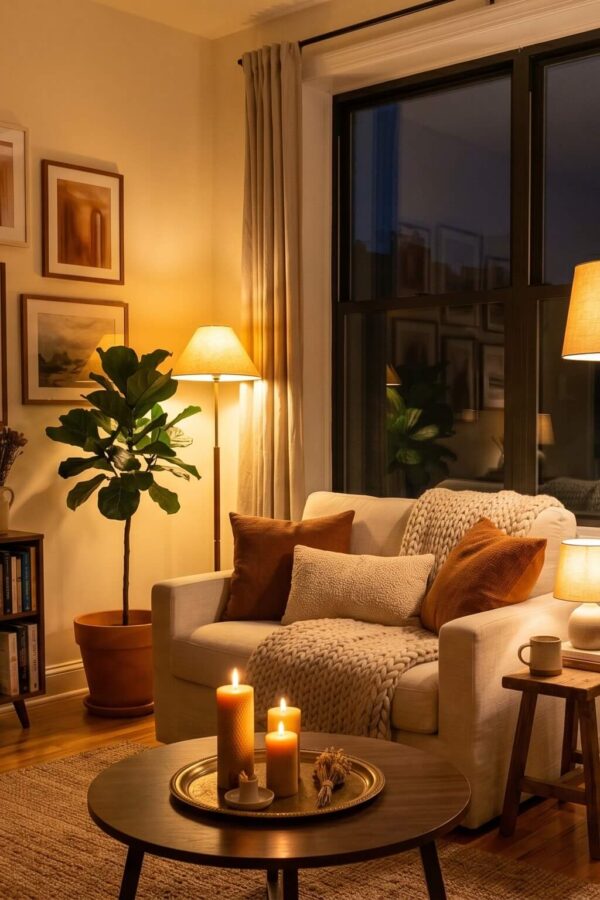
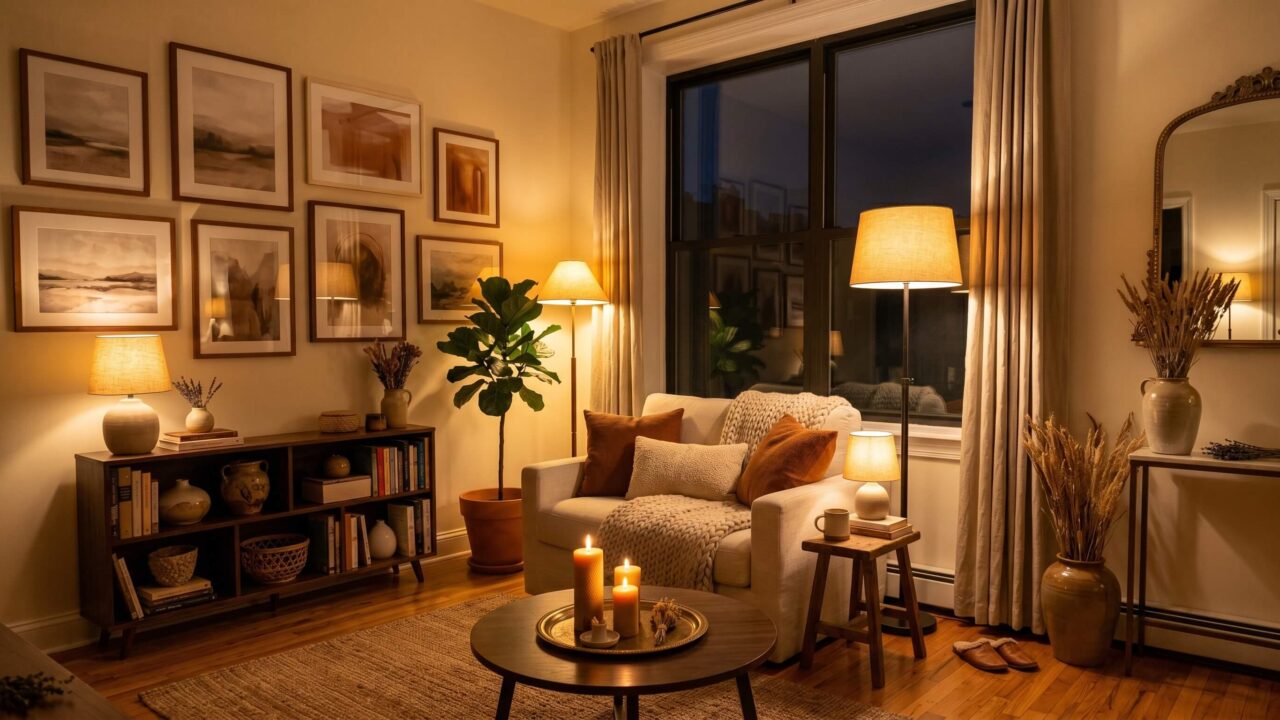
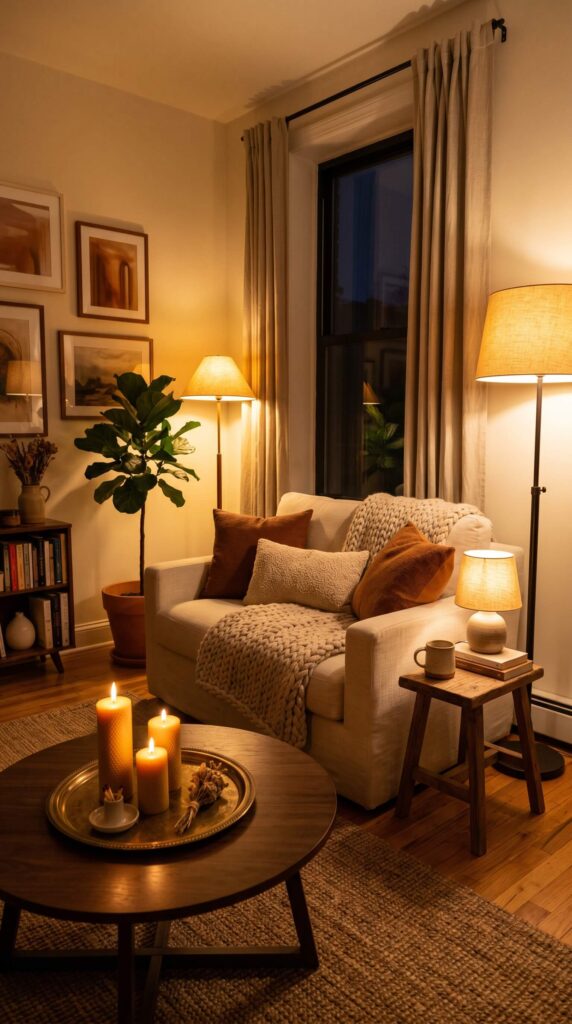
The single most impactful change you can make to create coziness in a small apartment is to replace every bulb throughout with warm white at 2700K and commit to never using the overhead ceiling light as the main light source in the evening. Overhead lighting makes rooms feel interrogated rather than inhabited. Warm lamp light makes the same room feel like the most comfortable place on earth. This change costs under twenty dollars and takes fifteen minutes.
The two lamps minimum rule: every room should have at least two plug-in lamps — one taller floor lamp for general light and one smaller table lamp for a secondary pool of warmth at a different height. The variation in height between the two sources creates depth and interest that a single source cannot. Add a third if the room has a dark corner that needs addressing.
2. Use Candles in Every Room — Real and Flameless
Candles are the original cozy light source and they remain unmatched in their ability to make a space feel warm, alive, and inhabited. Group three pillar candles of slightly different heights on a tray as a living vignette on the coffee table. Put a single large jar candle on the bathroom counter. Use a small taper in a ceramic holder on the bedside shelf. For rooms where an open flame is not practical, high-quality flameless candles with warm amber LEDs and a timer function do the job almost as well and look convincing at normal viewing distance.
3. Add String Lights or Fairy Lights as a Third Layer of Accent Lighting
String lights and fairy lights add a soft, diffused glow that works as pure accent lighting — not bright enough to read by, but warm and atmospheric as the third light layer in a layered scheme. Drape them along the top of a bookcase, wind them through a collection of dried botanicals on a shelf, or hang them across a window frame on adhesive hooks. They read as intentional and designed when paired with other warm light sources, and childish or temporary when used alone.
4. Choose Lamps with Warm Natural Shades — Linen, Rattan, or Ceramic
The lampshade material affects the quality of the light as much as the bulb temperature does. A thin linen or cotton shade diffuses light warmly and softly. A rattan or woven shade creates dappled, textured light patterns on the walls. An opaque ceramic or stone base with an open shade concentrates warmth upward and downward. Avoid plastic or synthetic shades — they diffuse light flatly and cool it down slightly. Natural materials warm the light as it passes through them.
Layered Textiles
5. Put a Chunky Knit or Boucle Throw on Every Seat
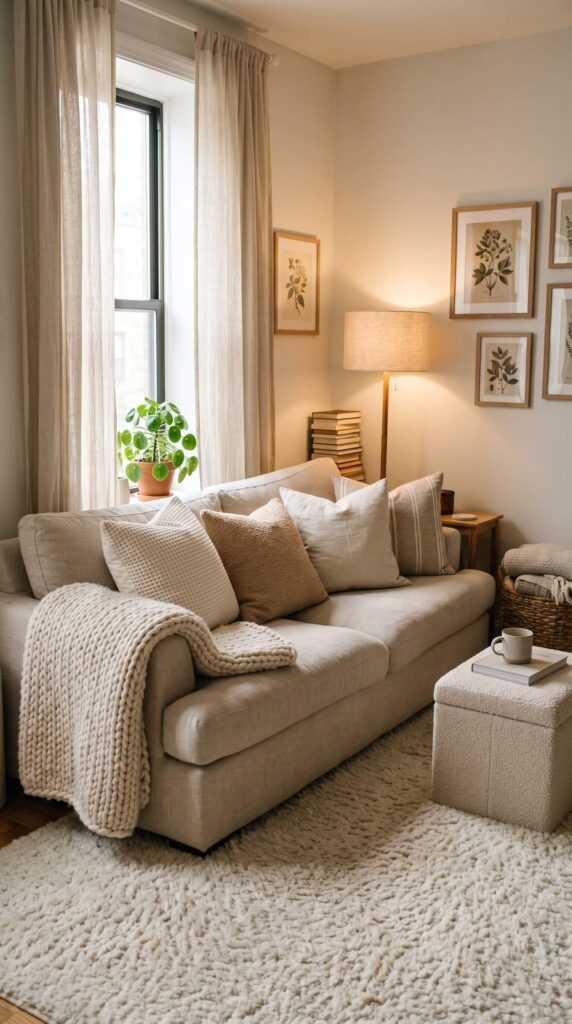
A draped throw blanket on a sofa or armchair is the most universally recognizable signal of a cozy space. Not folded neatly, which looks staged — draped or casually folded in a way that looks like someone just used it and left it there. Choose the chunkiest, most tactile texture you can find: a chunky hand-knit in warm cream, a boucle in warm white or caramel, a waffle-weave linen in warm ivory. The texture matters as much as the color — a cozy throw should look like it feels good before you touch it.
6. Invest in a Large Plush Area Rug That Covers Most of the Floor
A deep-pile or plush wool area rug that covers most of the floor in the main room changes the physical experience of the space as much as the visual one. Standing on a plush rug barefoot is a fundamentally different physical sensation from standing on hard flooring or thin carpet, and that physical warmth translates directly to how the room feels to be in. In a small apartment, a generous rug that extends well under the furniture edges makes the room feel like a contained, warm world rather than an open floor plan.
7. Layer Euro Pillows, Standard Pillows, and Accent Pillows on the Bed
A bed layered in three stages of pillow height and textile texture is the most powerful cozy element in any bedroom. Start with two large euro pillows against the headboard for height and visual backing. Add two standard sleeping pillows in textured linen cases in front of them. Finish with one or two smaller accent pillows in a different texture — boucle, chunky knit, velvet — at the front of the arrangement. Keep every piece in the same tonal family of warm creams, warm whites, and warm neutral tones.
8. Use Linen Curtains in Warm Ivory Rather Than White or Blackout
Linen curtains in warm ivory do three things simultaneously in a small apartment: they add organic texture to the wall surface, they filter natural light to a soft golden warmth rather than blocking it, and they move gently in any air movement which gives the room a sense of organic life. Blackout curtains in a small room create a tomb-like darkness that trades coziness for function. Warm ivory linen filters enough light to make the room feel private while keeping it warm and alive during the day.
Natural Materials
9. Bring Wood Into Every Room as a Grounding Material
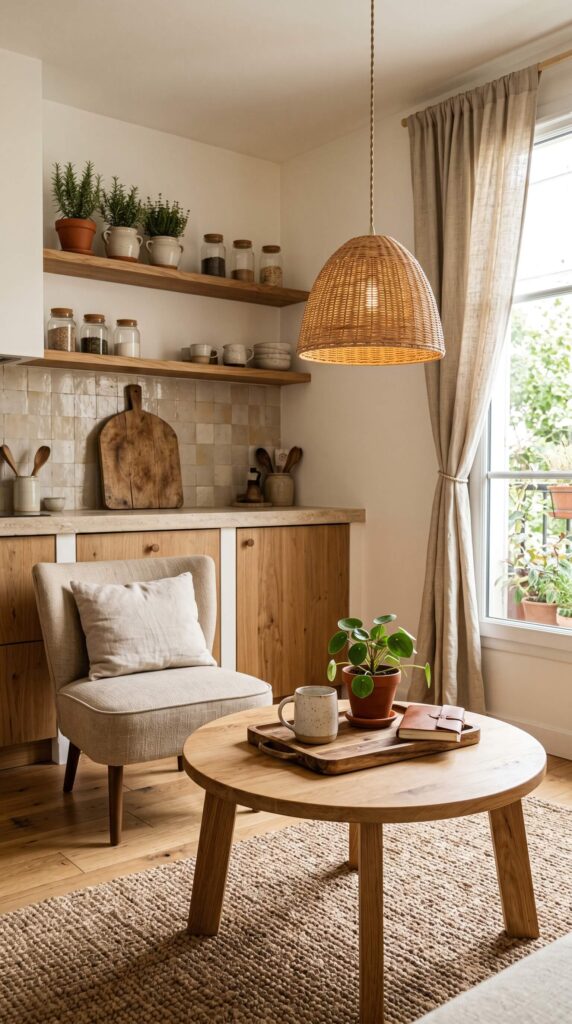
Wood is the most effective single material for creating warmth in a small apartment because it connects the space to the natural world and adds visual depth through grain and variation that no manufactured surface can replicate. A wooden tray on the coffee table, a walnut frame on the mirror, a wooden cutting board leaning against the kitchen backsplash, wooden picture frames, a wooden plant stand — small wooden elements in every room add cumulative warmth that changes the feeling of the whole apartment without any major furniture purchase.
10. Use Rattan and Woven Elements for Texture and Light
Rattan, jute, seagrass, and woven materials add organic texture that photographs do not fully capture — in person, they create a warmth and tactility that synthetic alternatives simply do not have. A rattan lampshade, a jute rug, a woven basket in the living room corner, a rattan side table beside the bed — these pieces add warmth through material honesty. They look and feel like the natural material they are, which is the quality that makes a space feel genuinely cozy rather than decorated to appear cozy.
11. Use Ceramic and Clay Pots for Plants and Vessels
Terracotta, stoneware, and ceramic vessels in earthy tones — warm beige, rust, muted sage, cream — add materiality and warmth to surfaces that would otherwise read as flat. A terracotta pot for a trailing plant, a stoneware mug on the coffee table, a ceramic vase for dried stems, a stone coaster under a candle — these small material choices accumulate into an environment that reads as warm and organic rather than generic and assembled. Avoid plastic and synthetic equivalents, which look warm in product photos but feel cold and cheap in a real space.
12. Add Dried Botanicals for Low-Effort Organic Warmth
Dried pampas grass, cotton branches, eucalyptus stems, and dried flowers in neutral earthy tones add the organic warmth of plants without any ongoing maintenance or watering requirement. In a cream or warm ivory tone, a large arrangement of dried botanicals in a floor vase in a corner is one of the most impactful, lowest-effort cozy decor additions available. They also photograph beautifully and last for months to years without attention. Pair with a ceramic or rattan vase in the same warm tone family.
Warm Color Palette
13. Add Terracotta and Rust in Small Doses as Accent Colors
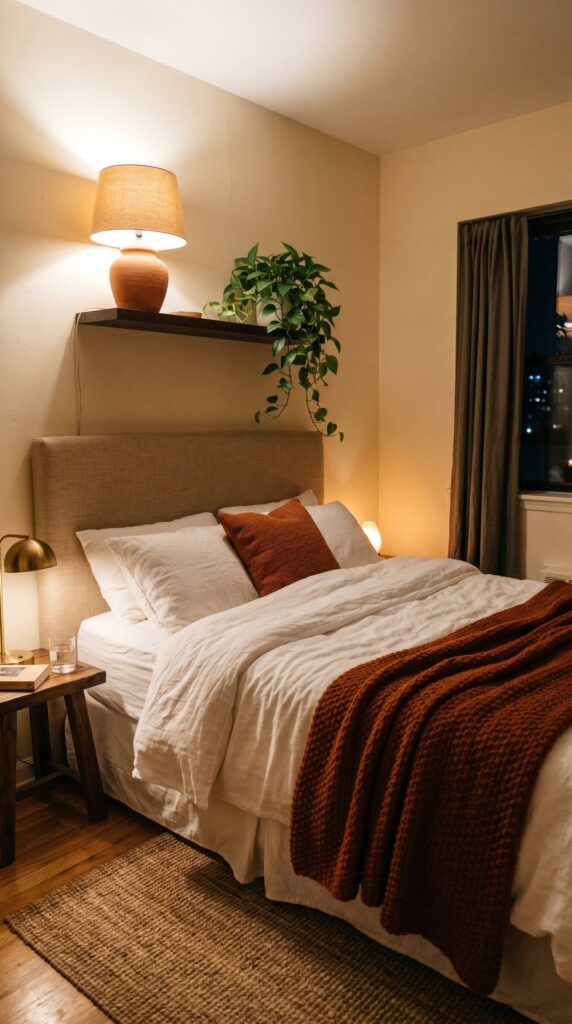
Terracotta and rust are the warmest accent colors available because they draw from the earth and fire end of the spectrum, which the eye reads as physically warm. A rust orange throw pillow on a cream sofa, a terracotta plant pot on a white shelf, a rust-toned candle on the coffee table — these small additions change the emotional temperature of a room significantly. Used in small, consistent doses throughout the apartment they create a warm, autumnal quality that persists across every season.
14. Use Warm Cream, Not White, as the Base Tone for Everything
The difference between warm cream and stark white as a base tone is the difference between a space that feels warm and one that feels clinical. Warm cream has yellow, beige, or red undertones that the eye reads as warm. Stark white has blue or green undertones that the eye reads as cool or neutral at best. In a small apartment where the base tone touches everything — walls, large furniture, bedding, storage units — the warmth of the undertone determines the warmth of the whole environment.
15. Use Muted Sage and Olive as Secondary Tones Through Plants and Textiles
Muted sage green and olive in their most desaturated, grey-green form are the most compatible secondary colors for a warm neutral palette because they read as organic rather than decorative — they look like color from nature rather than from a paint chart. Incorporate them through plants and plant pots first, then through a single sage-colored ceramic or textile as a secondary accent. The combination of warm cream, terracotta, and muted sage is one of the most reliably warm and cozy palettes for a small apartment.
Plants and Life
16. Use Plants at Three Different Scales in the Main Room
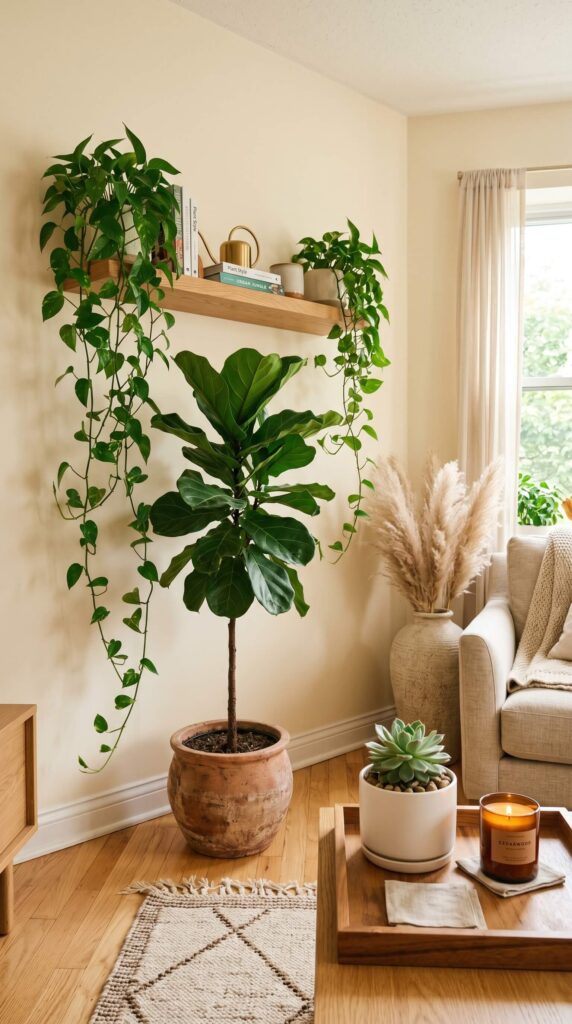
Coziness in a space comes partly from the sense that things are growing and living in it, not just placed in it. Using plants at three scales in the main room — one tall architectural floor plant, one medium trailing plant on a shelf, and one small potted plant on a surface — creates the sense of a living environment rather than a decorated one. Each scale does something different: the tall plant grounds the room, the trailing plant adds movement to the vertical surfaces, the small plant adds an intimate, close-up detail.
17. Choose Plants That Spill and Trail for Vertical Warmth
Trailing plants — pothos, string of hearts, string of pearls, trailing philodendron — add vertical warmth that upright plants cannot because they move with air currents and create a sense of organic life even in still air. Place them on high shelves, in hanging planters, or on top of wardrobes where they trail down naturally over the edge. The trailing effect softens the hard edge of shelves and storage and adds a cozy, organic quality that the room would feel noticeably different without.
18. Add Scent as the Final Cozy Layer
A consistently warm, natural scent is the final cozy layer that most decorating advice overlooks. Cedar, sandalwood, warm amber, linen, and fresh eucalyptus are the scents most consistently associated with a warm, cozy, well-kept home. A single large soy candle in the living room and a linen spray on the bedding — used consistently — give the apartment a sensory identity that makes it feel like home the moment you walk in. Scent memory is among the most powerful of all the senses and the most underused tool in small apartment decorating.
Key Takeaways
- Replace every bulb with 2700K warm white and stop using overhead lighting as the main evening source
- Two lamps minimum per room — one tall floor lamp and one smaller table lamp at a different height
- Candles on every surface where it is practical — grouped in odd numbers on trays
- Every seat gets a chunky or boucle throw draped naturally, not folded neatly
- One large plush area rug that covers most of the floor — physical warmth underfoot is as important as visual warmth
- Wood in every room as a grounding material — tray, frame, shelf, cutting board
- Terracotta and rust in small doses throughout the apartment as accent colors
- Warm cream as the base tone — never stark white — for walls and large surfaces
- Plants at three scales: tall floor plant, trailing shelf plant, small surface plant
- Scent is the final cozy layer — one consistent warm scent throughout the main living area
Frequently Asked Questions
How do you make a small apartment feel cozy on a budget?
Replace every bulb with 2700K warm white — under twenty dollars. Add one large throw and a few textured pillow covers. Bring in one large plant. Change the shower curtain and get a bamboo bath mat. Light a candle. These five changes together cost under sixty dollars and transform how the apartment feels more than any furniture purchase would.
What makes a space feel cozy rather than just small?
Cozy spaces have warmth at multiple levels: the light is warm rather than cool or flat, the materials have texture that the eye and hand recognize as natural and real, the colors draw from earth and fire tones rather than cool neutrals, and there are living things — plants, a lit candle, the movement of linen curtains — that signal that the space is inhabited and cared for. A small space without these qualities feels cramped. A small space with all of them feels intentional and genuinely welcoming.
What is the difference between cozy and cluttered in a small apartment?
Cozy is intentional warmth with space to breathe. Cluttered is accumulated objects with nowhere to go. The practical distinction: in a cozy small apartment, every object has a designated place and the 60 percent empty rule applies to every flat surface. Warmth comes from material quality, light temperature, and textile texture — not from the number of objects. A room with one perfect plant, two quality throws, and warm light is cozy. The same room with twenty small decorative objects and overhead fluorescent lighting is cluttered and stressful regardless of individual object quality.