 Uma
Uma Quick Answer
The small apartment organization hacks that actually last are the ones that build a system a designated place for every category of object, a consistent reset habit, and storage solutions that make the organized state easier to maintain than the disorganized one. These 20 hacks cover every room and every common category, with a focus on systems that work daily rather than solutions that look good for a week.
Most apartment organization advice focuses on products: buy this bin, install this shelf, use this drawer divider. Products help, but they are not the whole answer. An apartment gets and stays organized because of systems because every category of object has a designated home, and because the system is easy enough to maintain that the organized state becomes the default rather than the exception.
These 20 organization hacks combine the right products with the habits and systems that make them work over time. Some are five-minute changes. Some require a dedicated afternoon to set up. All of them make the apartment easier to live in and easier to keep organized once the initial work is done.
Living Room Systems
1. Designate One Basket for Everything That Migrates to the Living Room
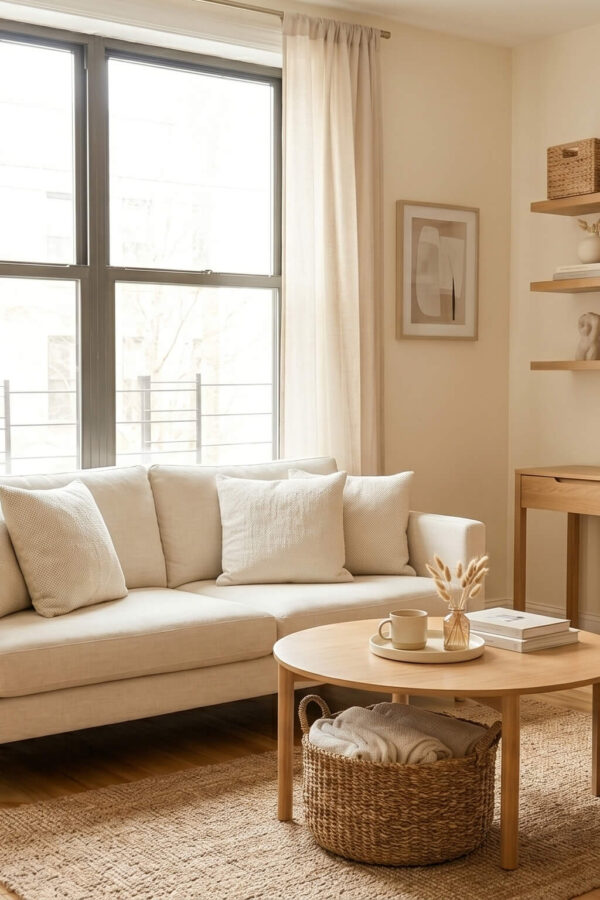
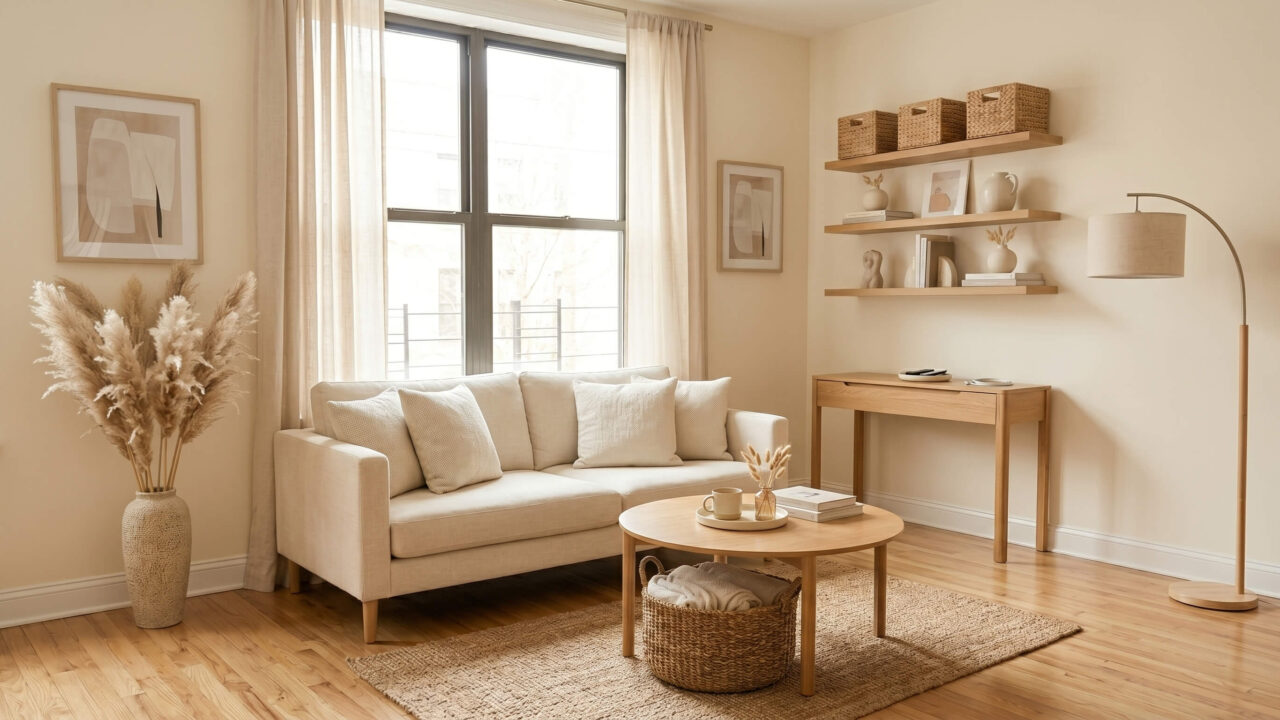
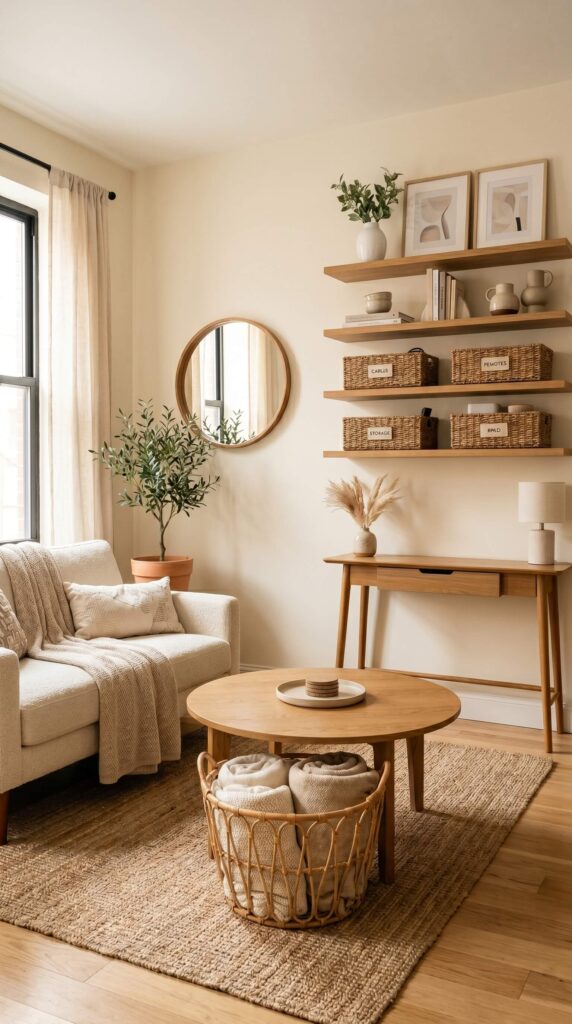
Keys, remotes, phone chargers, books currently being read, headphones, sunglasses — all of these migrate to the living room from their nominal homes and create the visual clutter that makes a small apartment feel disorganized regardless of how tidy everything else is. One large woven basket under the coffee table or on the bottom shelf of a console is the destination for all of these items. The rule is simple: if it lives in the living room but does not have a specific home there, it goes in the basket.
The basket does not eliminate the underlying organization problem but it contains it. Once a week, spend five minutes returning everything in the basket to its actual home. The basket prevents the daily accumulation of small items on every flat surface, which is what creates the feeling of general disorganization in a living room.
2. The One-In-One-Out Rule for Decorative Objects
In a small apartment, the number of decorative objects on shelves and surfaces is a self-regulating system that fails without a deliberate rule. The one-in-one-out rule: before any new decorative object enters the apartment, one existing object leaves. This prevents the gradual accumulation of objects across every surface that turns a styled small apartment into a cluttered one over the course of a year. Apply it strictly — the new object is not placed until the old one is removed.
3. Create a Charging Station Inside a Console or Cabinet
A charging station is just a power strip with a cable management system inside a contained space — a console drawer, a lidded basket, or a dedicated cabinet shelf. Run one extension cord from the nearest outlet into the container, connect a multi-port USB charger and power strip inside, and route every charging cable through the back of the container. All charging happens invisibly. Cables stay organized inside a closed container. The surface above or beside the charging station stays clear. The visual clutter of charging cables — one of the most persistent sources of visual noise in small apartments — disappears entirely.
4. The Weekly Sunday Reset Habit
A well-organized small apartment has one recurring maintenance habit: a fifteen-minute reset every Sunday before the week starts. Return everything from the living room migration basket to its home. Clear every flat surface to its 60-percent-empty baseline. Wipe down the kitchen counter and bathroom counter. Check the entry zone. The weekly reset prevents the gradual drift from organized to cluttered that happens without a regular reset interval. Fifteen minutes on Sunday morning is the difference between an apartment that stays organized and one that requires a full re-organization every month.
Bedroom and Wardrobe
5. Organize the Wardrobe by Category Then Color
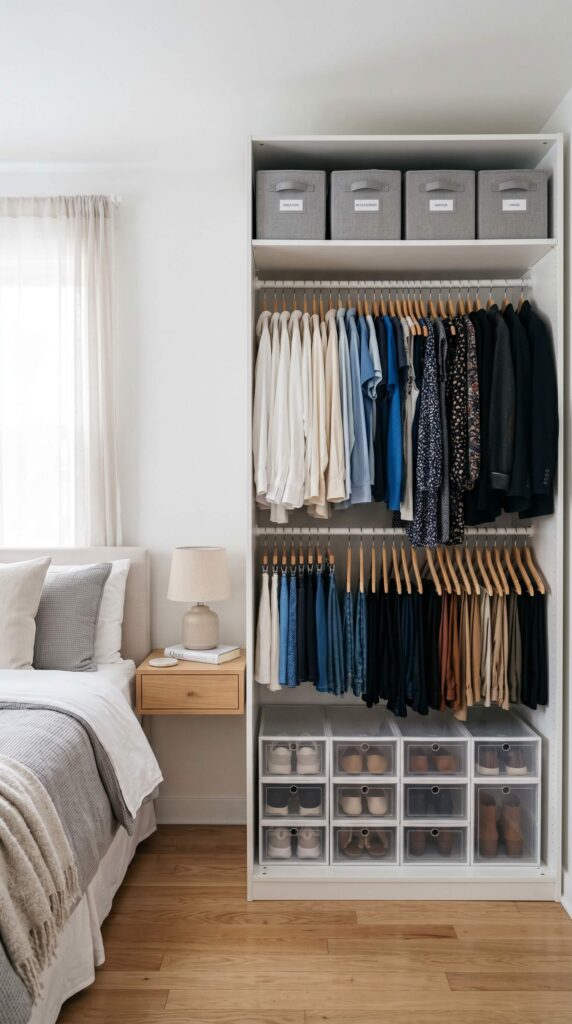
A wardrobe organized by category — all tops together, all bottoms, all dresses, all jackets — and then by color within each category is the single organizational system that makes getting dressed in a small apartment genuinely faster and less stressful. Everything is findable in under ten seconds. You can see at a glance what you have and what is missing. The color organization within each category creates a visible rainbow that makes the wardrobe look curated from a distance even when the wardrobe door is open.
Add a second hanging rod at mid-height for tops, jackets, and folded trousers — it doubles the usable hanging space in the wardrobe at the cost of one curtain rod and two brackets. Use the space below both rods for shoe storage in clear or matching bins. Use the top shelf for labeled fabric bins holding off-season and occasional-use items.
6. The One-In-One-Out Rule for Clothing
Clothes accumulate in small apartments because there is always technically room for one more item until suddenly there is not. The one-in-one-out clothing rule prevents this: before any new clothing item enters the wardrobe, one existing item leaves. The leaving item goes immediately into a donation bag or a sell pile — it does not go back into the wardrobe to consider later. This habit maintained consistently keeps the wardrobe at the right level of fullness without ever requiring a major wardrobe clearout.
7. Keep a Donation Box in the Wardrobe at All Times
A box in the wardrobe labeled Donate that is always present removes the friction of the donation process. When something does not fit, has not been worn in three months, or has been replaced by something better, it goes directly into the donation box rather than back onto the rail to consider later. When the box is full, it goes to the charity shop. This single habit prevents the accumulation of unwanted clothing that is the primary cause of overcrowded wardrobes in small apartments.
8. Use Drawer Dividers for Every Bedroom Drawer
Bedroom drawers without dividers become random piles that require excavation to find anything. Drawer dividers in every drawer — folded t-shirts in one section, underwear in another, socks in a third — make the entire contents of every drawer visible and accessible without disturbing the organization of adjacent items. Bamboo dividers are adjustable, affordable, and look good enough that having the drawer open is not embarrassing. The ten minutes it takes to add dividers to every drawer saves considerably more time over the course of a year.
Kitchen Organization
9. Alphabetize and Label the Spice Collection
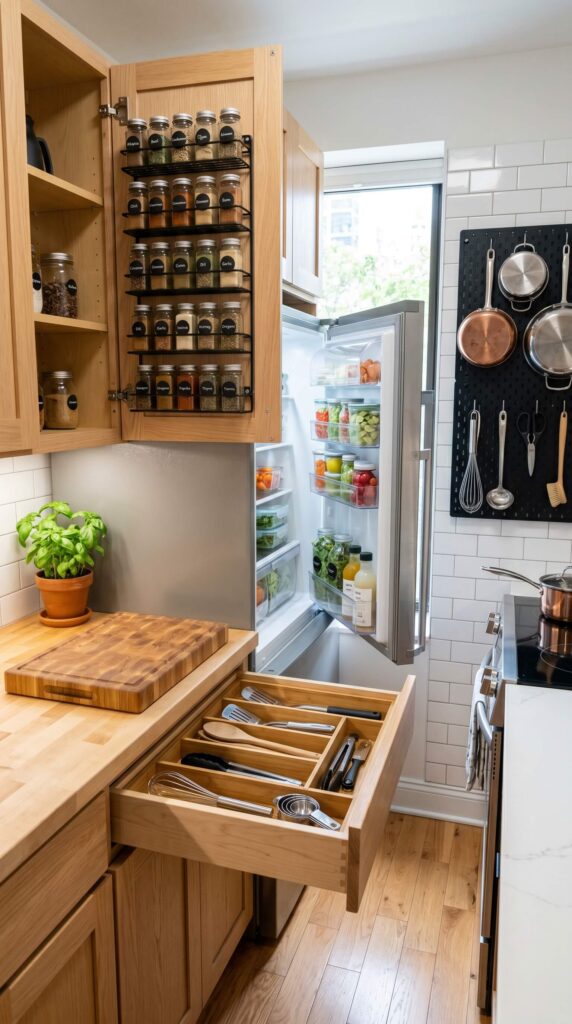
The spice collection is one of the most consistently disorganized areas in any small kitchen because spices are small, numerous, and look similar from the side. Alphabetizing them takes fifteen minutes and saves minutes every time you cook. Remove all the spices, check expiry dates and discard anything past its date, decant everything into matching small jars if the containers are inconsistent sizes, label each jar on top with a small sticker so the label is visible from above when the jar is stored, and return them in alphabetical order. The alphabetical system is memorable without labeling the shelf positions.
10. Keep the Refrigerator Organized with Designated Zones
A refrigerator without designated zones refills randomly every shopping trip and requires hunting for anything. Designate and maintain four zones: the top shelf for ready-to-eat items that do not need cooking, the middle shelf for leftovers and prepped ingredients, the bottom shelf for raw proteins that should not drip on anything below them, and the door for condiments and drinks. Clear containers for leftovers make contents visible without opening every container. The weekly clear-out before grocery shopping — removing anything past its best and noting what needs replacing — keeps the system from reverting to random over time.
11. The Weekly Kitchen Counter Reset
The kitchen counter in a small apartment has a gravitational pull that attracts every item that does not have a clear home elsewhere. The daily default state of the counter should be: one item per appliance that lives there, one tray with the essentials, nothing else. Anything that does not belong on the counter goes into a kitchen junk drawer or a cabinet rather than accumulating on the surface. The weekly reset — clearing the counter fully and returning everything to its home — reinforces this default and prevents the gradual drift toward a permanently cluttered counter that happens without active maintenance.
12. Use the Inside of Every Cabinet Door
Every cabinet door in the kitchen has a flat interior surface that is almost always unused. Mounted spice racks, adhesive hooks for measuring spoons and small utensils, over-door organizers for cleaning supplies under the sink, pot lid racks on the inside of the pots and pans cabinet — all of these add meaningful storage without touching the shelf space inside the cabinet. Audit every kitchen cabinet door and ask what could be mounted on it. The answer is almost always something useful.
Bathroom Organization
13. The One-Product-Per-Category Rule for the Counter
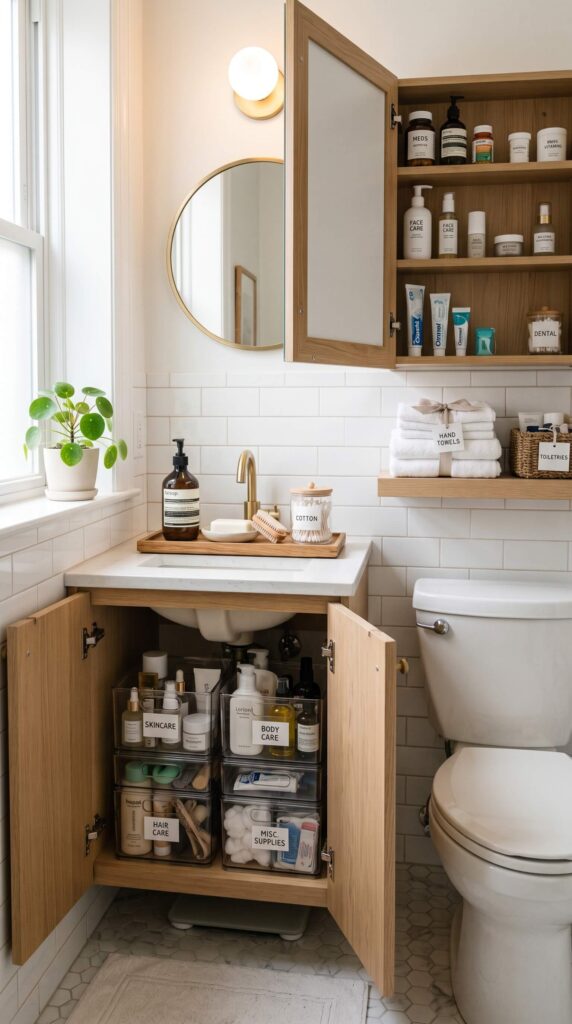
The bathroom counter accumulates products faster than almost any other surface in the apartment. The organization solution is the one-product-per-category rule: one hand soap, one hand lotion, one facial wash, one facial moisturizer. Everything else — the backup bottle, the product you are trying to finish before opening the next one, the duplicate that came in a set — lives under the sink or in a cabinet. The counter holds only the one item you are actively using in each category. The result is a counter that requires almost no active maintenance to stay clear.
14. Do the Product Audit Twice a Year
The under-sink bathroom cabinet is the most frequent storage overflow zone in a small apartment because products accumulate without regular auditing. Twice a year, pull everything out of the under-sink cabinet and every bathroom shelf, check expiry dates on every product, discard everything expired or unused, and consolidate duplicates. Most people discover they have three body moisturizers, two shampoos they do not like, and a collection of hotel toiletries they will never use. Removing these items frees more under-sink space than any organizational product can create.
15. Label Every Container in the Bathroom Storage System
Matching containers in the bathroom create visual order. Labeled matching containers create a system that someone else can use and that maintains itself without active effort. Label baskets under the sink: Skincare, Hair, Medicine, Cleaning. Label the shelf sections above the toilet: Towels, Guest Items, Extras. The labels make the system self-evident, which means it gets used consistently rather than abandoned when it becomes inconvenient. Use a consistent label format — same font or same label style — so the labels themselves become part of the organized visual impression.
Entry and Whole-Apartment Systems
16. Build a Full Entry Catch System Before Anything Else
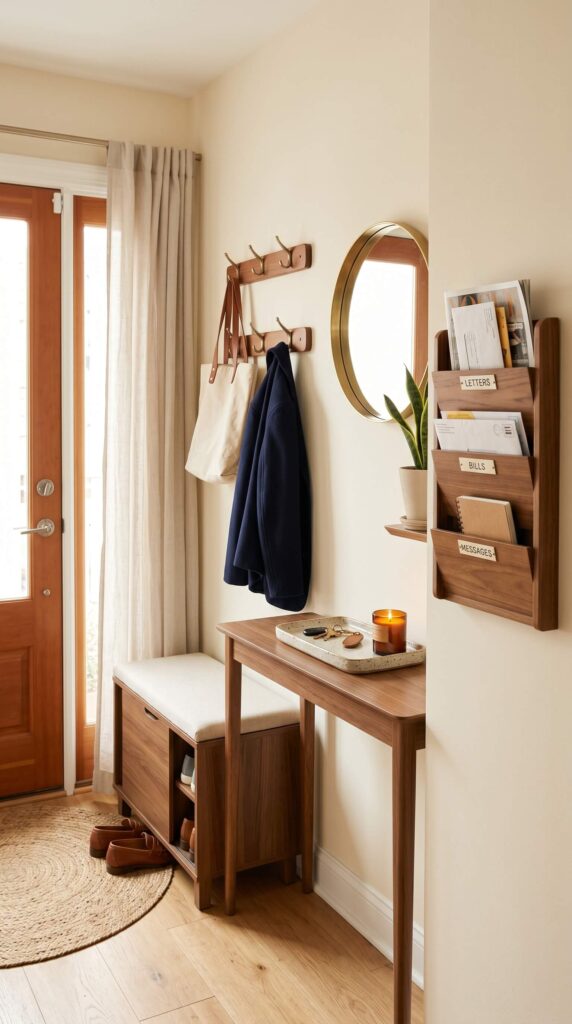
The entry is the most important organizational zone in the apartment because everything that enters and leaves passes through it. A complete entry system has four elements: one surface for setting things down (a console or a bench), hooks for bags and jackets at two heights, a tray for keys and small daily-carry items, and a mail organizer with designated slots for incoming mail, outgoing mail, and items to file. Getting these four elements in place at the entry prevents the daily accumulation of items throughout the rest of the apartment.
17. The Inbox-Outbox-File System for Paper
Paper clutter is the most persistent organizational failure in small apartments because paper has no natural home and accumulates on any available flat surface. An inbox-outbox-file system with three labeled slots beside the entry door intercepts every piece of paper before it migrates to the kitchen counter or the coffee table. The inbox holds items requiring action. The outbox holds items ready to mail or hand off. The file slot holds items to be filed. Empty all three slots once a week as part of the Sunday reset.
18. Create a Home for Every Category Before Buying Any Storage Product
The most common organizational mistake is buying storage products before knowing what needs to be stored in them. Buy the bins and shelves first and then try to figure out what goes in them — and the result is a mismatch between container and content that does not work and gets abandoned. The correct sequence: audit what you have, decide what category of object needs a home and where that home should logically be, measure the available space, then buy the container that fits that specific space for that specific category. Every purchase is intentional rather than optimistic.
19. The Digital Household Inventory for Under-Bed and High-Shelf Storage
Anything stored out of sight and out of reach — under-bed bins, top wardrobe shelf, high storage boxes — gets forgotten within a month. Maintain a simple digital list in your phone’s notes or a spreadsheet of everything stored in these out-of-sight locations, organized by location. When you store something, you add it to the list. When you retrieve it, you remove it. The list takes thirty seconds to update and prevents the phenomenon of buying something you already own because you forgot it was in the under-bed bin on the left side.
20. The Daily Two-Minute Tidy Before Bed
All apartment organization systems, however well-designed, drift toward disorder without a daily maintenance habit. The two-minute tidy before bed — returning everything that is out of place to its designated home, clearing the kitchen counter, putting the one item that has been sitting on the coffee table back where it belongs — prevents the gradual drift that turns an organized apartment into a cluttered one over the course of a week. Two minutes before bed consistently is more effective than a full re-organization every month.
Key Takeaways
- One basket in the living room for everything that migrates there — cleared weekly in five minutes
- One-in-one-out rule for both clothing and decorative objects prevents gradual accumulation
- Charging station inside a closed console or cabinet — cables and clutter disappear completely
- Wardrobe by category then color — everything findable in under ten seconds
- Donation box always present in the wardrobe — full means it goes to the charity shop
- Alphabetize spices, label everything in the bathroom storage system
- One-product-per-category rule on the bathroom counter — everything else under the sink
- Entry catch system with four elements: surface, hooks, tray, and mail organizer
- Digital inventory for anything stored out of sight — add when stored, remove when retrieved
- Two-minute daily tidy before bed prevents weekly drift from organized to cluttered
Frequently Asked Questions
How do you keep a small apartment organized when you have limited storage?
The sequence matters: first reduce the volume of objects to what you actually use and love. Then assign every remaining category of object a specific home. Then buy storage products sized exactly to fit those specific homes. A small apartment with the right volume of objects organized by this sequence stays organized with minimal effort. The organizational failure in most small apartments is too many objects relative to the storage available, which no amount of clever organization products can fully compensate for.
What is the most important room to organize first in a small apartment?
The entry. Everything that enters and leaves the apartment passes through it, and an entry without an interception system allows clutter to migrate throughout the whole apartment every day. A complete entry system — surface, hooks, tray, and mail organizer — requires one afternoon to set up and prevents daily organizational failures in every other room.
How do you maintain organization in a small apartment long-term?
Three habits: the one-in-one-out rule for any new object that enters the apartment, the weekly Sunday reset that returns everything to its designated home, and the two-minute daily tidy before bed. These three habits together require under thirty minutes per week and prevent the gradual drift from organized to cluttered that happens without active maintenance. Organization is not a one-time project — it is a set of habits maintained consistently.