 Uma
Uma Quick Answer
The best small apartment storage hacks work by moving storage off the floor and onto walls, inside furniture, and behind doors — surfaces most people never use. These 20 hacks cover every room in the apartment and focus on solutions that are renter-friendly, inexpensive, and visually clean so the storage disappears into the design rather than adding to the clutter problem it is meant to solve.
Storage is the most urgent problem in a small apartment and the most commonly solved wrong. Most people’s first instinct is to buy more furniture — another bookcase, another dresser, another set of shelves — which uses more of the floor space that is already too scarce. The real answer is to use the surfaces that are already there and completely ignored: walls, door backs, the insides of furniture, the space above doors, and the area under every piece of furniture in the apartment.
These 20 storage hacks cover the living room, bedroom, kitchen, bathroom, and entryway. Each one is renter-friendly or easily reversible, inexpensive enough to implement without planning, and designed to look intentional rather than improvised.
Living Room Storage Hacks
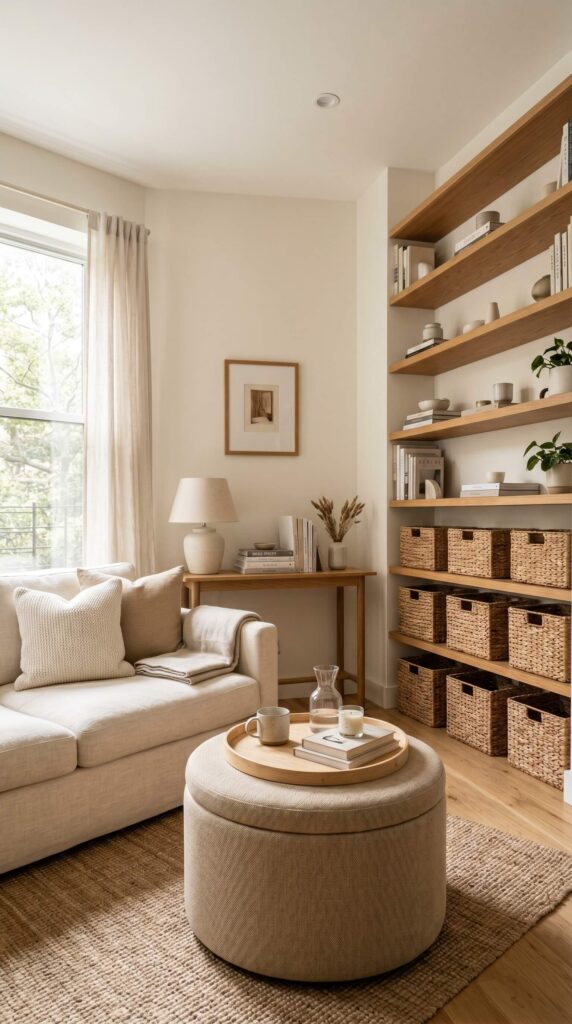
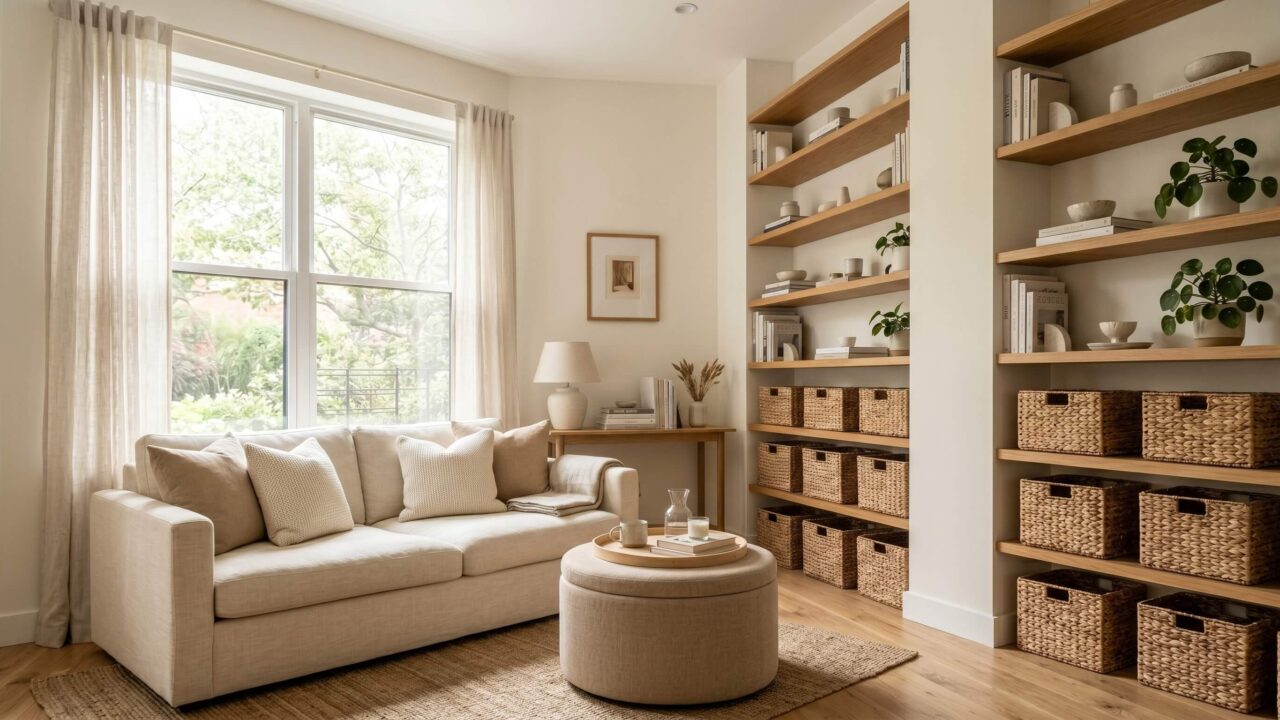
1. Use Large Baskets on Lower Shelves to Hide Visible Clutter
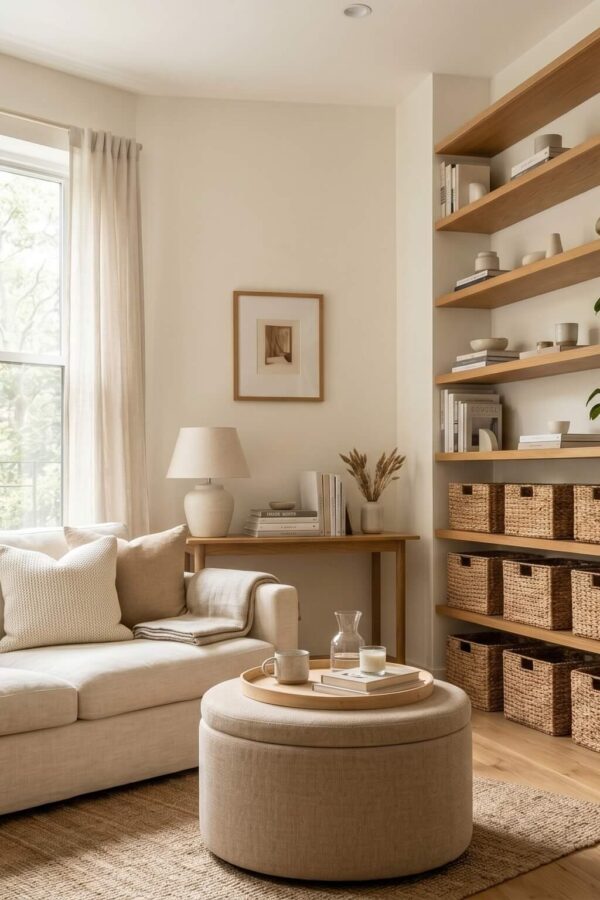
Open shelving looks curated or chaotic depending entirely on what is on it. Large woven or fabric baskets on the lower two shelves give all the small, random items — remotes, chargers, mail, extra cables — a contained, visually clean home. From across the room, a basket with a lid reads as a decorative object, not as hidden chaos.
2. Store Everything Extra Under the Sofa in Flat Bins
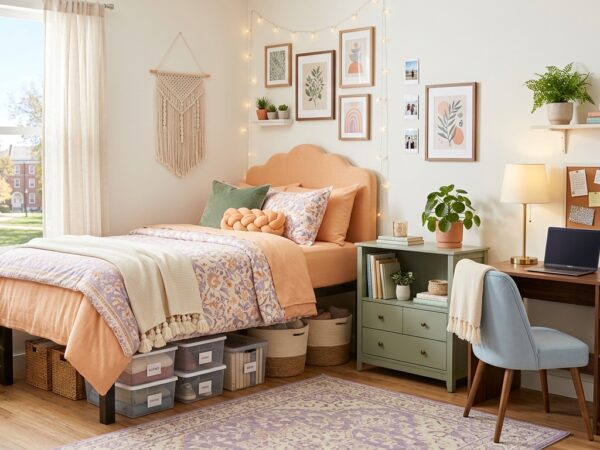
Most sofas sit 7 to 10 inches off the floor. Flat rolling storage bins that fit that clearance hold extra blankets, seasonal items, magazines, board games, and anything else that migrates to the living room but has nowhere to go. Measure the clearance under your sofa before buying. Choose bins with lids to keep items clean and handles to pull them out without moving the sofa.
3. Use a Sofa Table as a Charging Station and Cable Hub
Cables and chargers on a small apartment living room floor are both a tripping hazard and a source of visual clutter. A slim sofa table or console behind the sofa, fitted with a power strip underneath, becomes an invisible charging hub. Cables run along the back of the sofa and plug in behind it, completely out of sight.
4. Mount a Floating Shelf Above the Sofa for Books and Decor
One or two floating shelves above the sofa add display and storage space that reads as a designed feature rather than an afterthought. Use the shelves for books you are currently reading, a plant, a candle, and small objects. It is one of the few storage additions that also improves the visual composition of the room.
Bedroom Storage Hacks
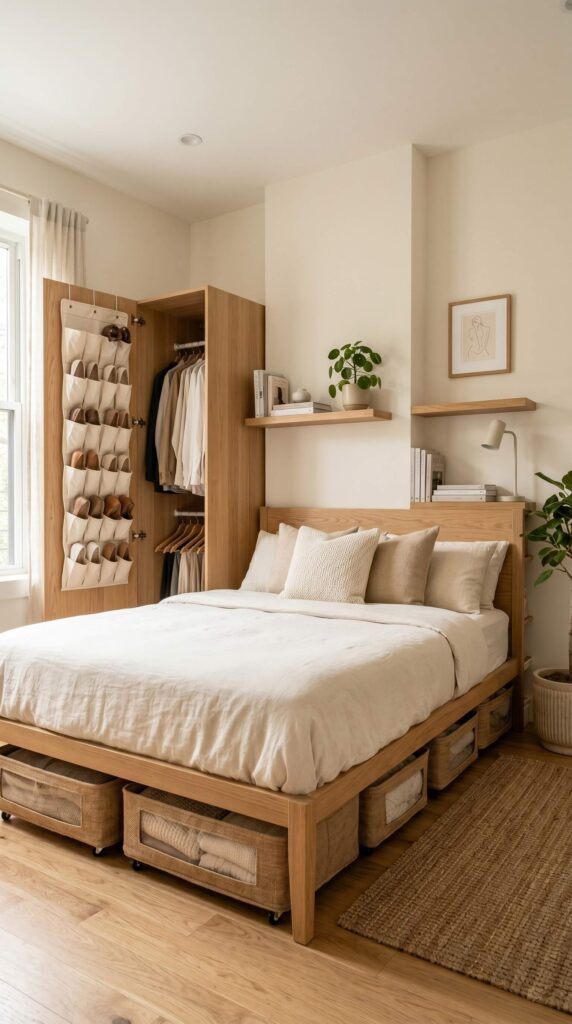
5. Use an Over-Door Shoe Organizer Inside the Wardrobe Door
The inside of every wardrobe or closet door is free vertical storage. An over-door shoe organizer on the inside of the closet door holds shoes in the pockets it was designed for — but also holds accessories, scarves, belts, small bags, and anything else that tends to pile on the floor of the wardrobe. The door closes and the system disappears completely.
6. Add a Second Hanging Rod Inside the Wardrobe for Shorter Items
Most wardrobes come with a single hanging rod at full height, which means the bottom half of the wardrobe is empty air beneath hanging clothes. A second rod mounted below the first doubles the hanging capacity for shorter items like shirts, jackets, and folded trousers. This single change often doubles the effective wardrobe capacity without spending anything except the cost of a curtain rod and two brackets.
7. Store Off-Season Clothes in Vacuum Bags Under the Bed
Vacuum storage bags compress bulky sweaters, winter coats, and seasonal duvets to a fraction of their normal volume, making them thin enough to store flat under the bed. One bed’s worth of clearance can hold an entire off-season wardrobe in compressed bags. Label each bag with the contents before storing so you do not have to open them all to find what you need when the season changes.
8. Use the Top Shelf of the Wardrobe for Labeled Bins
The top shelf of most wardrobes is used for random piles of things that get forgotten. Replace the pile with labeled bins — one for each category of item that lives up there: extra bedding, out-of-season accessories, gift wrap, spare cables. The bins stack efficiently, the labels make everything findable in thirty seconds, and the top shelf stops being a black hole for items that have no other home.
💡 Quick Tip: Vacuum bags work best for natural fibers like wool and cotton. Do not vacuum-compress down or synthetic filling — it damages the material and it does not compress well.
Kitchen Storage Hacks
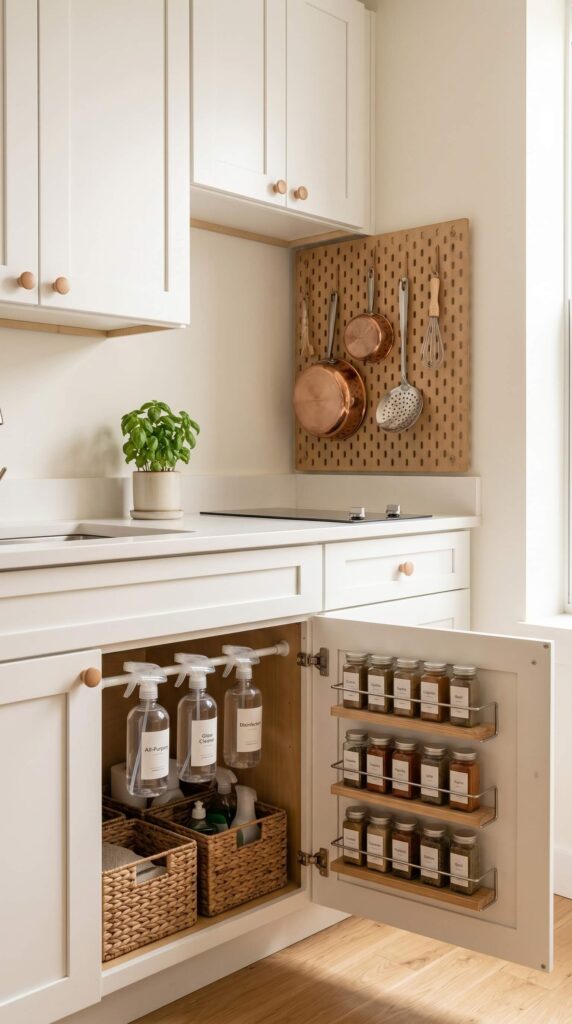
9. Install a Tension Rod Under the Sink to Hang Spray Bottles
A spring tension rod installed horizontally inside the under-sink cabinet, about two-thirds of the way up, holds all your spray cleaning bottles by their trigger handles. The entire floor of the cabinet stays clear for larger items and the spray bottles are instantly accessible at door height when you open the cabinet. This costs about three dollars and ten minutes.
10. Use a Stackable Pot Lid Organizer Inside a Lower Cabinet
Pot lids are the most difficult kitchen items to store because they cannot stack flat and they fall constantly. A vertical pot lid organizer mounted inside a lower cabinet door or freestanding inside the cabinet holds every lid upright in a dedicated slot. Everything becomes accessible in one motion instead of excavating through a pile.
11. Add a Magnetic Spice Rack to the Side of the Refrigerator
The side of the refrigerator is a flat, vertical metal surface that most people walk past without noticing. Magnetic spice tins with clear lids attach directly to the side of the fridge and hold your most-used spices at eye level, completely off the counter. A strip of ten spice tins takes up zero counter space and saves significant frustration every week.
12. Use a Drawer Divider System in Every Kitchen Drawer
The kitchen junk drawer is a symptom of a larger problem: when things have no designated home, they pile up in the nearest drawer. Bamboo or plastic drawer dividers installed in every kitchen drawer take one afternoon and solve the problem permanently. Each item has a compartment. Each compartment has a category. Nothing piles up because there is no pile available.
Bathroom Storage Hacks
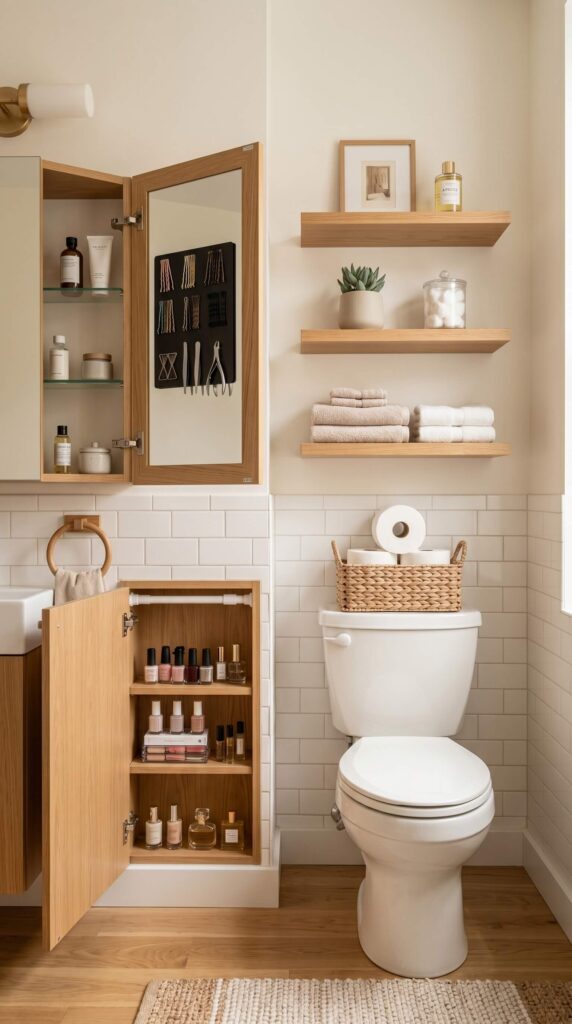
13. Mount a Magnetic Strip Inside the Medicine Cabinet
The inside of a medicine cabinet door has room for a small magnetic strip that holds bobby pins, nail clippers, tweezers, small scissors, and any other small metal grooming tools that normally scatter across the counter. A strip of adhesive magnetic tape costs about two dollars and keeps the smallest, most easily lost items instantly accessible behind a closed door.
14. Store Spare Toilet Paper in a Basket on the Back of the Toilet Tank
Extra toilet paper rolls stored under the sink require moving things out of the way every time you need one. A small woven basket sitting on the back of the toilet tank holds four to six spare rolls within reach and at a height that does not obstruct the wall above. It looks like a deliberate styling choice rather than a practical necessity.
15. Use Adhesive Hooks Inside Cabinet Doors for Hairdryers and Tools
Command hooks rated for three to five pounds inside the bathroom cabinet door hold hairdryers, straighteners, and curling irons by their cords when stored. The tools hang neatly, the cords do not tangle, and the cabinet floor stays clear. This is significantly better than the coiled-cord pile on the counter alternative and costs about four dollars per door.
Entryway Storage Hacks
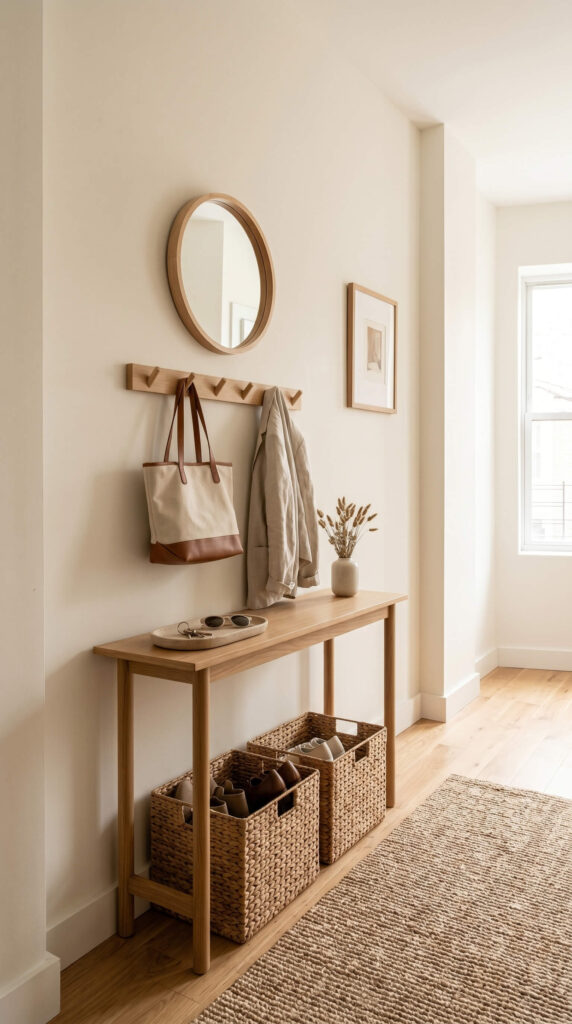
16. Use a Slim Console Table with a Basket Below as an Entryway Station
An entryway does not need a dedicated mudroom — it needs one surface and one spot for shoes. A slim console table against the entry wall holds keys, mail, and daily essentials on top. One basket or bin beneath the console holds the shoes you wear most often. A mirror and a few hooks above the console complete a fully functional entry in under twelve inches of depth.
17. Mount Wall Hooks at Two Heights for Different Items
A row of wall hooks at coat height holds jackets and bags. A second row of smaller hooks at shoulder height holds keys, earbuds, sunglasses, and small daily-carry items. The two heights separate the items by size and access frequency and make the entry wall work as a fully functional storage system rather than a coat dump.
18. Use a Shoe Cabinet That Doubles as a Bench
A shoe cabinet with a padded lid serves as a bench for putting on shoes, a surface for setting things down when you walk in, and hidden storage for ten to fifteen pairs of shoes beneath the lid. In a small apartment entry with no dedicated closet, this single piece replaces a shoe rack on the floor, a bench, and a storage unit.
19. Hang a Wall-Mounted Mail Organizer Beside the Door
Mail and paper clutter migrates to the nearest flat surface. A wall-mounted mail organizer with two or three slots beside the entry door intercepts paper clutter before it spreads. One slot for immediate action items, one for filing, one for magazines. Empty it weekly to prevent the paper pile that accumulates on every available horizontal surface in a small apartment.
20. Hang a Pegboard in the Entry or Kitchen for Maximum Flexibility
A painted pegboard section on any wall in the entry or kitchen is the most flexible storage system on this list because it changes completely as your needs change. Add hooks for bags, rails for keys and sunglasses, small shelves for plants, clips for a notepad, and hooks for an umbrella. Paint the board the same color as the wall so it reads as built-in architecture rather than a craft project.
Key Takeaways
- The biggest storage opportunity in any small apartment is surfaces already there but unused: door backs, walls above furniture, and the insides of existing cabinets
- Go vertical in every room before adding any freestanding storage furniture to the floor plan
- Every piece of furniture should serve a storage function: storage ottoman, storage bed, sofa with hidden compartment
- Tension rods inside cabinets create a second tier of storage for under three dollars
- Label everything in closed storage — a system that requires opening every container to find what you need will not be maintained
- The entry is the most important storage zone to get right — everything that comes in and out of the apartment passes through it daily
- Uniform containers and baskets in closed storage look designed; random containers of different sizes look like clutter
- The floor is not storage — anything on the floor that is not furniture is clutter
Frequently Asked Questions
How do you add storage to a small apartment without buying more furniture?
Use the surfaces you already have and are not using: the backs of doors, the walls above existing furniture, the insides of cabinet doors, the space under every piece of furniture that is not currently occupied, and the top shelves of closets. In most small apartments, fully using these surfaces adds more storage than buying one new piece of furniture — without adding anything to the floor plan.
What are the best storage solutions for small apartments?
The highest-impact solutions are storage bed frames, storage ottomans that replace coffee tables, over-door organizers in every room, floating shelves with baskets on the lower tiers, and drawer dividers in every drawer. Together these systems cover every room and every category of item without adding any floor-standing furniture beyond what the apartment already has.
How do you organize a small apartment with no storage?
Start with a declutter — the storage problem in most small apartments is partly a volume problem. Remove anything you have not used in the last six months. Then install vertical storage: floating shelves, over-door organizers, wall hooks. Then optimize the storage you have: drawer dividers, turntables in cabinets, a second hanging rod in the closet.