 Uma
Uma Quick Answer
The small apartment ideas that make the biggest difference work on three levels at once: how you arrange furniture, how you control light and color, and how you store things invisibly. From ceiling-height curtains to furniture with exposed legs to storage beds, this list covers 25 changes that genuinely transform a small space not just make it look good in photos.
Your apartment is small. You already know that. What you need are specific changes that make it feel different not just cleaner, but actually bigger, more intentional, and more like a space you want to be in.
These 25 small apartment ideas are organized by impact. Start with layout and furniture placement they cost nothing and move the needle the most. Then work through light, storage, furniture choices, and finishing details. Each section compounds on the previous one.
Start with Layout and Flow
1. Map the Layout on Paper Before Moving Anything
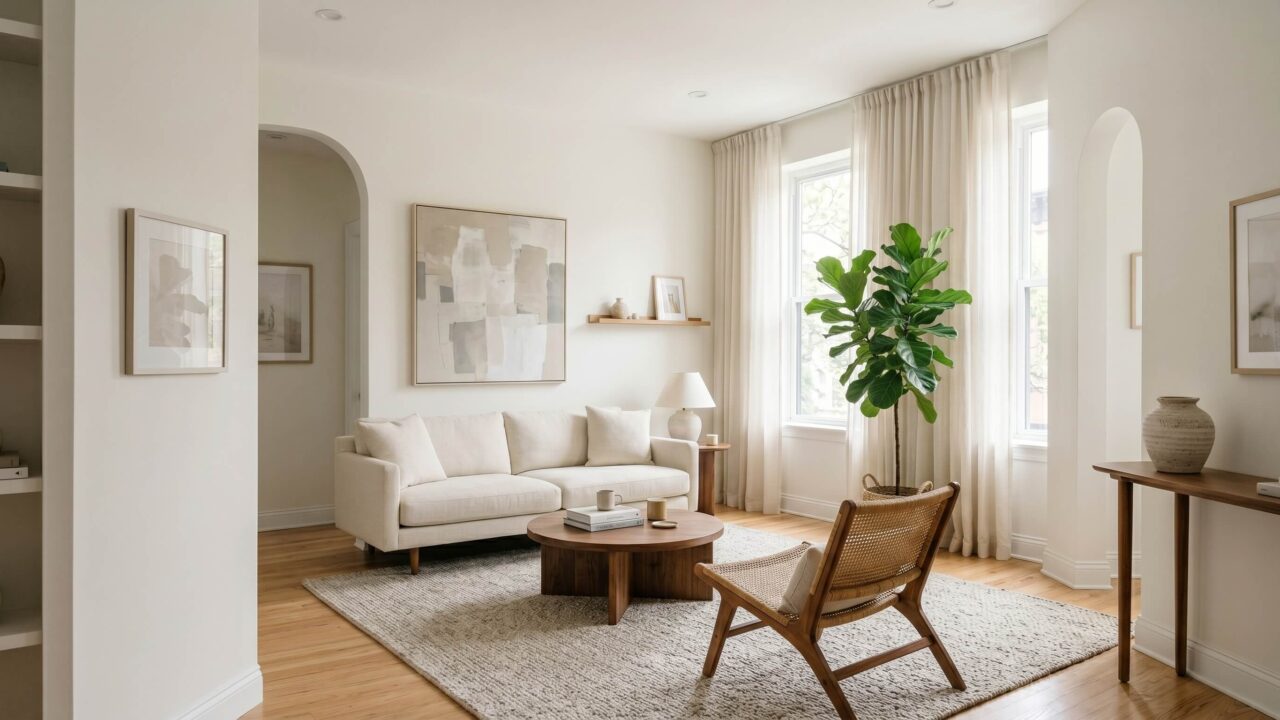
Every furniture rearrangement in a small apartment should start on paper. Measure every room and every piece of furniture, sketch a rough floor plan, cut out scaled paper shapes to represent each piece, and test every possible layout in minutes without lifting anything heavy. The three things to verify on paper first: are all walking paths at least 24 inches wide? Does every zone have a visual anchor? Is there one sightline that travels the full length of the apartment?
Most people move furniture once or twice, decide it is not working, and give up. Three minutes of paper planning prevents this. The layout you land on from a paper exercise will almost always be better than the one you land on through trial and error because you are thinking spatially rather than reacting physically.
2. Float All Furniture Away from the Walls
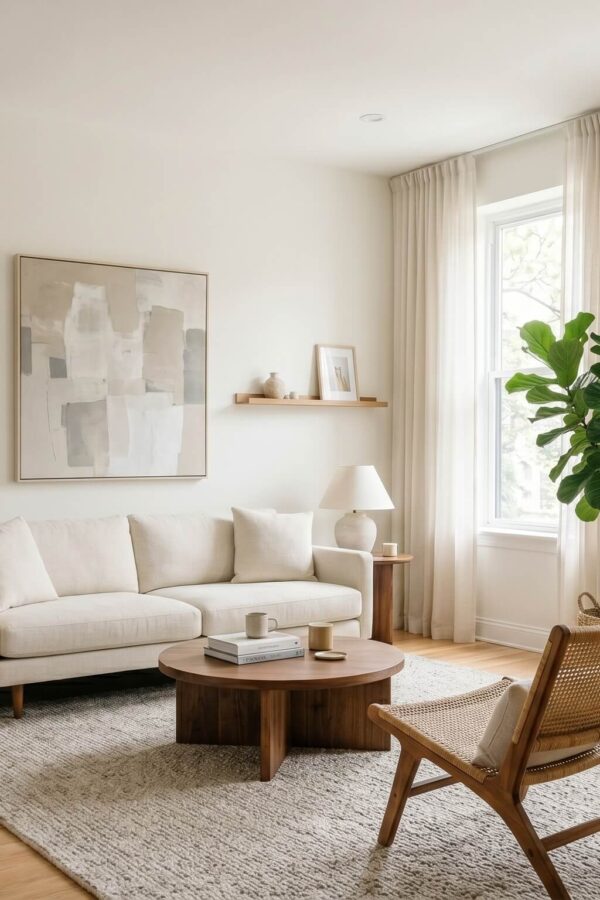
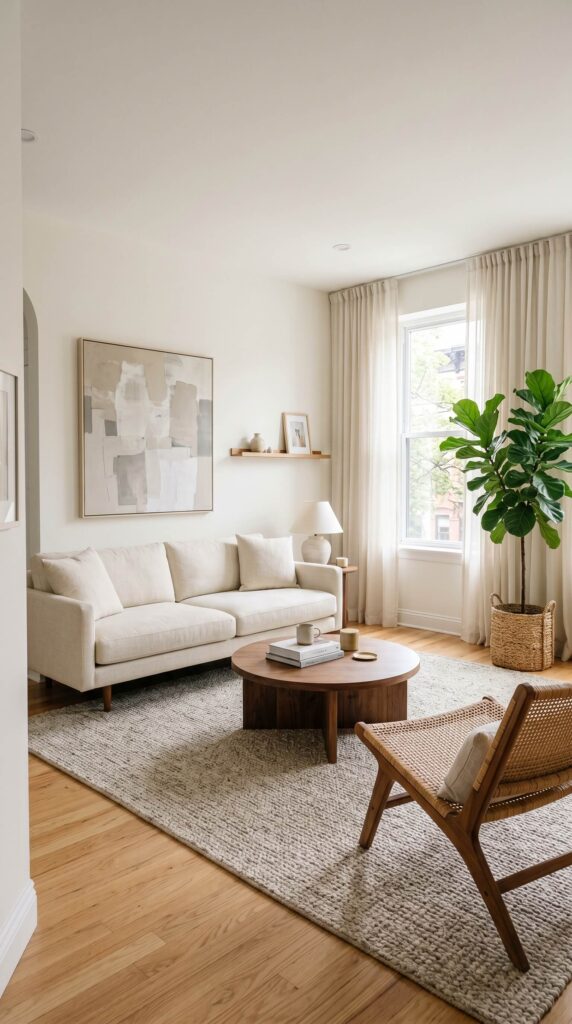
Pushing furniture flat against every wall is the most common small apartment instinct and the most consistently wrong one. It makes rooms look ringed out and creates dead center space that feels purposeless. Pull your main sofa and chairs six to twelve inches from the walls behind them. The gap creates visual breathing room and makes the arrangement look like a choice rather than a default.
The floating furniture principle applies to every room. In a bedroom, even two or three inches on each side of the bed makes the layout feel less squeezed. In a dining area, floating the table slightly from the wall allows chairs to be pulled out comfortably on all sides. The visible gap does more for perceived space than most design choices.
3. Protect One Clear Sightline Through the Apartment
Every small apartment has at least one axis along which the eye can travel some distance — usually from the front door through to a window at the back, or from one end of the main living area to the other. Keep that sightline clear of tall furniture, hanging elements, and anything else that blocks it. An unobstructed sightline makes the apartment feel longer and larger than it is because the eye travels without stopping.
Map it from the entry point and trace it to wherever it naturally ends. The furniture on either side of this line can be as close together as it needs to be — what matters is that the line itself stays open. This is the one spatial rule that has the most impact in studios and one-bedroom apartments with linear floor plans.
4. Use Area Rugs to Define Zones Before Placing Furniture
In an open-plan apartment, define each zone with an area rug before placing any furniture. The rug tells every other piece where it belongs and creates a sense of separate rooms without any walls. Get the rug placement right first and the furniture arrangement follows naturally. The living zone rug should be large enough for all four legs of the main sofa to sit on it at minimum — most people go too small and it looks like a mistake.
5. Give Every Object a Specific Home Before It Enters the Apartment
Every item that does not have a specific, designated home contributes to visual clutter even when it is tidied up, because it always ends up somewhere slightly different. Before bringing anything new into a small apartment, decide exactly where it will live. This applies to daily-use items — keys, bags, chargers, shoes — as much as to decor. When every object has a permanent place, the apartment reads as organized all the time rather than occasionally.
Light, Color, and Visual Space
6. Match the Wall and Ceiling Color
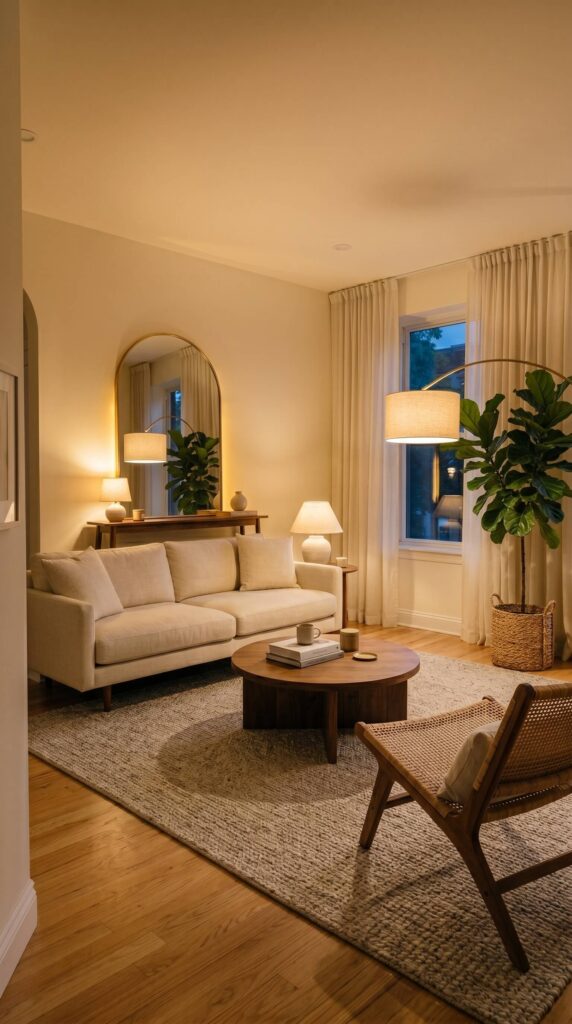
Paint the ceiling the exact same color as the walls and the room immediately stops feeling boxed in. The horizontal line where the wall meets the ceiling is the most space-limiting visual element in any room — paint it the same color and the eye stops registering it. The room reads as a continuous envelope rather than a container. Use warm off-whites and creamy neutrals rather than stark white for this — the warmth makes the enveloping effect feel cozy rather than clinical.
7. Hang One Large Mirror on the Main Wall
One large mirror is worth more in a small apartment than almost any other single purchase. Positioned on the main wall or opposite a window, it bounces light across the room and creates a doubled sense of depth that convincingly makes the space feel larger. A leaner mirror does not require any installation and can be repositioned until you find the best placement. Choose one large piece over several small ones — a single mirror reads as an architectural element, multiple small ones read as a collection.
8. Hang Curtains at Ceiling Height, All the Way to the Floor
The curtain rod should be as close to the ceiling as physically possible, and the fabric should fall all the way to the floor. This creates one continuous vertical surface from ceiling to floor that draws the eye upward and makes the ceiling feel taller. It does not matter if the window itself is small — the curtains are dressing the wall, not the window. Use sheer or semi-sheer fabrics in warm ivory or cream to keep the wall feeling light rather than heavy.
9. Build Three Layers of Lighting in Every Room
Overhead lighting is the enemy of spaciousness in small apartments because it illuminates the boundaries of the room uniformly, making every wall equally obvious. Layer the lighting instead: a tall floor lamp as the main source, a small table lamp for a secondary pool of warmth, and accent lighting — under cabinets, on shelves, inside glass doors — for depth. The result is a room that feels larger at night than it does in daylight because the boundaries are less visible.
10. Keep a Unified Warm Palette Across Every Room
Every time a strong color change occurs between rooms in a small apartment, the eye registers a visual stop that breaks the space into smaller sections. A unified palette of two or three warm neutral tones used consistently across walls, large furniture, and textiles removes those visual stops and lets the eye travel continuously through the apartment. The whole reads as one connected space rather than several small ones. Pick a dominant neutral, a secondary neutral, and one accent color — use them in every room.
Storage That Disappears
11. Audit and Reduce Before You Organize Anything
The storage problem in most small apartments is partly a volume problem. Organizing things you do not need is just hiding clutter behind a system. Before buying any storage products, do a full audit: remove anything from the apartment you have not used in the last six months. What remains is what actually needs a home. In most cases, removing a third of the apartment’s contents makes organizing the rest straightforward rather than an ongoing battle.
12. Go Vertical in Every Room Before Adding Floor Storage
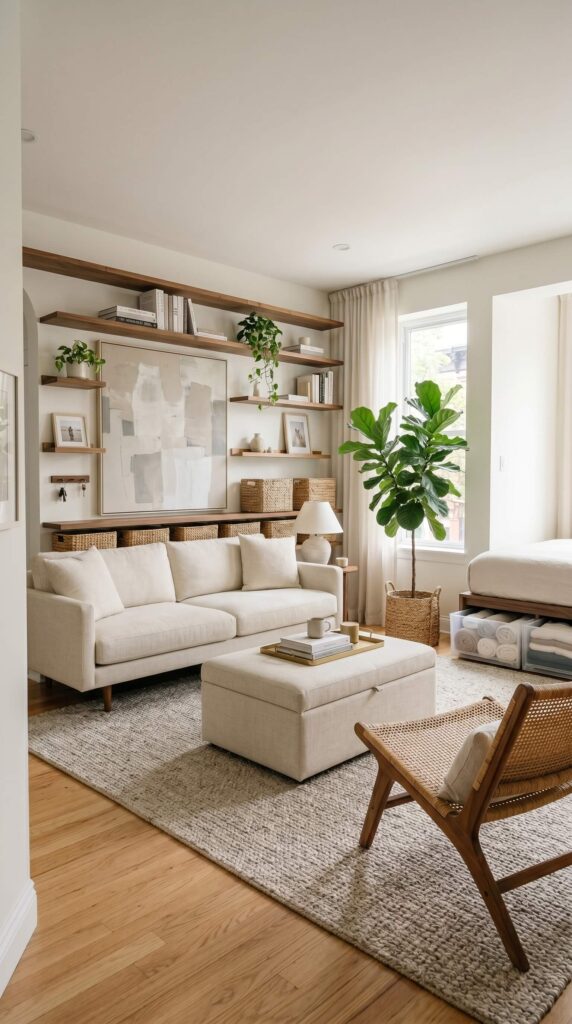
Floor space is the scarcest resource in a small apartment. Every storage solution that sits on the floor competes with living space. Floating shelves, wall-mounted hooks, over-door organizers, and pegboard all take storage vertical without occupying any floor area. Go vertical in every room and exhaust the available wall space before adding any freestanding storage furniture. In most small apartments, fully using vertical surfaces adds more storage than one new bookcase without touching the floor plan.
13. Make Every Large Furniture Piece Store Something
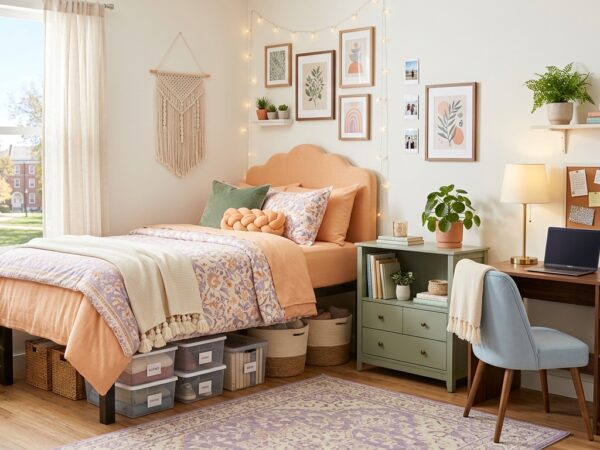
Every large piece of furniture that stores nothing is a missed opportunity in a small apartment. The bed should have drawers or be a lofted frame with storage below. The sofa should have a hidden storage compartment or be paired with a storage ottoman in place of a coffee table. The dining bench should have a lift-top compartment. Multi-function furniture does not look different from single-purpose furniture — it just does more. This principle alone can eliminate the need for two or three additional storage pieces.
14. Use Every Door Back as a Storage Surface
The back of every door in the apartment is free, flat, vertical storage that most people never use. Over-door organizers on the bathroom door, shoe organizers inside wardrobe doors, hooks on the bedroom door for bags and robes, a mail organizer beside the entry door — none of these cost more than twenty dollars and none of them require any installation beyond hooking over the top of the door. Add them to every applicable door and the storage capacity of the apartment increases significantly without touching a single wall.
Furniture Choices That Work Harder
15. Choose Furniture with Exposed Legs
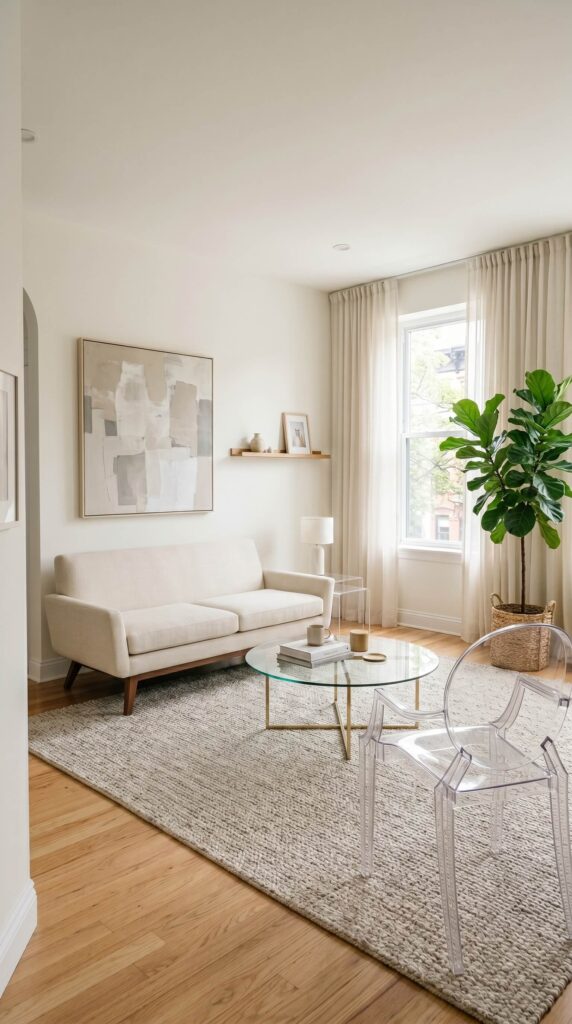
Furniture that sits directly on the floor anchors visually to it and makes the room feel heavier and more divided. Furniture with exposed legs allows the eye to see the floor continuing beneath each piece, which reads as uninterrupted space even when the room is fully furnished. Apply this to every piece you can: sofa, armchairs, dining chairs, bed frame, side tables. The goal is to maximize the amount of continuous floor visible from any standing position in the room.
16. Use Transparent or Glass Pieces for Secondary Seating and Tables
A clear acrylic chair or glass-top table takes up physical space but almost none of the visual space in a small room. The eye looks through transparent furniture rather than stopping at it, which keeps the room feeling open even when it is fully furnished. Use transparent pieces in the spots where you need furniture but cannot afford the visual bulk — a second seating chair, a side table, a small desk in a bedroom corner.
17. Scale Every Piece to the Room Before Buying
Oversized furniture is the fastest way to make a small apartment feel smaller. Before buying any piece, tape its footprint on the floor with masking tape and live with it for a day. Walk around it, see if the paths still feel comfortable, look at it from the doorway. What looks fine on a showroom floor or in a product photo can dominate a small room in a way that is only apparent once it is in the space. The tape test catches this before it is a problem.
18. Own Fewer Pieces and Choose Each One Carefully
A small apartment with fewer, better-chosen pieces of furniture always looks more spacious and more intentional than one that is fully furnished. The question for every piece is not just whether it fits physically but whether it earns its floor space. A chair that is used once a week might not earn its place. A side table that holds nothing and surfaces nothing might not earn its place. Edit the furniture count to what actually makes daily life better and the apartment automatically feels larger.
Decor and Styling
19. One Statement Piece Per Room — Art, Mirror, or Plant
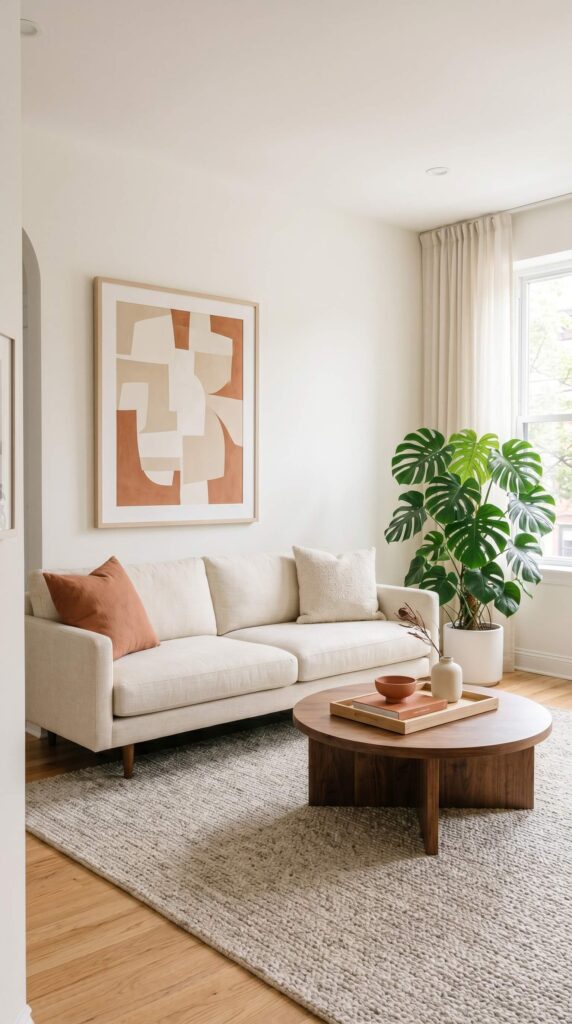
The fastest way to make a small room feel designed is to give it one strong focal point. One large piece of art above the sofa. One oversized mirror on the bedroom wall. One architectural plant in the living room corner. The singular statement reads as a deliberate design choice rather than accumulated decor. Everything else in the room supports this one thing rather than competing with it for attention.
20. Keep Every Flat Surface 60 Percent Empty
The 60-percent rule: any flat surface — coffee table, side table, dresser, kitchen counter — should have at most 40 percent of its area occupied by objects. The remaining 60 percent stays clear. This single discipline prevents the accumulation that makes small apartments feel cramped regardless of their size. Use trays to group the 40 percent so it reads as one composed vignette rather than individual scattered items.
21. Layer Textiles in Texture, Not Pattern
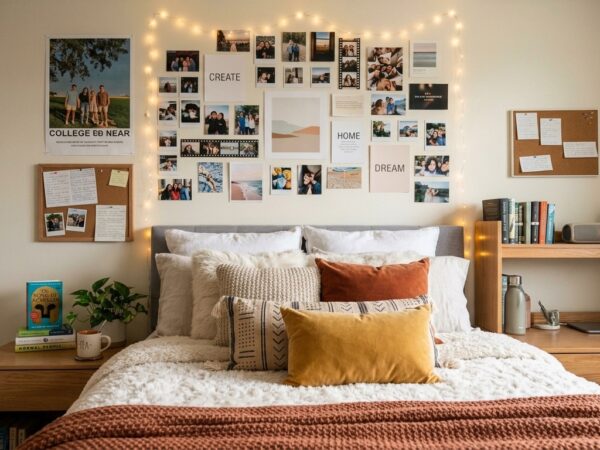
Layered textiles create warmth and richness in a small apartment without adding visual noise. The rule is: vary the texture of every textile, keep the color palette very tight. Three throw pillows in three different textures — waffle, chunky knit, smooth linen — in the same family of cream and warm neutrals will look intentionally styled. Three different colors in three different patterns will look like leftover textiles from three different apartments.
22. Choose Plants Over Most Other Decor
A plant budget almost always yields better results than the equivalent in decorative objects. Plants add organic life, softness, and scale that manufactured objects cannot replicate. One tall architectural plant costs the same as two decorative objects and does more for the room. Trailing plants on high shelves create vertical interest for almost nothing. Fresh or dried botanicals in a ceramic vase outlast most decorative trends. When in doubt between a plant and an object, choose the plant.
Renter-Friendly Upgrades
23. Swap Hardware Across the Entire Apartment in One Session
Cabinet pulls, towel bars, toilet paper holders, and light switch plates are all removable with a screwdriver and swappable in a single afternoon. Replacing every piece of builder-grade chrome hardware with matte black or brushed brass versions that match each other creates a cohesion across the apartment that looks intentional and renovated rather than rented. Keep all originals in labeled bags to reinstall when you leave. This single session costs under a hundred dollars and transforms every room it touches.
24. Add Peel-and-Stick Wallpaper to One Accent Wall Per Room
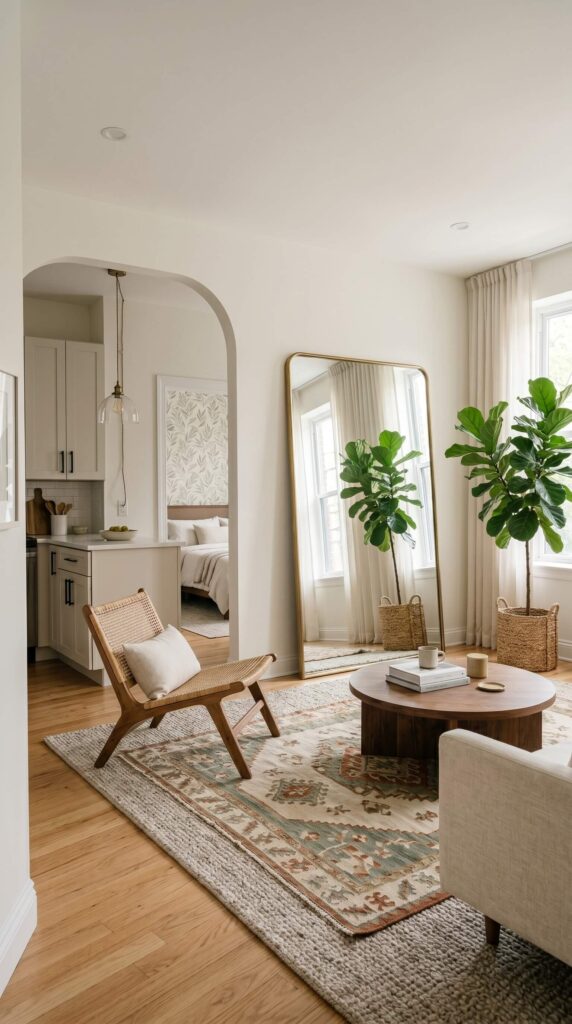
One peel-and-stick wallpaper accent wall changes the personality of any room without permanent commitment. Choose a different pattern for each room — botanical in the bedroom, geometric in the living room, textured in the bathroom — but keep the base tones consistent across all three so the apartment still reads as one cohesive space. Apply to the most visible wall in each room, usually behind the main focal piece of furniture. Remove slowly with a hair dryer when you move out.
25. Replace Every Light Fixture You Can Unscrew
Builder-grade rental light fixtures are almost always the wrong scale, the wrong style, and the wrong color temperature for the rooms they are in. Most ceiling fixtures unscrew in under thirty minutes. Store the original, install something better, reinstall the original before you leave. A rattan pendant in the bedroom, a linen shade in the living room, and a warm-globe vanity fixture in the bathroom cost under a hundred dollars total and immediately make the apartment feel like a designed space rather than a managed one.
Key Takeaways
- Map the layout on paper first — a good floor plan is free and changes more than any purchase
- Float furniture from walls in every room to create visual breathing room
- Match wall and ceiling color to remove the horizontal boundary that makes rooms feel boxed in
- One large mirror on the main wall doubles perceived depth more than almost any other change
- Ceiling-height curtains make every ceiling feel taller regardless of window size
- Every large furniture piece should store something — storage bed, storage ottoman, storage sofa
- Go vertical with storage before adding anything to the floor plan
- 60 percent of every flat surface stays empty — use trays to organize the other 40 percent
- One statement focal point per room — art, mirror, or plant — not multiple competing pieces
- Hardware swaps across the whole apartment in one afternoon for under a hundred dollars
Frequently Asked Questions
What are the best small apartment ideas on a tight budget?
The highest-impact free and near-free changes are: rearranging furniture so it floats from the walls, matching wall and ceiling paint color, swapping curtains to ceiling height, and clearing flat surfaces to 60 percent empty. Together these four changes cost under fifty dollars and transform how the space reads more than most furniture purchases would.
How do you make a small apartment feel like home?
The difference between a small apartment that feels like a space and one that feels like a home is personalisation and warmth. Add warm lighting, layer textiles in natural materials, keep a plant or two alive, display a few things you genuinely love rather than things that are meant to look designed, and maintain one clear routine that keeps the apartment reset regularly. The feeling of home comes from the space feeling curated and cared for, not from its size.
What is the most important thing to get right in a small apartment?
Layout. Everything else is easier to change — paint, furniture, decor, lighting. A bad layout creates daily friction: cramped paths, awkward sightlines, zones that do not work for how you actually live. Get the floor plan right first and every subsequent decision is easier because the framework is solid. Sketch it on paper, test it before committing, and prioritize function over aesthetics in the first pass.
How do you decorate a small apartment without making it feel cluttered?
Apply the 60-percent rule to every surface, commit to the one-tray system that groups objects rather than scattering them, choose textiles in texture rather than pattern, and limit decor to one focal statement per room. Clutter is not a product of too little storage — it is a product of too many objects with unclear homes. Solve the home problem for every object first and the apartment stays clear without ongoing effort.